Likes
- All the luxury vibes you could ever want
- Driving dynamics are that of a cloud
- Loaded with more tech than you will ever need
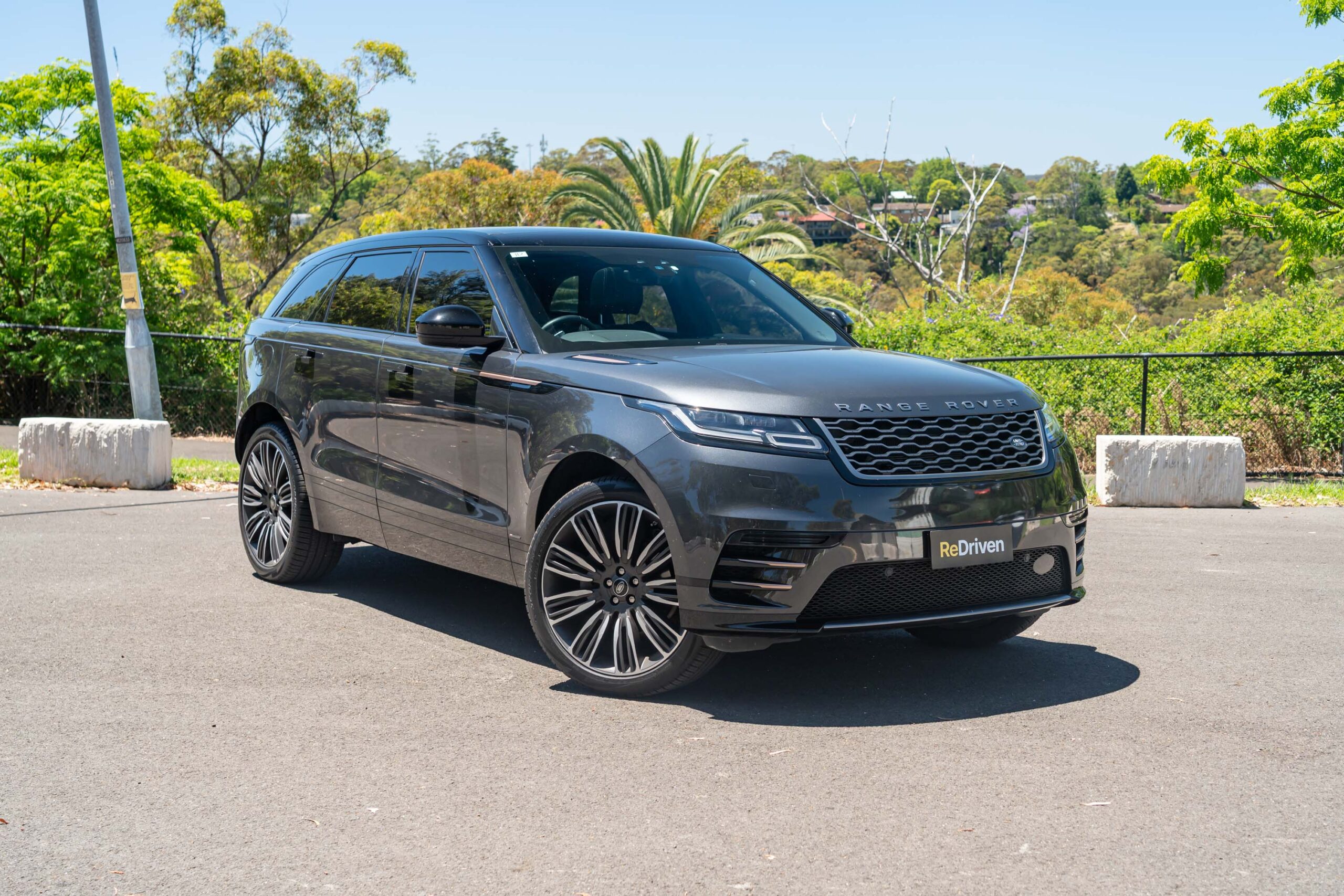
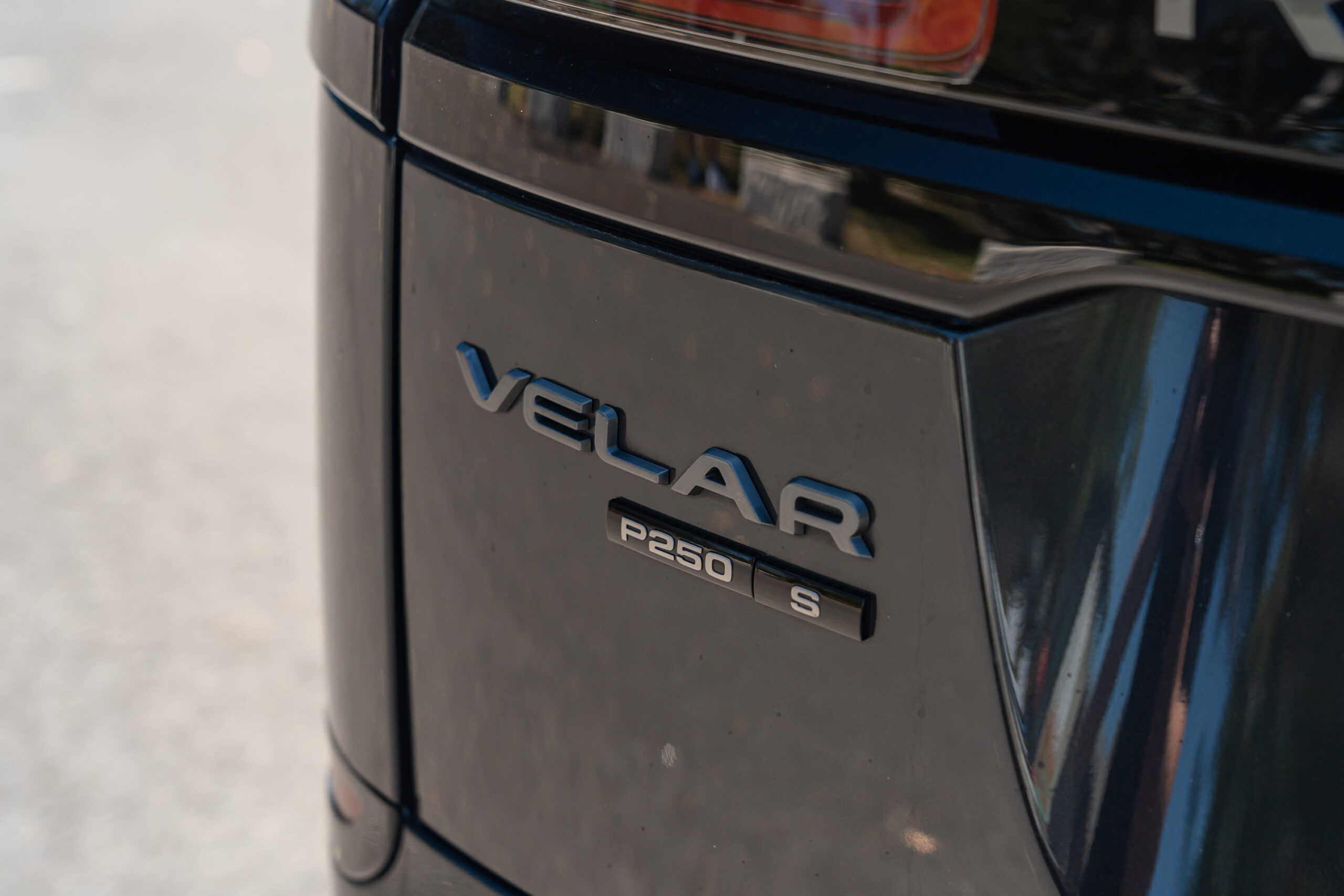
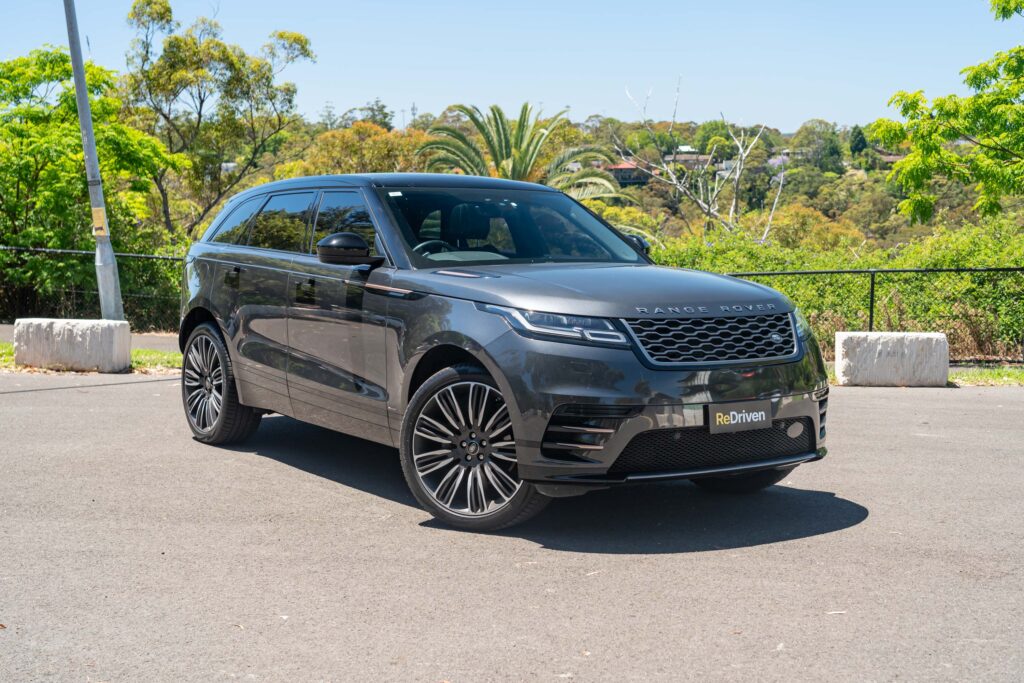
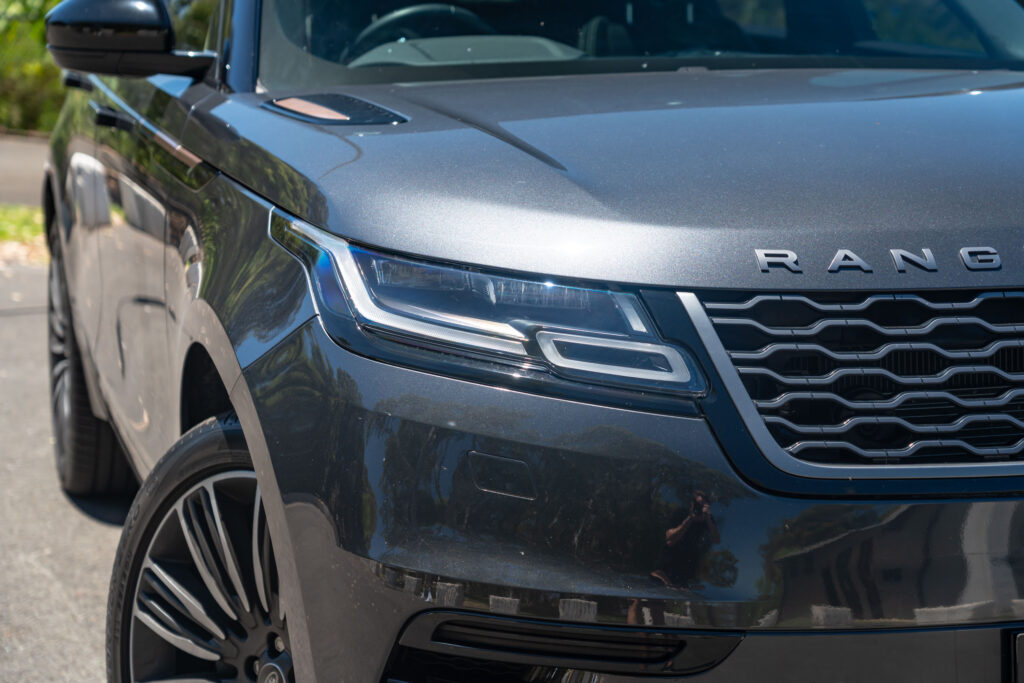
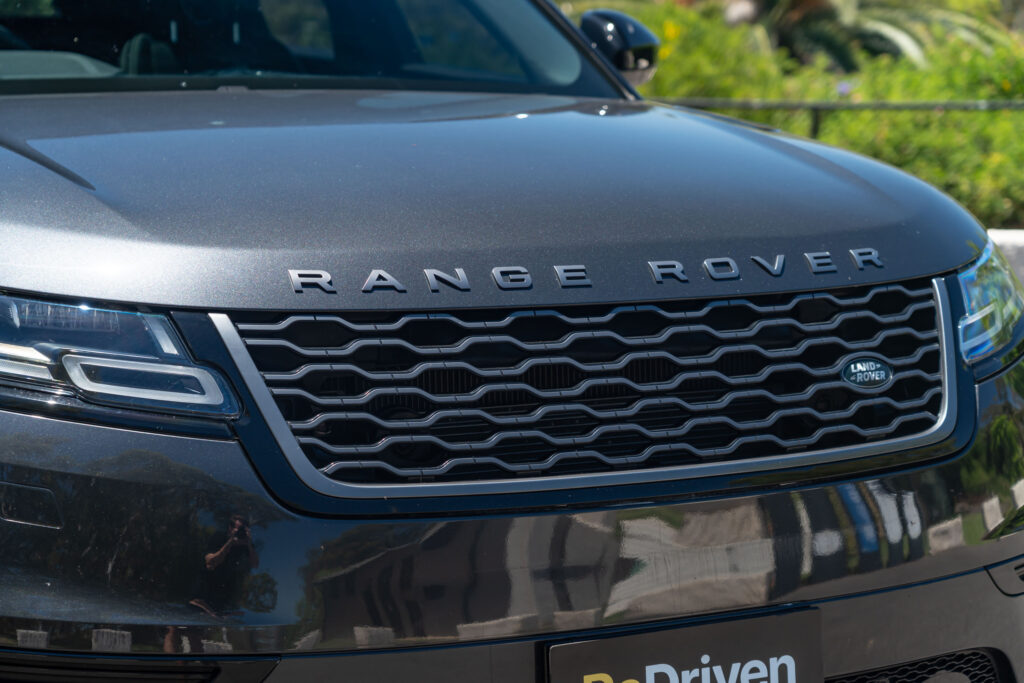
The Range Rover Velar is one of the most recent additions to the Jaguar/Land Rover Range Rover product lineup, first making its appearance for the 2017 model year after the introduction of its larger counterpart, the full-size fifth-generation Range Rover.
Within the Range Rover product range, the Velar (whose name was previously applied to prototype versions of the first-gen Range Rover) occupies a slot between the smaller Evoque/Discovery Sport and the larger Range Rover Sport.

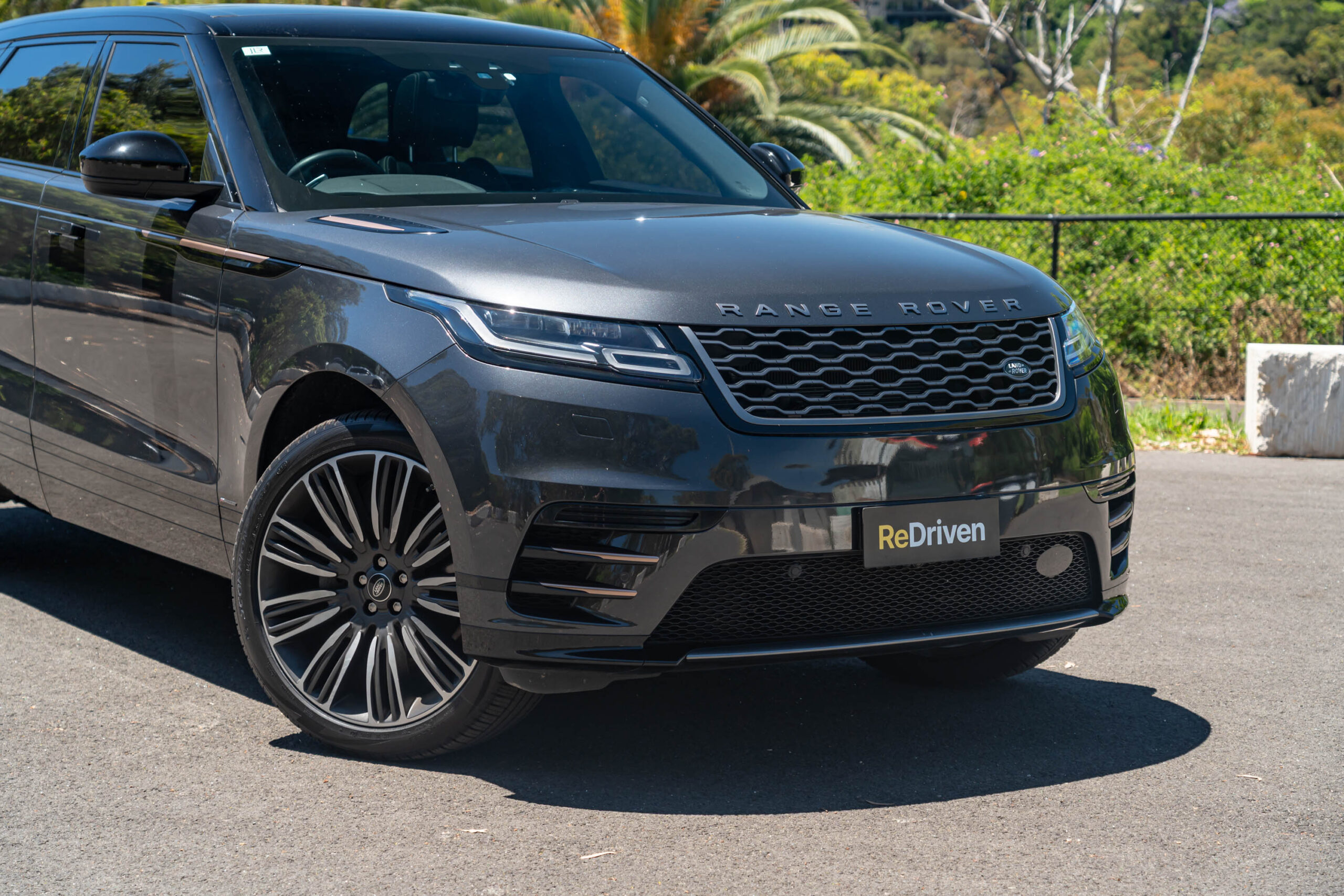
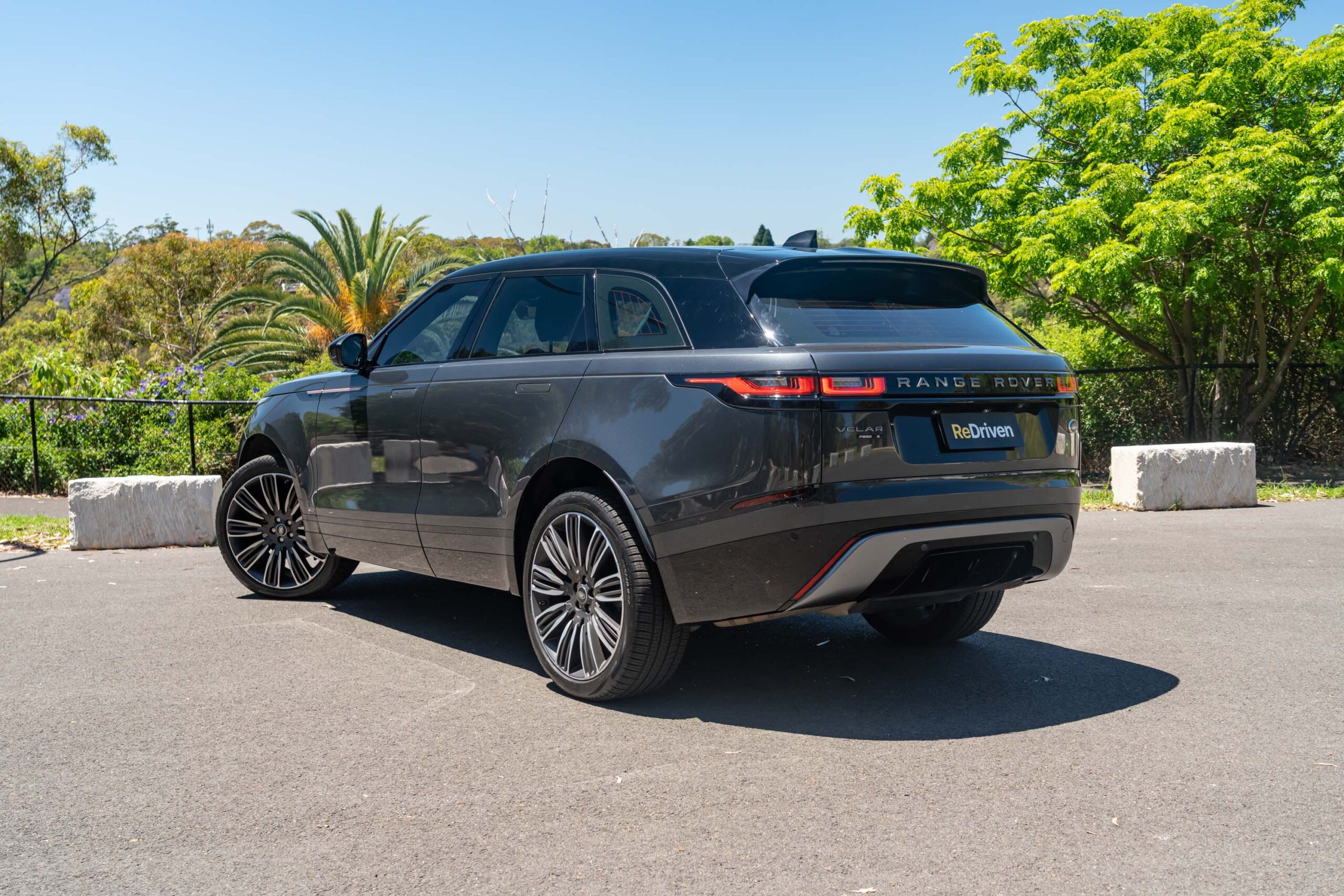
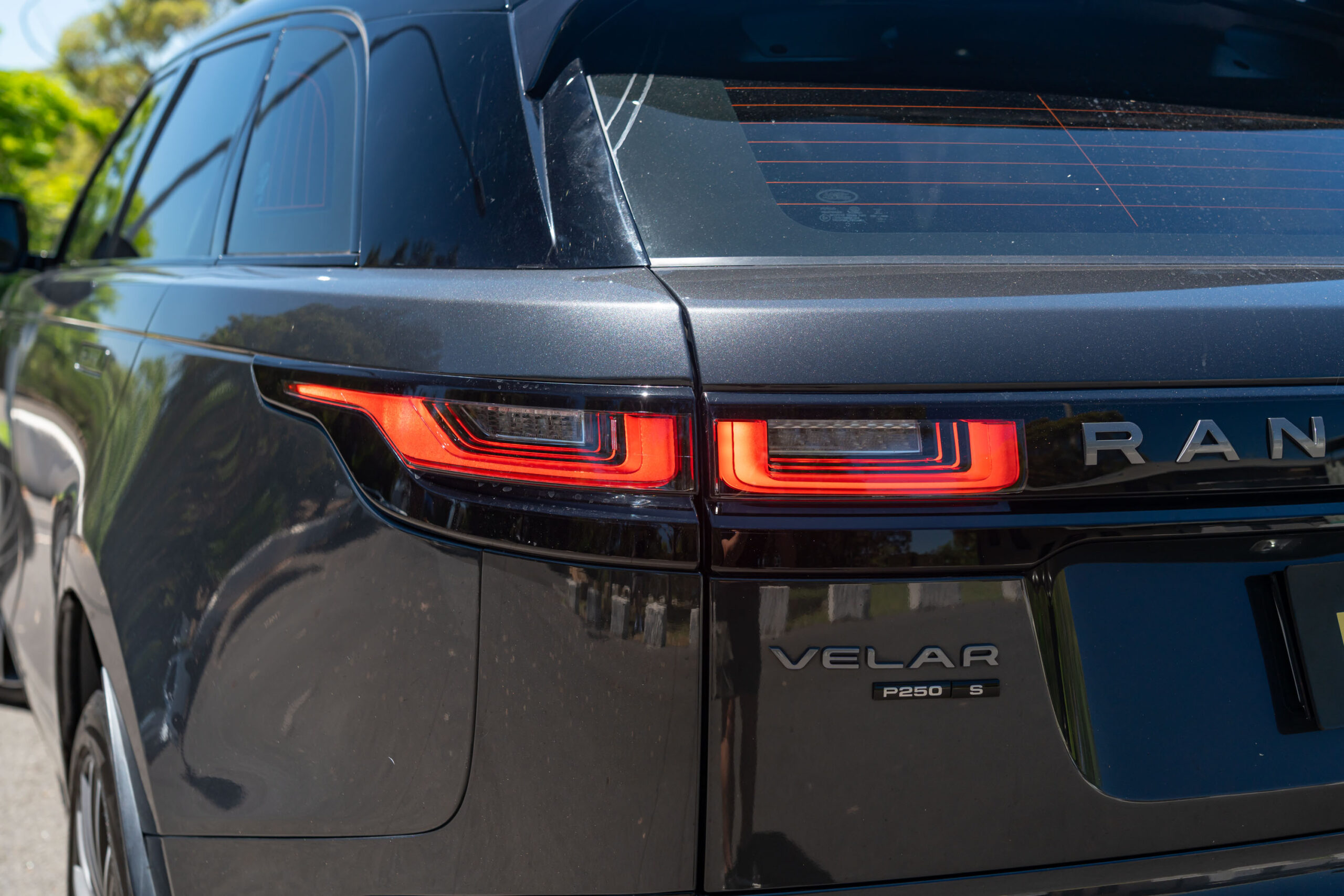
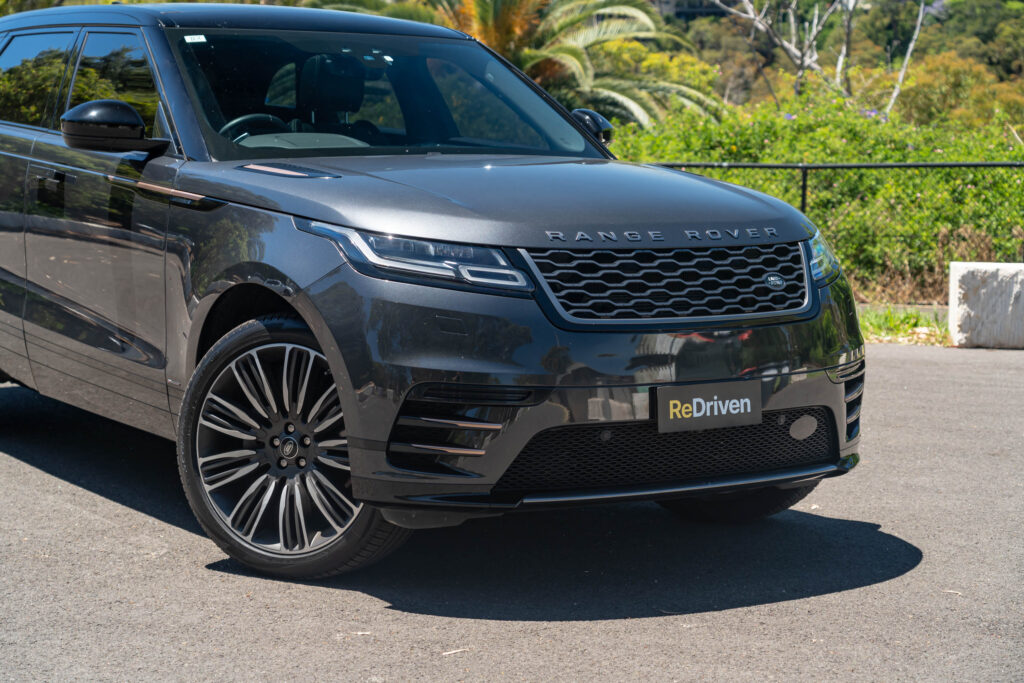
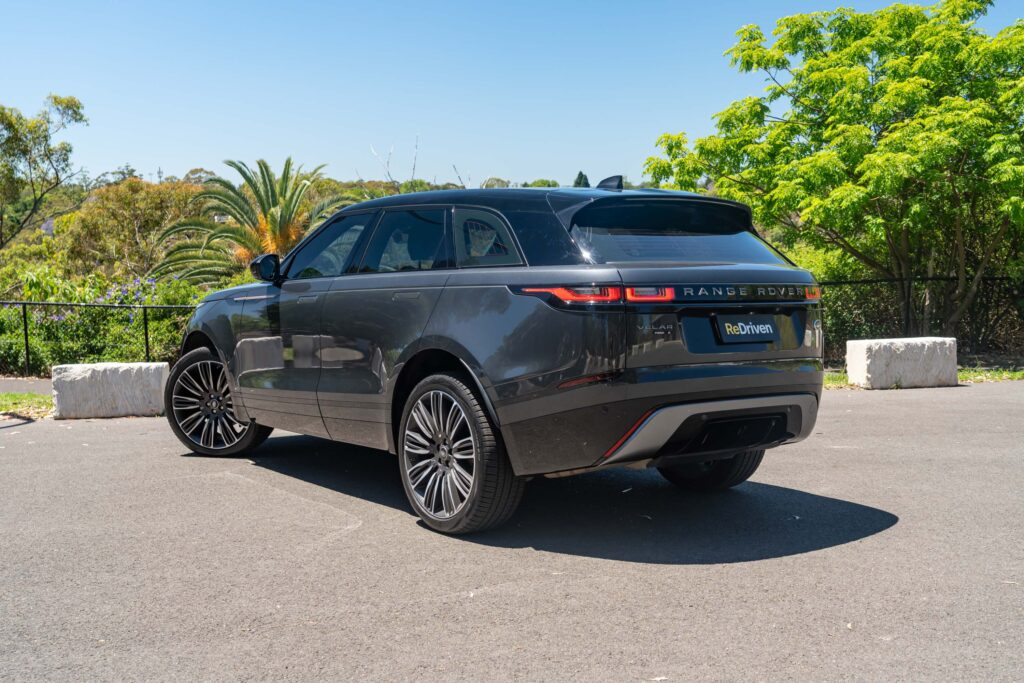
The Range Rover Velar distinguishes itself as a more road-focused variant of the British luxury SUV, with a sportier appearance throughout its exterior lines and a lower driving position compared to the tall, upright driving position found in standard Range Rovers.
Adding to its focus on on-road performance, the Velar also rides on an aluminium-intensive platform shared with other JLR Group sports-optimised crossovers/SUVs, such as the Jaguar F-Pace.
Engine choices include a range of petrol/diesel four and six-cylinder engines (with varying degrees of turbocharging and supercharging, or a hybrid setup), and in certain markets, the familiar Jaguar/Land Rover supercharged V8. No matter what engine was featured, all sent their power to all four wheels through an automatic transmission.
With its avant-garde, coupe-esque styling, the Velar notably gained the accolade of the ‘World’s Most Beautiful Car’ in 2018, but as time has passed, has any of that glamor faded away? Plus, given Range Rover’s unimpressive customer satisfaction and reliability track record, how does it fare as a used luxury car purchase?
Exterior Issues:
As you would expect from a luxury vehicle, there is a lot of equipment on the outside powered by electricity that adds a lot of convenience – when it’s working normally, that is.
The exterior door handles pop out and retract to keep the Velar’s side profile as smooth as possible, but plenty of owners report issues where the handles fail to retract back in, or don’t come out at all, leaving some to resort to creative measures to gain access inside.
The powered door locks are also beginning to give issues to owners, from them failing to unlock/lock normally, to sporadically unlocking without input, or in some cases, attempting to unlock but confusing the vehicle and activating the alarm.
Adding to the electronic gremlins owners report with the Velar, items such as the power folding side door mirrors and rear tailgate can experience small annoyances like not closing/folding or opening normally, or failing altogether.
We’ve also heard of inconsistency with the quality of the paint work and panel gaps – even finding some cases where body panels aren’t lining up perfectly on press vehicles, to any number of black plastics fading or exterior trim pieces getting loose.
The premium Rose Gold finish can be especially fragile if not looked after properly.
Interior Issues:
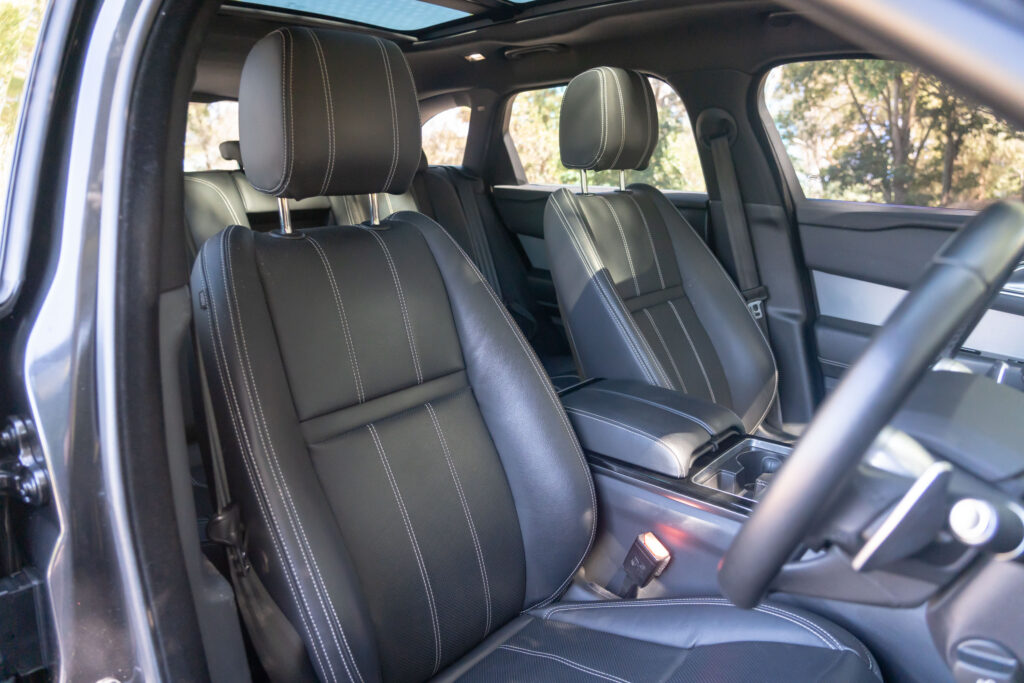
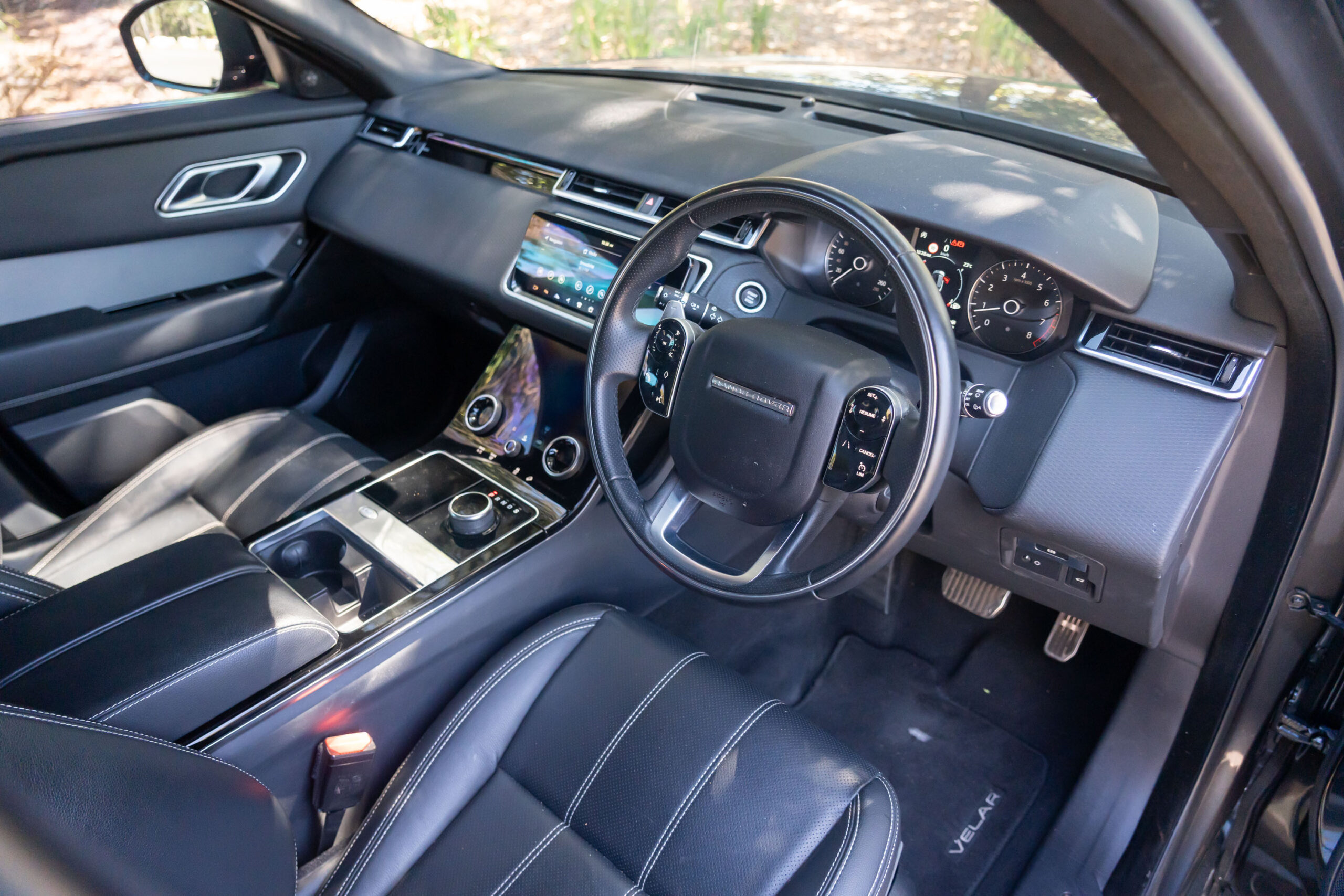
The cabin of the Velar is filled with premium leather upholstery that smells, appears, and feels nice and plush, with more expensive models bringing far more elevated levels of materials. But we’ve heard these interiors fall short when it comes to resilience long-term, from the trim pieces coming loose to the leather material wearing out fairly easily.
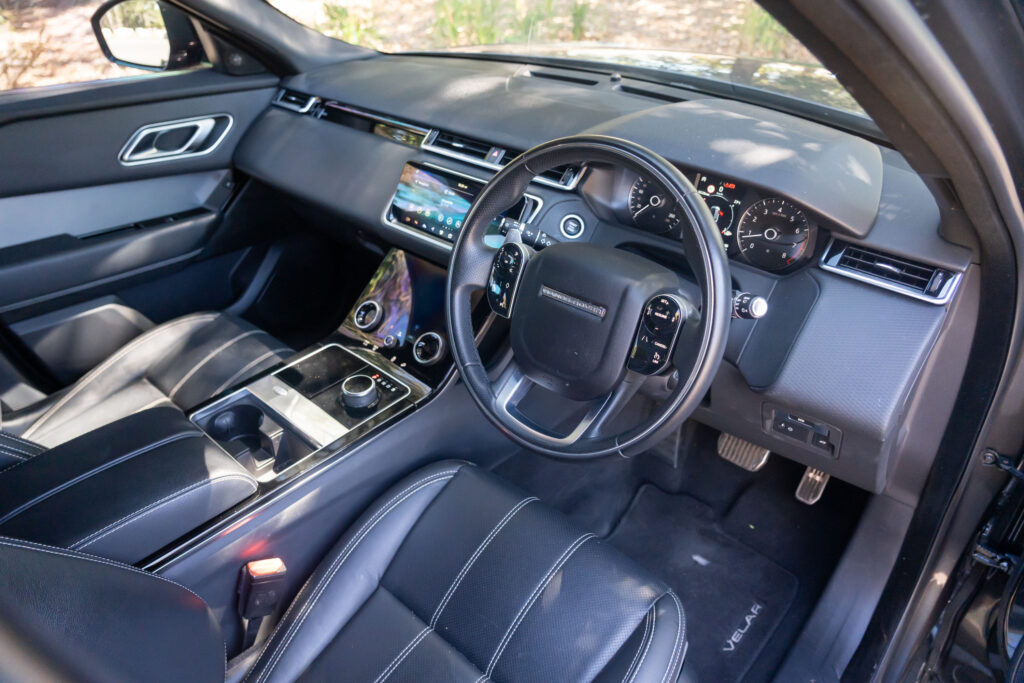
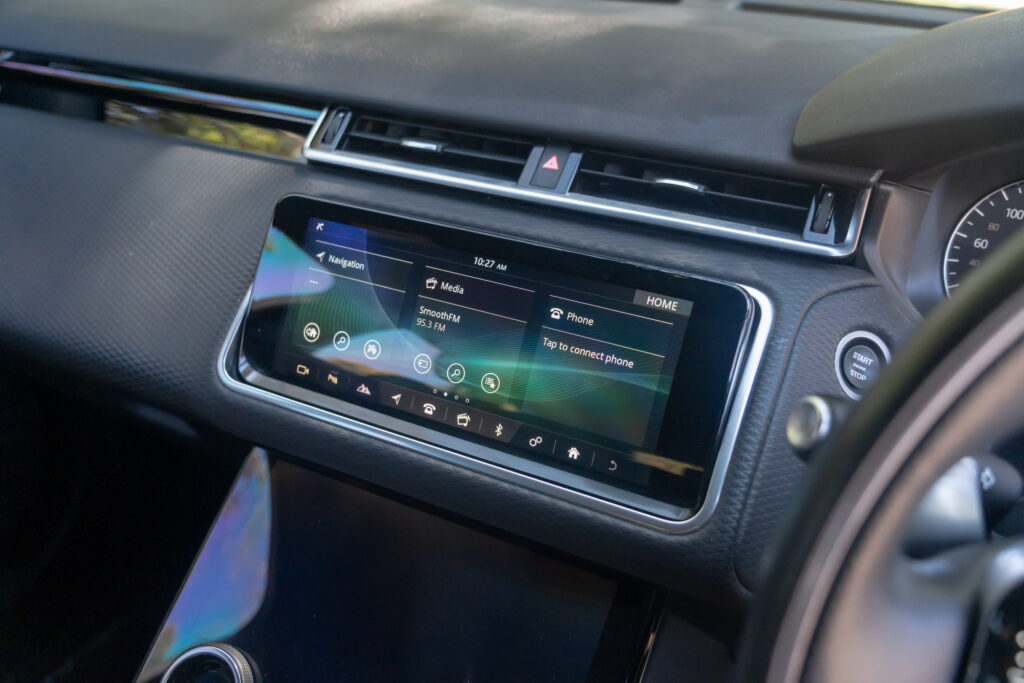
One particular source of frustration for Velar owners (as with other Land Rover/Range Rover models) is the fully-digital infotainment and HVAC screen arrangement. When it’s working normally, it all looks beautiful and has a very presentable UI.
But there are so many reports of problems this entire setup can suffer from – ranging from screens flickering, slow to respond/load up, freezing or blanking out altogether, along with the Apple CarPlay/Android Auto/Bluetooth connections playing up. Plus, the lack of physical buttons for this setup means it is far more challenging to use, especially when driving.
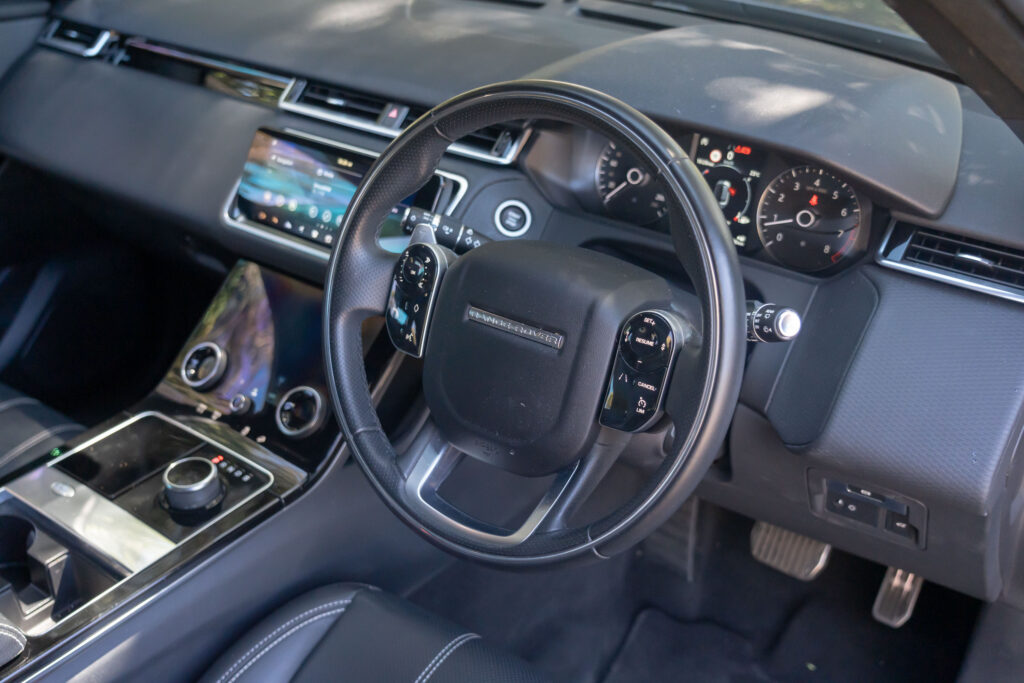
The lack of physical buttons impeding the user-friendliness of the cabin also extends to the steering wheel controls, which control multiple functions, but make accessing certain functions not as straightforward as you think.
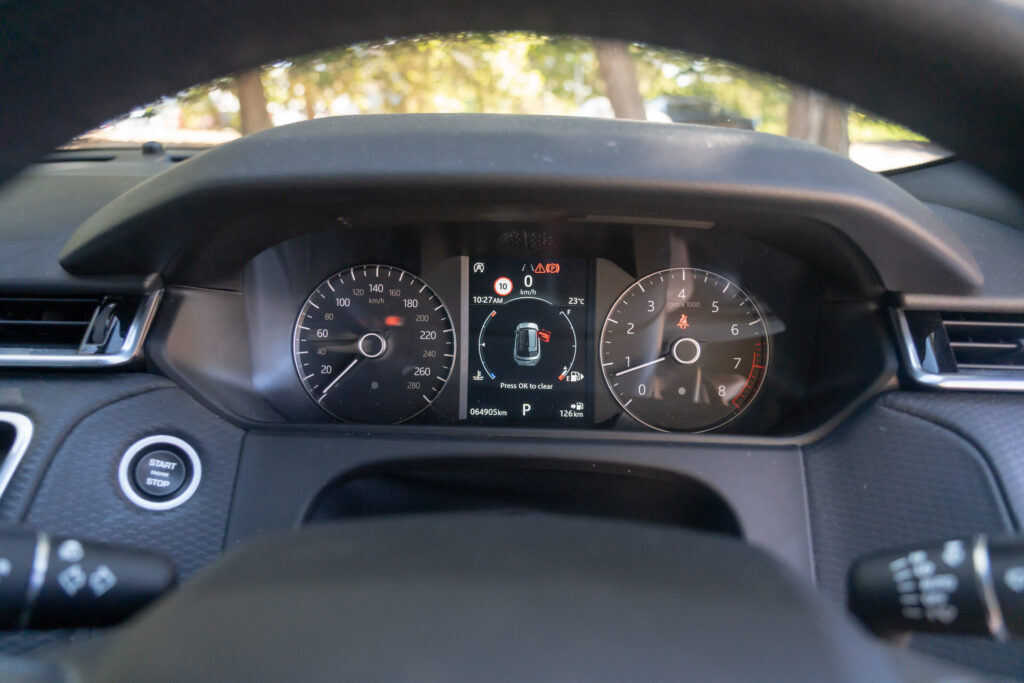
The rear-view camera and more advanced 360-around-view monitors can also remain displayed until you turn off the car and restart it.
It’s worth noting that in recent models, the infotainment system was improved (2023 MY) and even received a full overhaul of the UI and setup (2024 MY and up),
Exterior Issues:
As you would expect from a luxury vehicle, there is a lot of equipment on the outside powered by electricity that adds a lot of convenience – when it’s working normally, that is.
The exterior door handles pop out and retract to keep the Velar’s side profile as smooth as possible, but plenty of owners report issues where the handles fail to retract back in, or don’t come out at all, leaving some to resort to creative measures to gain access inside.
The powered door locks are also beginning to give issues to owners, from them failing to unlock/lock normally, to sporadically unlocking without input, or in some cases, attempting to unlock but confusing the vehicle and activating the alarm.
Adding to the electronic gremlins owners report with the Velar, items such as the power folding side door mirrors and rear tailgate can experience small annoyances like not closing/folding or opening normally, or failing altogether.
We’ve also heard of inconsistency with the quality of the paint work and panel gaps – even finding some cases where body panels aren’t lining up perfectly on press vehicles, to any number of black plastics fading or exterior trim pieces getting loose.
The premium Rose Gold finish can be especially fragile if not looked after properly.
Interior Issues:
The cabin of the Velar is filled with premium leather upholstery that smells, appears, and feels nice and plush, with more expensive models bringing far more elevated levels of materials. But we’ve heard these interiors fall short when it comes to resilience long-term, from the trim pieces coming loose to the leather material wearing out fairly easily.
One particular source of frustration for Velar owners (as with other Land Rover/Range Rover models) is the fully-digital infotainment and HVAC screen arrangement. When it’s working normally, it all looks beautiful and has a very presentable UI.
But there are so many reports of problems this entire setup can suffer from – ranging from screens flickering, slow to respond/load up, freezing or blanking out altogether, along with the Apple CarPlay/Android Auto/Bluetooth connections playing up. Plus, the lack of physical buttons for this setup means it is far more challenging to use, especially when driving.
The lack of physical buttons impeding the user-friendliness of the cabin also extends to the steering wheel controls, which control multiple functions, but make accessing certain functions not as straightforward as you think.
The rear-view camera and more advanced 360-around-view monitors can also remain displayed until you turn off the car and restart it.
It’s worth noting that in recent models, the infotainment system was improved (2023 MY) and even received a full overhaul of the UI and setup (2024 MY and up), which added better features as well as made it slightly more user-friendly and ideally, less likely to encounter issues.
Ideally, software updates can resolve any issues you experience with the infotainment/HVAC system, as quotes for replacement headunits or repairing faulty systems are ridiculously expensive.
The powered rotary gear selector that rises out of the centre console is a nice interior party piece, but it can fail to rise up or not select gears at all, which leaves you stranded. The potential headaches of this design are likely why, for models post-2021, Range Rover replaced this with a more traditional gear lever.
The active safety systems can also be temperamental – plenty of owners have complained that the lane keep assistance can be too aggressive, or the adaptive cruise control can be too hard on applying the brakes. Even the adaptive high beam headlights can be indecisive about what settings they need to be in.
Given the amount of electrical equipment featured on the Velar and the potential for issues, we highly recommend conducting a thorough test drive, during which – check that everything works while driving. Also, after stopping the car: turn off the power, lock and unlock it, then start it up again, as even a normal driving procedure can cause one or more systems to develop intermittent issues.
All models in the Velar range come with a great number of standard equipment, even early-model year base trims, but if you want some of the more advanced or specific features available, you may need to target higher trims specifically that are likely to come with more generous options or specifications from the factory.
It’s also worth mentioning that some of these noteworthy features can be found in far less expensive luxury SUVs from Korean or Japanese brands that rival Range Rover, giving the impression that some of the brand’s customers aren’t getting their full money’s worth in return for their passionate loyalty to the British marque.
Mechanical issues:
As you might expect with a luxury vehicle, prices for OEM replacement parts can be ridiculously overpriced. Replacement headlights, for example, have been quoted at least $8,000 each.
But if you want to avoid draining your wallet attempting to source OEM parts alone, plenty of owners highly recommend sourcing and fitting quality aftermarket parts, which you may find outperform, outlast, and cost far less than sourcing from a Land Rover dealer.
Petrol Engines:
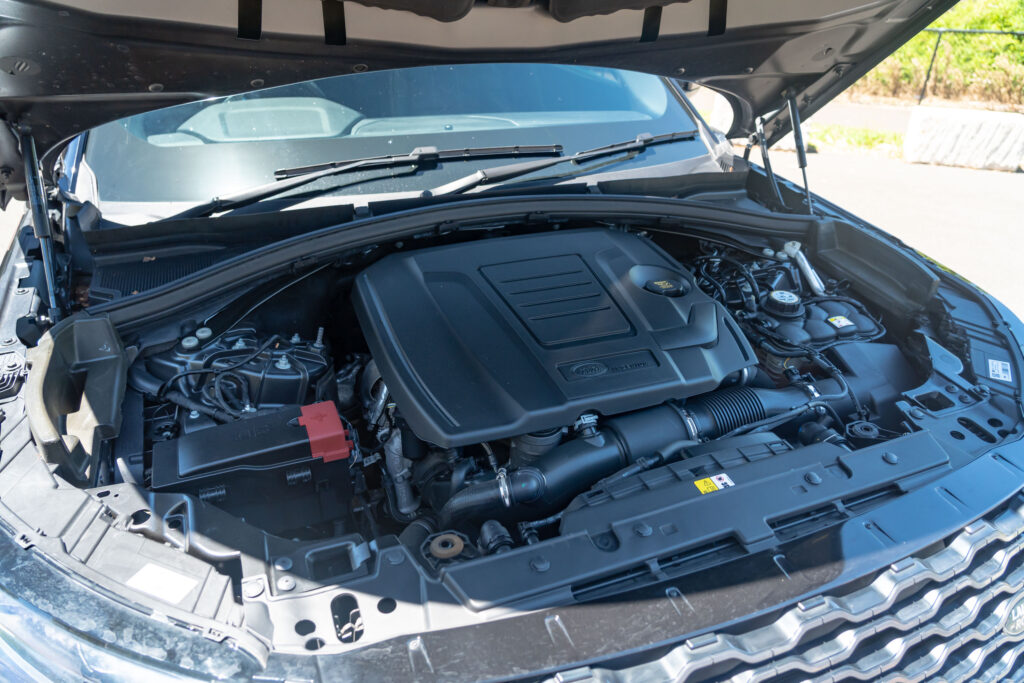
2.0L Ingenium (Turbocharged Inline-Four Cylinder, P250/300)
The 2.0L Ingenium engine’s widely documented weak points are its complex timing chain and valvetrain design. The chains can stretch easily or experience broken guide complications.
The cooling system is also very complex and prone to fluid leaks, mainly because its largely composed of plastic components that aren’t quite as robust.
Excessive oil consumption is also a common issue known to affect these engines.
3.0L Ingenium (Supercharged Inline-Six Cylinder and Hybrid, P340, P400/400e)
The 3.0L Ingenium engines have an electronically-driven supercharger and are known to have issues. An important note that they are not serviceable or rebuildable – if they fail, they need to be replaced altogether (in Australia, it can cost around $6,000 for a replacement).
These also have the same complex cooling system made up of plastic components that are prone to fluid leaks.
The timing chain designs are slightly better built compared to those in the 2.0L Ingenium engines, but they can still experience the same stretching issues and other failure points.
If they’re combined with the more sophisticated hybrid system, there’s not much known about their reliability at this time, but given Range Rovers’ track record, expect known (to be blunt – the JLR hybrids are likely to not be as reliable as Japanese equivalents).
3.0L Supercharged V6 (P380)
The supercharged V6 is the worst offender when it comes to reliability, out of all the petrol engines featured.
This engine has been used by Jaguar/Land Rover for several generations, and fun fact – the V6 is just the AJ-series V8 engine block casting with the rearmost two cylinders ‘blanked off’. Some view it as smart engineering, others say it’s evidence of cost-cutting, and just outright bizarre JLR would implement this.
These can also experience timing chain failure or complications, but compared to the V6 turbodiesel, it’s less likely to cause a total engine failure. Key signs that they are having issues are the timing chain itself rattling or any degree of engine bay noises upon startup.
The supercharger drive shaft bearings and coupling are also prominent failure points on this engine.
Once again, the cooling system on the supercharged V6 is also very fragile and prone to leaking. The water pump, as well as the same range of fairly weak plastic components, from thermostat housings and expansion tanks, can also break and leak fluid.
Diesel Engines
2.0L Ingenium (Turbodiesel Four-Cylinder/Four-Cylinder Mild Hybrid, D200/240)
The more problematic diesels tend to be the four-cylinder ones, and their weakest link (out of all the potential ones) is the timing chains. These can stretch, and their guides wear out, and can spontaneously fail altogether.
The plastic guides can also spontaneously break, which can lead to major engine failure.
Poor or lack of maintenance can also worsen the timing chains’ condition – if you hear rattling from the engine bay, get it sorted ASAP. As a reminder, the timing chains are located at the rear of the engine, so replacing them requires the engine to be taken out just to access them and can take up to two days turnaround.
3.0L Inline-Six TurboDiesel MHEV, 3.0L V6 Bi-TurboDiesel (D275, D300)
Issues can also affect the six-cylinder diesel units, but they’re typically not as prone to failure as the four-cylinder units.
Both the four and six-cylinder diesels do have issues with EGR cooler fluid leaks and EGR valve failure. Adding to how difficult they are to upkeep, the EGR systems are very sensitive and unnecessarily complicated. They can clog up easily, as well as their internal filter – key indicator of when this filter clogs up is when an ‘EGR Insufficient Flow’ fault code displays.
DPF (Diesel Particulate Filter) issues are common, and it’s highly recommended that before you budget the expense for an all-new replacement DPF, check that the MAP sensors are not clogged or the intake pipe is not leaking boost first.
The plastic intake manifolds are also very fragile, prone to leaking or having their swirl flap actuators fail altogether.
It’s very likely the first owners of these Range Rovers only had service done every 20,000-30,000 km (per manufacturer recommendations). If you are still the first owner and want it to last as long as possible, or at least care to show some form of decency to a future owner, make sure you change the oil!
Suspension/Drivetrain:
Models equipped with air suspension should have a very smooth and composed ride that glides over imperfections in the road. But like many cars that feature it, eventually it will fail and can be expensive to put right.
Even on non-air suspension-equipped Velars, the electronically controlled dampers can wear or fail prematurely, as well as other consumables like the suspension bushings and brakes.
We’ve also heard some reports of the steering components corroding/wearing out to the point it feels like the Velar has lost its power steering – in some markets, this was even subject to a recall by Jaguar/Land Rover.
The Velar comes with the brand’s signature ‘Terrain Response’ to optimise it for any degree of off-road settings and environments. Though most will very likely never see any use off-road to begin with, if you do intend on using it on any surfaces other than asphalt, check that all of the settings work.
The eight-speed automatic transmission is made by ZF and is applied to a variety of other luxury models. If looked after well, it can be quite trouble-free. However, Velar owners have experienced a variety of transmission issues: from clunky or juddering between gear shifts, to the transmission being indecisive in finding ‘right’ gears, as well as more severe instances of overheating and mechanical issues. While conducting a test drive, check that the transmission changes gears smoothly.
Exterior Issues:
As you would expect from a luxury vehicle, there is a lot of equipment on the outside powered by electricity that adds a lot of convenience – when it’s working normally, that is.
The exterior door handles pop out and retract to keep the Velar’s side profile as smooth as possible, but plenty of owners report issues where the handles fail to retract back in, or don’t come out at all, leaving some to resort to creative measures to gain access inside.
The powered door locks are also beginning to give issues to owners, from them failing to unlock/lock normally, to sporadically unlocking without input, or in some cases, attempting to unlock but confusing the vehicle and activating the alarm.
Adding to the electronic gremlins owners report with the Velar, items such as the power folding side door mirrors and rear tailgate can experience small annoyances like not closing/folding or opening normally, or failing altogether.
We’ve also heard of inconsistency with the quality of the paint work and panel gaps – even finding some cases where body panels aren’t lining up perfectly on press vehicles, to any number of black plastics fading or exterior trim pieces getting loose.
The premium Rose Gold finish can be especially fragile if not looked after properly.
Interior Issues:
The cabin of the Velar is filled with premium leather upholstery that smells, appears, and feels nice and plush, with more expensive models bringing far more elevated levels of materials. But we’ve heard these interiors fall short when it comes to resilience long-term, from the trim pieces coming loose to the leather material wearing out fairly easily.
One particular source of frustration for Velar owners (as with other Land Rover/Range Rover models) is the fully-digital infotainment and HVAC screen arrangement. When it’s working normally, it all looks beautiful and has a very presentable UI.
But there are so many reports of problems this entire setup can suffer from – ranging from screens flickering, slow to respond/load up, freezing or blanking out altogether, along with the Apple CarPlay/Android Auto/Bluetooth connections playing up. Plus, the lack of physical buttons for this setup means it is far more challenging to use, especially when driving.
The lack of physical buttons impeding the user-friendliness of the cabin also extends to the steering wheel controls, which control multiple functions, but make accessing certain functions not as straightforward as you think.
The rear-view camera and more advanced 360-around-view monitors can also remain displayed until you turn off the car and restart it.
It’s worth noting that in recent models, the infotainment system was improved (2023 MY) and even received a full overhaul of the UI and setup (2024 MY and up), which added better features as well as made it slightly more user-friendly and ideally, less likely to encounter issues.
Ideally, software updates can resolve any issues you experience with the infotainment/HVAC system, as quotes for replacement headunits or repairing faulty systems are ridiculously expensive.
The powered rotary gear selector that rises out of the centre console is a nice interior party piece, but it can fail to rise up or not select gears at all, which leaves you stranded. The potential headaches of this design are likely why, for models post-2021, Range Rover replaced this with a more traditional gear lever.
The active safety systems can also be temperamental – plenty of owners have complained that the lane keep assistance can be too aggressive, or the adaptive cruise control can be too hard on applying the brakes. Even the adaptive high beam headlights can be indecisive about what settings they need to be in.
Given the amount of electrical equipment featured on the Velar and the potential for issues, we highly recommend conducting a thorough test drive, during which – check that everything works while driving. Also, after stopping the car: turn off the power, lock and unlock it, then start it up again, as even a normal driving procedure can cause one or more systems to develop intermittent issues.
All models in the Velar range come with a great number of standard equipment, even early-model year base trims, but if you want some of the more advanced or specific features available, you may need to target higher trims specifically that are likely to come with more generous options or specifications from the factory.
It’s also worth mentioning that some of these noteworthy features can be found in far less expensive luxury SUVs from Korean or Japanese brands that rival Range Rover, giving the impression that some of the brand’s customers aren’t getting their full money’s worth in return for their passionate loyalty to the British marque.
Mechanical issues:
As you might expect with a luxury vehicle, prices for OEM replacement parts can be ridiculously overpriced. Replacement headlights, for example, have been quoted at least $8,000 each.
But if you want to avoid draining your wallet attempting to source OEM parts alone, plenty of owners highly recommend sourcing and fitting quality aftermarket parts, which you may find outperform, outlast, and cost far less than sourcing from a Land Rover dealer.
Petrol Engines:
2.0L Ingenium (Turbocharged Inline-Four Cylinder, P250/300)
The 2.0L Ingenium engine’s widely documented weak points are its complex timing chain and valvetrain design. The chains can stretch easily or experience broken guide complications.
The cooling system is also very complex and prone to fluid leaks, mainly because its largely composed of plastic components that aren’t quite as robust.
Excessive oil consumption is also a common issue known to affect these engines.
3.0L Ingenium (Supercharged Inline-Six Cylinder and Hybrid, P340, P400/400e)
The 3.0L Ingenium engines have an electronically-driven supercharger and are known to have issues. An important note that they are not serviceable or rebuildable – if they fail, they need to be replaced altogether (in Australia, it can cost around $6,000 for a replacement).
These also have the same complex cooling system made up of plastic components that are prone to fluid leaks.
The timing chain designs are slightly better built compared to those in the 2.0L Ingenium engines, but they can still experience the same stretching issues and other failure points.
If they’re combined with the more sophisticated hybrid system, there’s not much known about their reliability at this time, but given Range Rovers’ track record, expect known (to be blunt – the JLR hybrids are likely to not be as reliable as Japanese equivalents).
3.0L Supercharged V6 (P380)
The supercharged V6 is the worst offender when it comes to reliability, out of all the petrol engines featured.
This engine has been used by Jaguar/Land Rover for several generations, and fun fact – the V6 is just the AJ-series V8 engine block casting with the rearmost two cylinders ‘blanked off’. Some view it as smart engineering, others say it’s evidence of cost-cutting, and just outright bizarre JLR would implement this.
These can also experience timing chain failure or complications, but compared to the V6 turbodiesel, it’s less likely to cause a total engine failure. Key signs that they are having issues are the timing chain itself rattling or any degree of engine bay noises upon startup.
The supercharger drive shaft bearings and coupling are also prominent failure points on this engine.
Once again, the cooling system on the supercharged V6 is also very fragile and prone to leaking. The water pump, as well as the same range of fairly weak plastic components, from thermostat housings and expansion tanks, can also break and leak fluid.
Diesel Engines
2.0L Ingenium (Turbodiesel Four-Cylinder/Four-Cylinder Mild Hybrid, D200/240)
The more problematic diesels tend to be the four-cylinder ones, and their weakest link (out of all the potential ones) is the timing chains. These can stretch, and their guides wear out, and can spontaneously fail altogether.
The plastic guides can also spontaneously break, which can lead to major engine failure.
Poor or lack of maintenance can also worsen the timing chains’ condition – if you hear rattling from the engine bay, get it sorted ASAP. As a reminder, the timing chains are located at the rear of the engine, so replacing them requires the engine to be taken out just to access them and can take up to two days turnaround.
3.0L Inline-Six TurboDiesel MHEV, 3.0L V6 Bi-TurboDiesel (D275, D300)
Issues can also affect the six-cylinder diesel units, but they’re typically not as prone to failure as the four-cylinder units.
Both the four and six-cylinder diesels do have issues with EGR cooler fluid leaks and EGR valve failure. Adding to how difficult they are to upkeep, the EGR systems are very sensitive and unnecessarily complicated. They can clog up easily, as well as their internal filter – key indicator of when this filter clogs up is when an ‘EGR Insufficient Flow’ fault code displays.
DPF (Diesel Particulate Filter) issues are common, and it’s highly recommended that before you budget the expense for an all-new replacement DPF, check that the MAP sensors are not clogged or the intake pipe is not leaking boost first.
The plastic intake manifolds are also very fragile, prone to leaking or having their swirl flap actuators fail altogether.
It’s very likely the first owners of these Range Rovers only had service done every 20,000-30,000 km (per manufacturer recommendations). If you are still the first owner and want it to last as long as possible, or at least care to show some form of decency to a future owner, make sure you change the oil!
Suspension/Drivetrain:
Models equipped with air suspension should have a very smooth and composed ride that glides over imperfections in the road. But like many cars that feature it, eventually it will fail and can be expensive to put right.
Even on non-air suspension-equipped Velars, the electronically controlled dampers can wear or fail prematurely, as well as other consumables like the suspension bushings and brakes.
We’ve also heard some reports of the steering components corroding/wearing out to the point it feels like the Velar has lost its power steering – in some markets, this was even subject to a recall by Jaguar/Land Rover.
The Velar comes with the brand’s signature ‘Terrain Response’ to optimise it for any degree of off-road settings and environments. Though most will very likely never see any use off-road to begin with, if you do intend on using it on any surfaces other than asphalt, check that all of the settings work.
The eight-speed automatic transmission is made by ZF and is applied to a variety of other luxury models. If looked after well, it can be quite trouble-free. However, Velar owners have experienced a variety of transmission issues: from clunky or juddering between gear shifts, to the transmission being indecisive in finding ‘right’ gears, as well as more severe instances of overheating and mechanical issues. While conducting a test drive, check that the transmission changes gears smoothly.
If you know your high-end, luxury SUVs, you shouldn’t be surprised that, among many factors they suffer as a used vehicle, depreciation is one of their biggest factors at play.
The Range Rover Velar is another case – when it first arrived in showrooms, retail pricing began from $150,000. Now, within the secondhand market, prices have dropped to as low as $30,000, with most on average priced between $60,000-$110,000.
Compared to the depreciation of other luxury SUVs from BMW, Genesis, Lexus, and even its Land Rover Defender and Range Rover siblings, the Velar generally depreciates substantially faster and at worse rates. Combine that with the exorbitant costs for parts and maintenance to upkeep one, and it’s really hard to justify why you would choose a Velar, once you get over its attractive styling.
That being said, there are plenty of stories within Range Rover owners’ groups and forums filled with nothing but praise for the Velar and reports of satisfied owners who report few to no problems. Also interestingly, from our research, we found the Velar is currently ranked relatively high on reliability and customer satisfaction surveys compared to other Land Rover/Range Rover models – giving the impression that while it’s not the most reliable luxury SUV out there, it’s the most ‘reliable’ one out of the entire Range Rover family.
Even if you do feel slightly won over, we do want to highlight: Is owning a Velar worth the risk? As we’ve mentioned in other reviews of SUVs with
If you know your high-end, luxury SUVs, you shouldn’t be surprised that, among many factors they suffer as a used vehicle, depreciation is one of their biggest factors at play.
The Range Rover Velar is another case – when it first arrived in showrooms, retail pricing began from $150,000. Now, within the secondhand market, prices have dropped to as low as $30,000, with most on average priced between $60,000-$110,000.
Compared to the depreciation of other luxury SUVs from BMW, Genesis, Lexus, and even its Land Rover Defender and Range Rover siblings, the Velar generally depreciates substantially faster and at worse rates. Combine that with the exorbitant costs for parts and maintenance to upkeep one, and it’s really hard to justify why you would choose a Velar, once you get over its attractive styling.
That being said, there are plenty of stories within Range Rover owners’ groups and forums filled with nothing but praise for the Velar and reports of satisfied owners who report few to no problems. Also interestingly, from our research, we found the Velar is currently ranked relatively high on reliability and customer satisfaction surveys compared to other Land Rover/Range Rover models – giving the impression that while it’s not the most reliable luxury SUV out there, it’s the most ‘reliable’ one out of the entire Range Rover family.
Even if you do feel slightly won over, we do want to highlight: Is owning a Velar worth the risk? As we’ve mentioned in other reviews of SUVs with premium badges, that may not mean it’s a product built to premium standards compared to far less expensive models that come better equipped, superior build quality, resilience when it comes to general use as a car (as intended), and just as nice to drive.
We even heard of one owner whose Range Rover Velar had to be taken to the garage so many times, they bought another car outright just so they could have access to at least one reliable car in their household.
If image and aesthetics are things you prioritise from a vehicle in this segment, then we understand why the Velar is an attractive choice, even though its not really special to drive. But if you are considering an SUV that can do more than serve as ‘eye candy’, our advice is to look elsewhere if you want one that will be less of a liability to own in the long run.
If you know your high-end, luxury SUVs, you shouldn’t be surprised that, among many factors they suffer as a used vehicle, depreciation is one of their biggest factors at play.
The Range Rover Velar is another case – when it first arrived in showrooms, retail pricing began from $150,000. Now, within the secondhand market, prices have dropped to as low as $30,000, with most on average priced between $60,000-$110,000.
Compared to the depreciation of other luxury SUVs from BMW, Genesis, Lexus, and even its Land Rover Defender and Range Rover siblings, the Velar generally depreciates substantially faster and at worse rates. Combine that with the exorbitant costs for parts and maintenance to upkeep one, and it’s really hard to justify why you would choose a Velar, once you get over its attractive styling.
That being said, there are plenty of stories within Range Rover owners’ groups and forums filled with nothing but praise for the Velar and reports of satisfied owners who report few to no problems. Also interestingly, from our research, we found the Velar is currently ranked relatively high on reliability and customer satisfaction surveys compared to other Land Rover/Range Rover models – giving the impression that while it’s not the most reliable luxury SUV out there, it’s the most ‘reliable’ one out of the entire Range Rover family.
Even if you do feel slightly won over, we do want to highlight: Is owning a Velar worth the risk? As we’ve mentioned in other reviews of SUVs with premium badges, that may not mean it’s a product built to premium standards compared to far less expensive models that come better equipped, superior build quality, resilience when it comes to general use as a car (as intended), and just as nice to drive.
We even heard of one owner whose Range Rover Velar had to be taken to the garage so many times, they bought another car outright just so they could have access to at least one reliable car in their household.
If image and aesthetics are things you prioritise from a vehicle in this segment, then we understand why the Velar is an attractive choice, even though its not really special to drive. But if you are considering an SUV that can do more than serve as ‘eye candy’, our advice is to look elsewhere if you want one that will be less of a liability to own in the long run.
Have ultimate peace of mind when buying a used car by purchasing an official PPSR report.
Please note that pricing information is subject to fluctuations in the automotive market.
Information correct as of December 24, 2025.
The advice provided on this website is general advice only. It has been prepared without taking into account your objectives, financial situation or needs. Before acting on this advice, you should consider the appropriateness of the advice, having regard to your own objectives, financial situation and needs.
Read our full terms and conditions here.
You are the best, the content in your videos is so helpful, delivered in a great way. Please keep going as for sure you are unique in every way. All the best from Guatemala
L. G. - YouTube
You guys have truly found something wonderful… Loved this channel ever since from the beginning… Will support you guys as long as you guys keep making these wonderful car reviews…
Calvin - YouTube
This is probably the best channel I have ever seen when reviewing vehicles. New or old. The honesty is so appreciated. I’ve been a mechanic for 20 years and I find it very informative when looking for a vehicle for my daughter. Keep up the awesome work.
Jason T. - YouTube
© 2025 ReDriven All Rights Reserved