Australia’s No. 1 Used Car Review Website
Australia’s No. 1 Used Car Review Website
+20 Photos

2021 Mercedes-Benz G-Class G63 AMG

27 March 2026
Yes. But only the right example.

2021 Mercedes-Benz G-Class G63 AMG

Used car review
27 March 2026
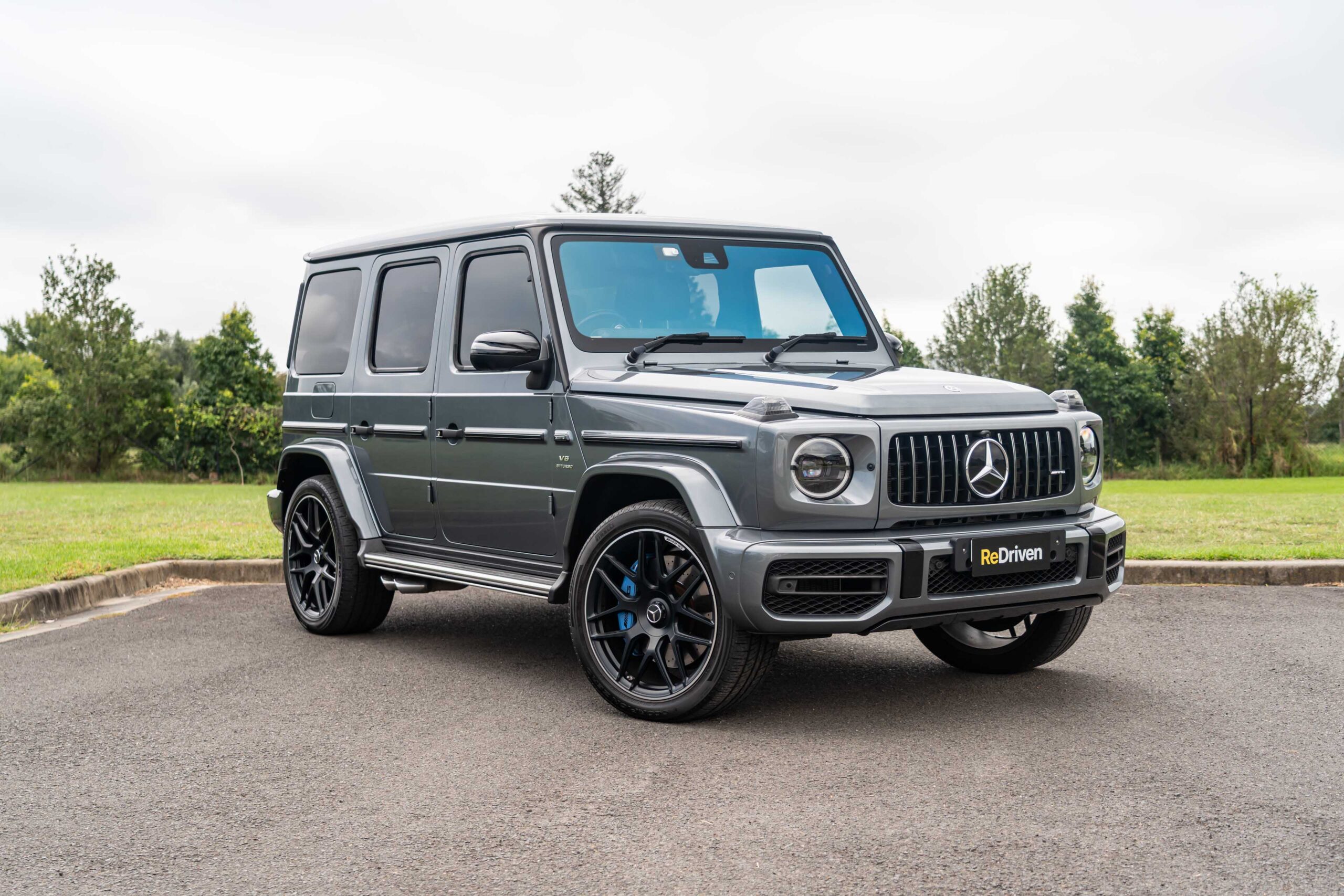
The Mercedes-Benz G-Class, also known as the G-Wagen, is instantly recognisable as one of the German brand’s most famous models since its inception.
Initially a purpose-built, go-anywhere SUV for military use, it eventually spawned a more comfort-oriented variant to rival the likes of the Range Rover – becoming a status symbol of excess luxury among the elite, frequently seen driving within high-end streets and suburbs.

That continued for the W463 ‘second-generation’(also referred to as the W463A/W464), produced from 2018 up to 2024, which continued to be made in the same production line in Graz, Austria.
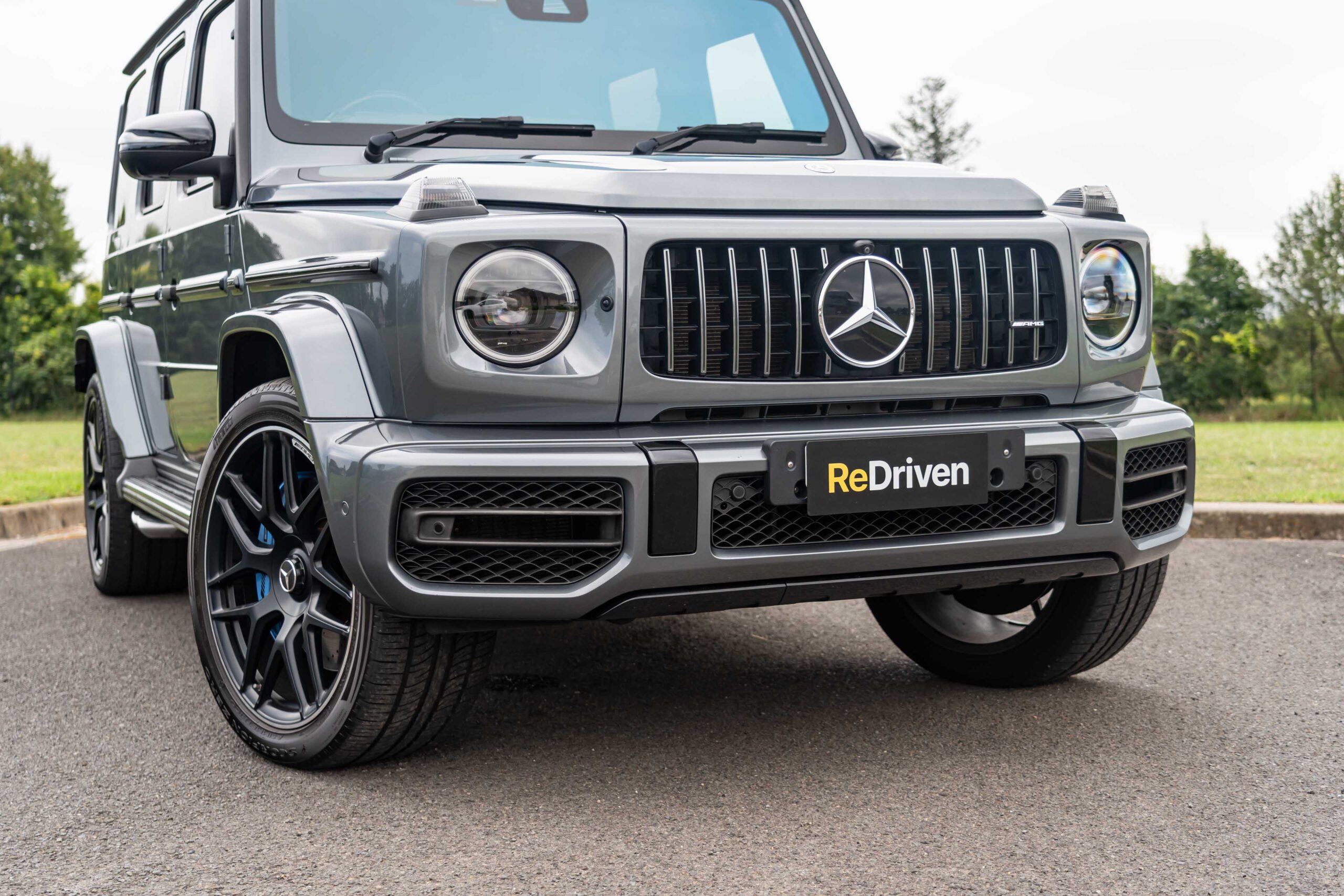
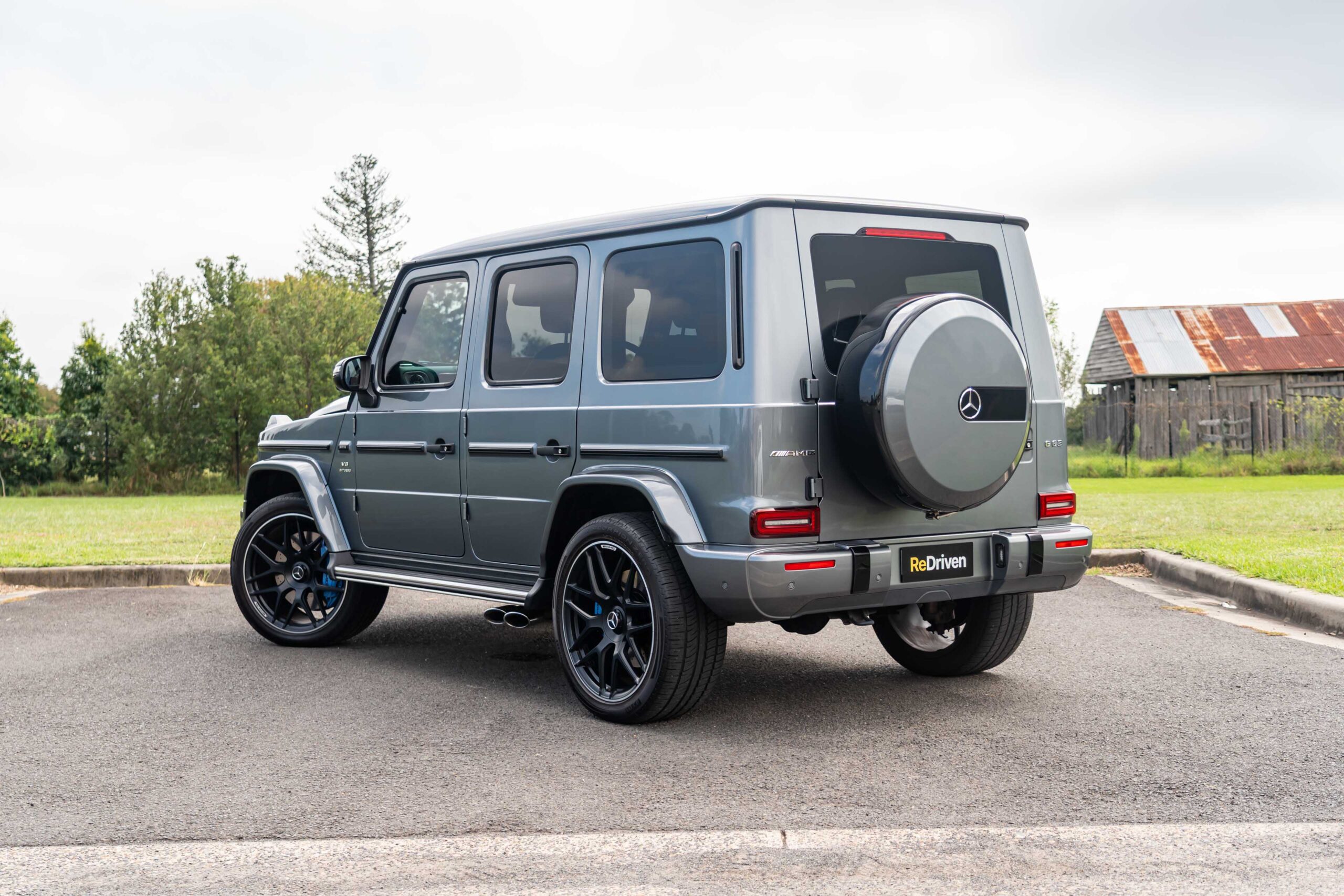
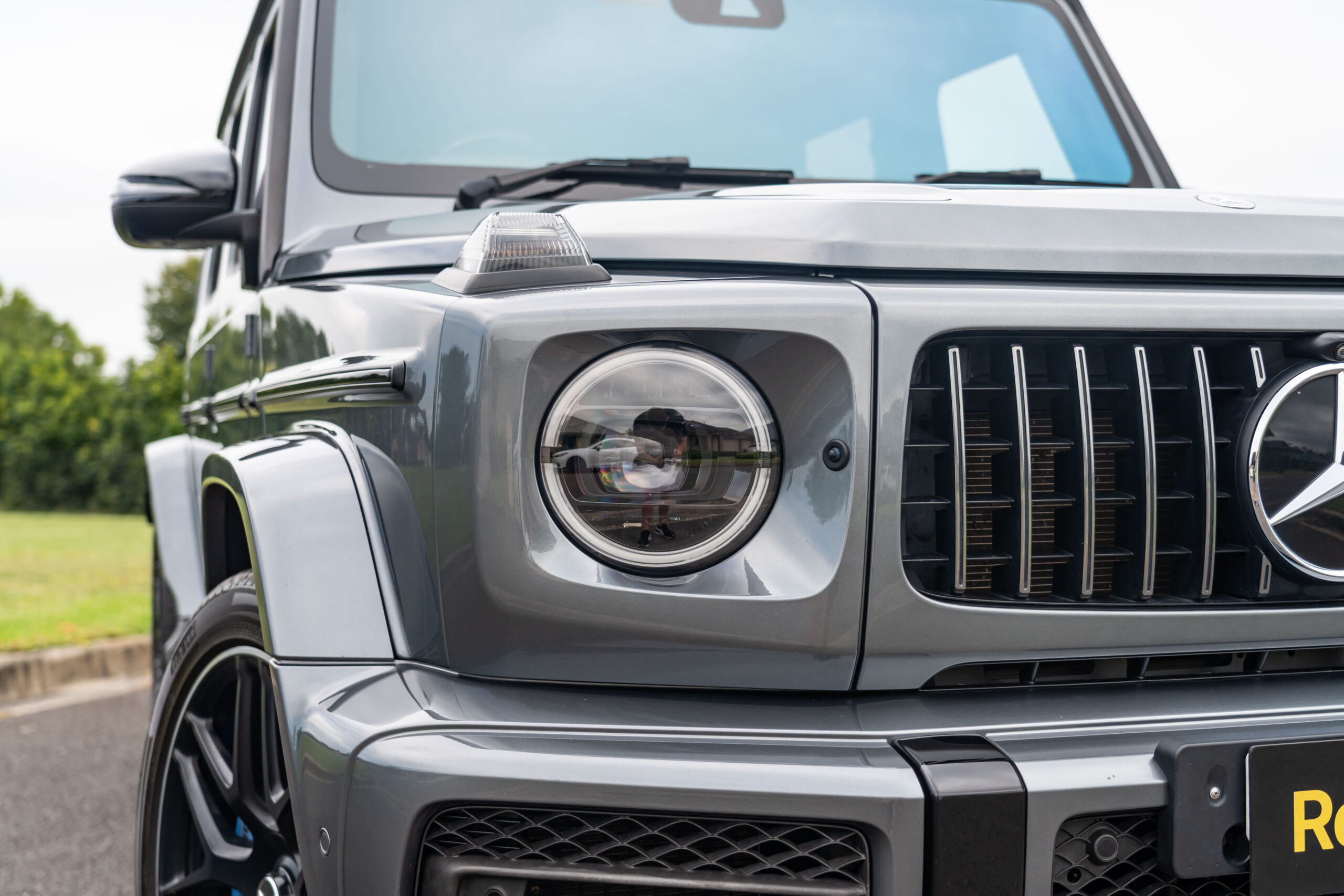
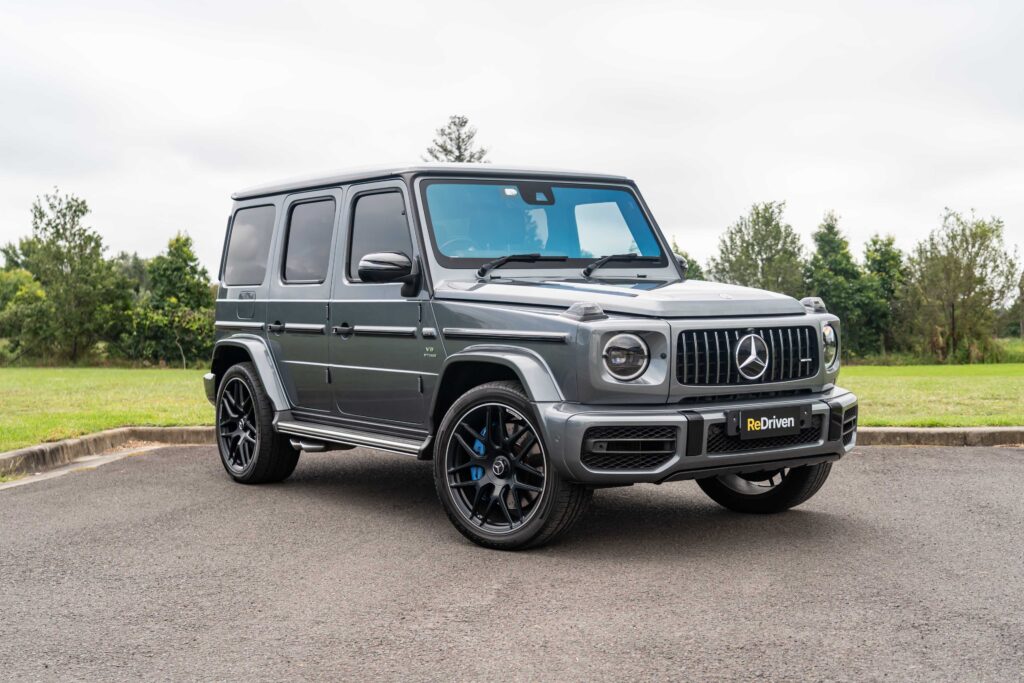
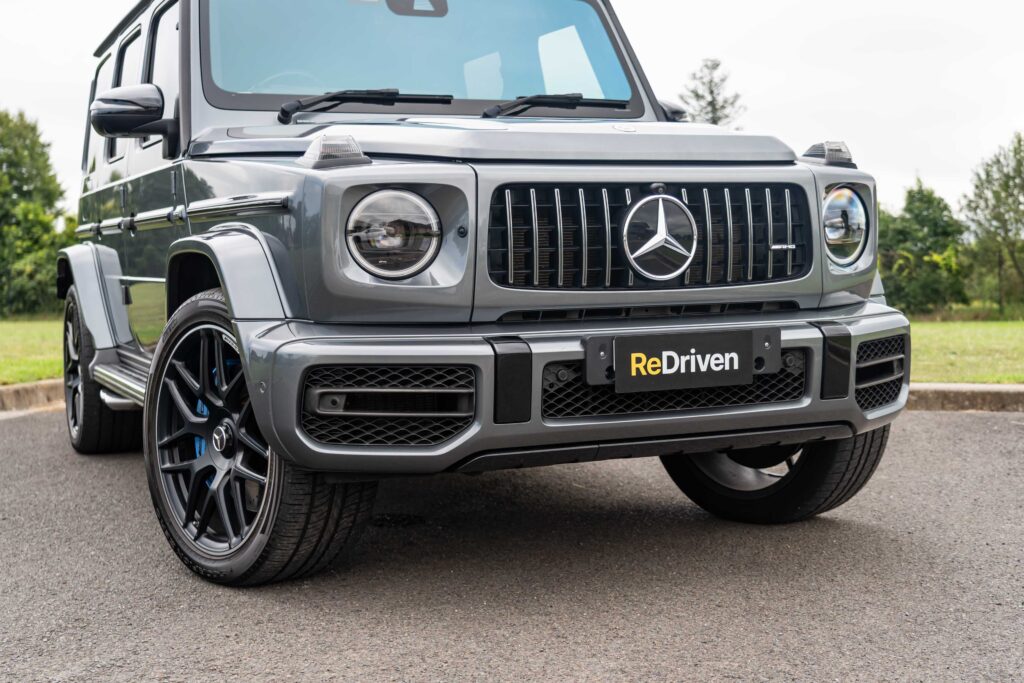
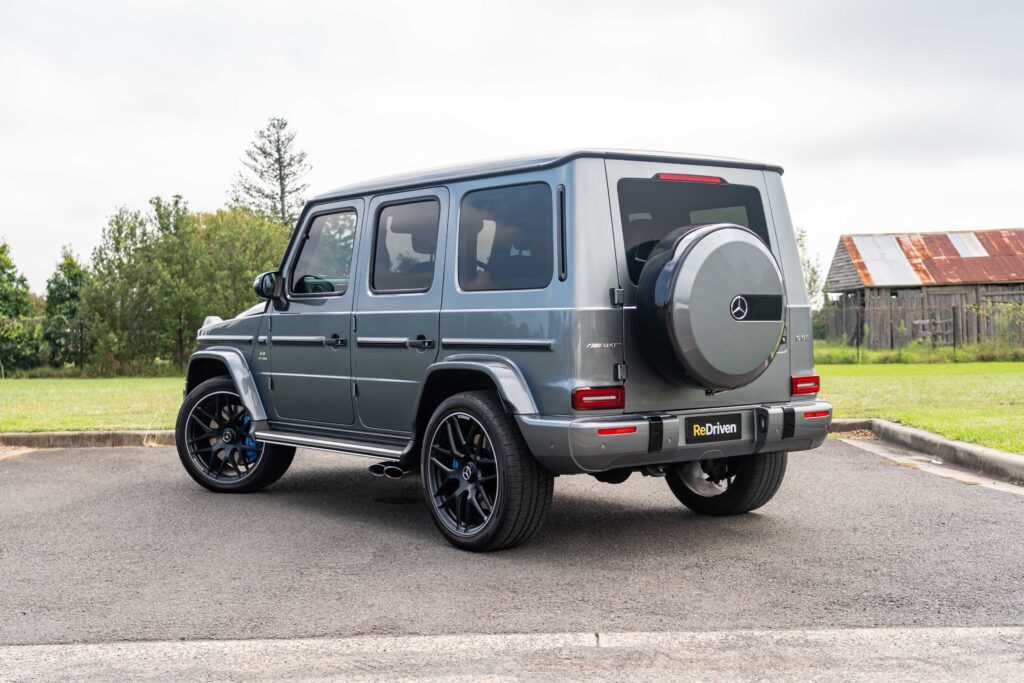
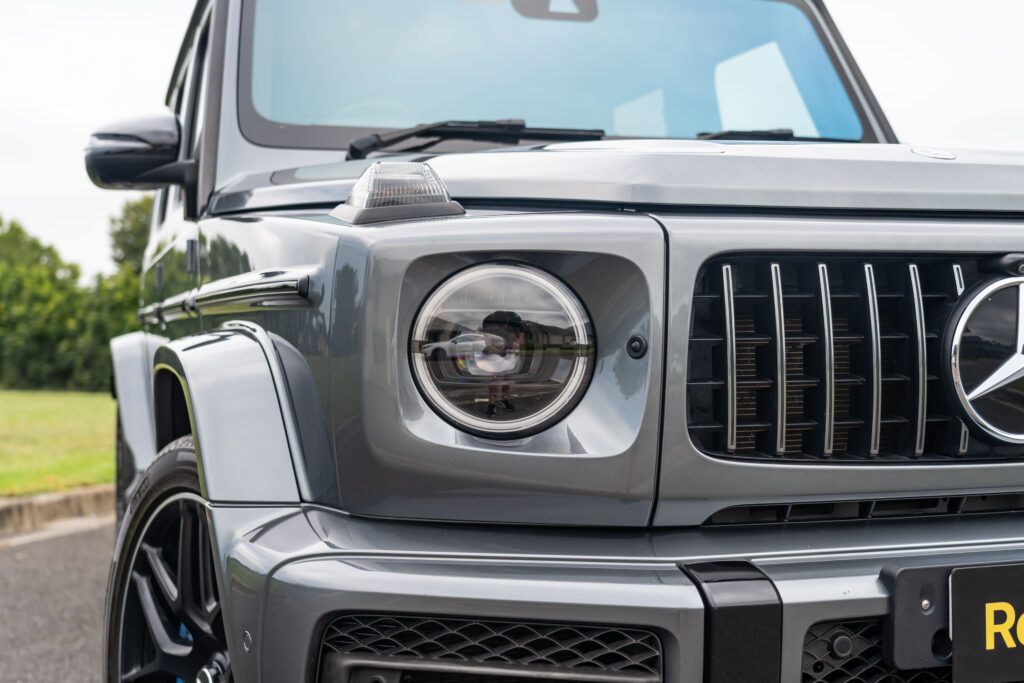
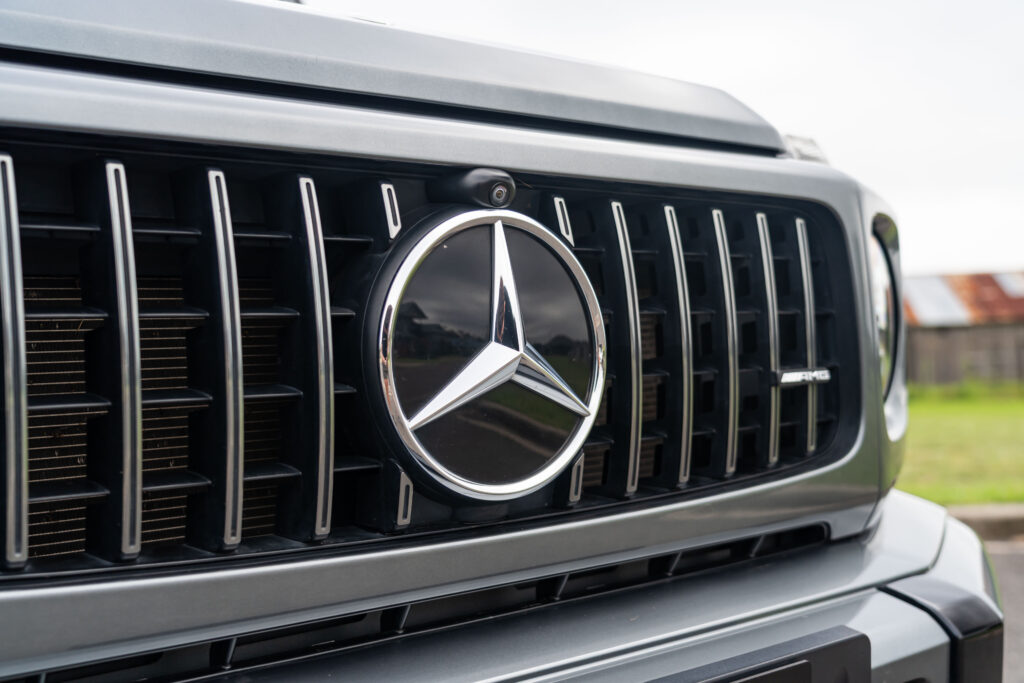
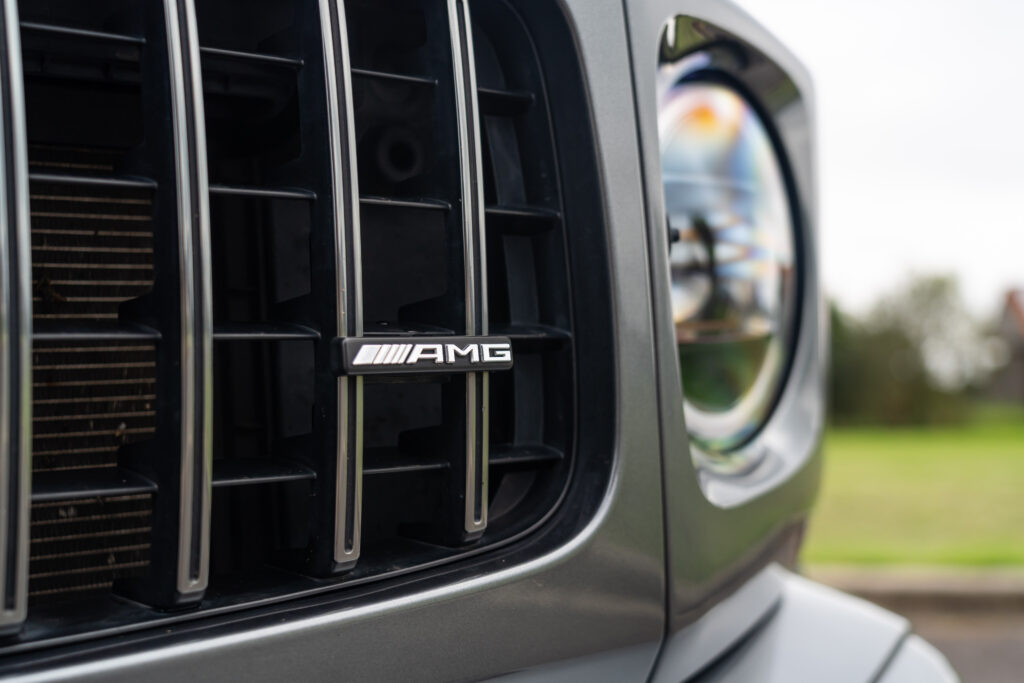
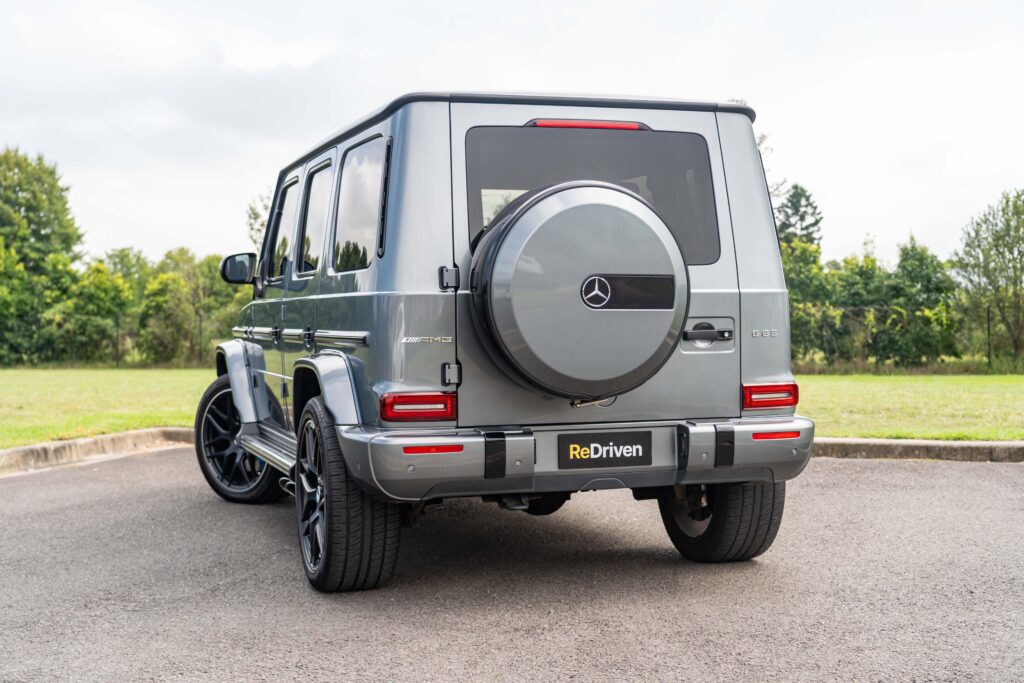
Retaining much of its boxy shape from earlier W463 iterations (including the headlamp washers, push-button door handles, and spare wheel cover), key differences seen on the W463 second-gen were the inclusion of an updated steering system and frame, more updated cabin tech/safety features onboard, as well as updated exterior styling (front grille, rounder headlights etc.)
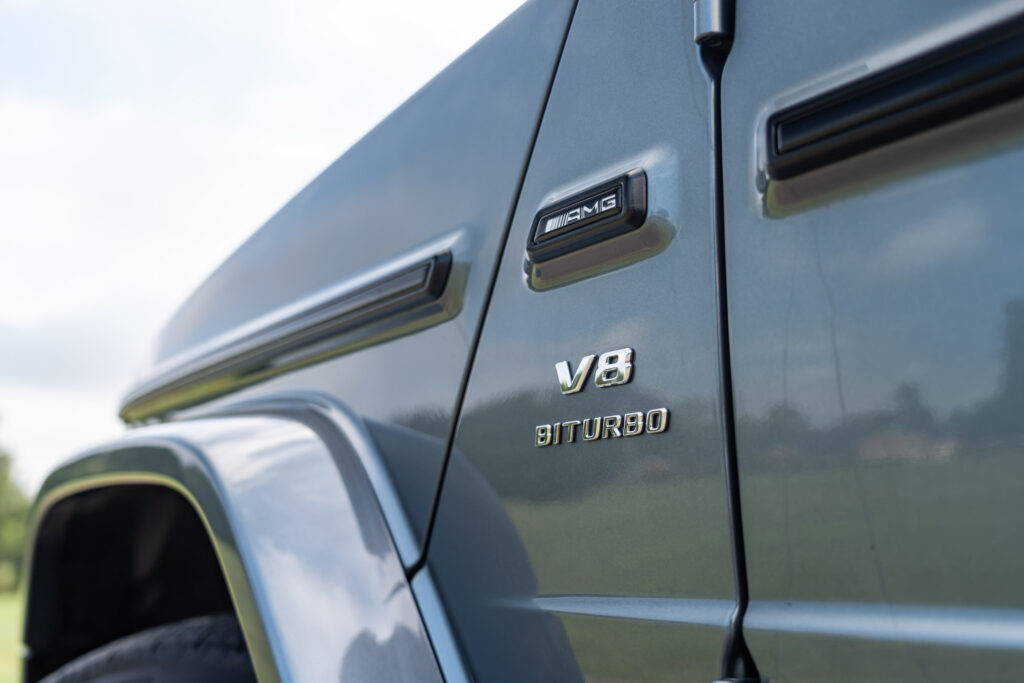
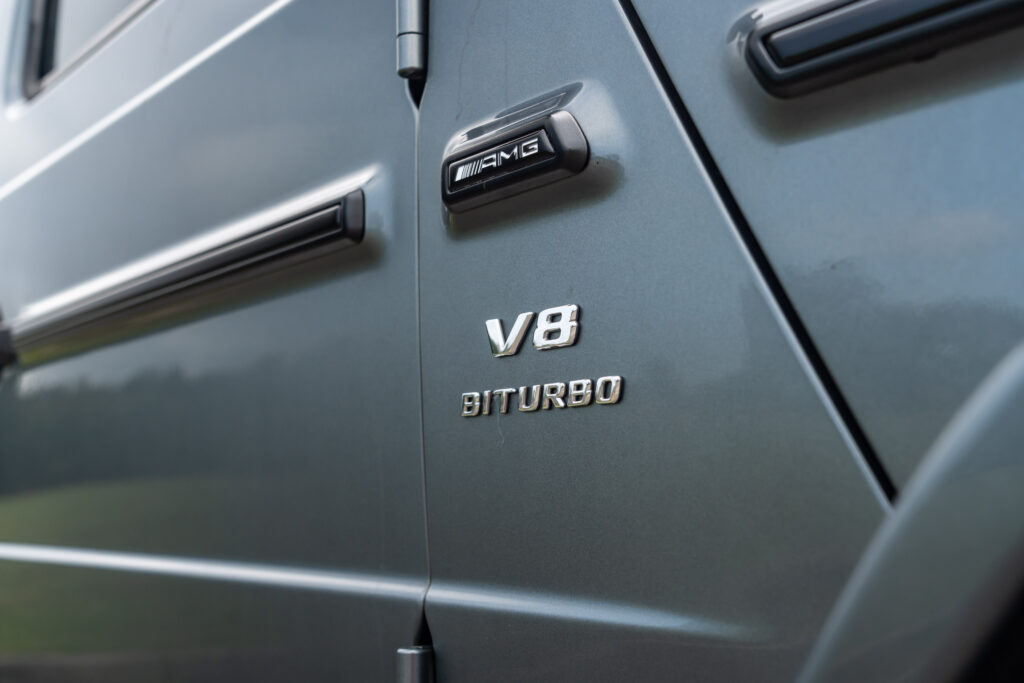
For the Australian market, this iteration of the G-Class was available with two engines: a six-cylinder turbodiesel and a gasoline twin-turbocharged V8. Both powertrains are paired with an automatic transmission and all four wheels via three lockable differentials.
Just like preceding models, the W463 G-Classes pride themselves on their reputation for being one of the most robust and luxurious vehicles ever made. But in the secondhand market of luxury SUVs, are they still proving to be built ‘stronger than time’?
Exterior:
You’d believe that all G-Classes are built like a tank, especially with how the doors shut close with vault-like ‘thunks’, but there are some issues to look out for within this iteration.
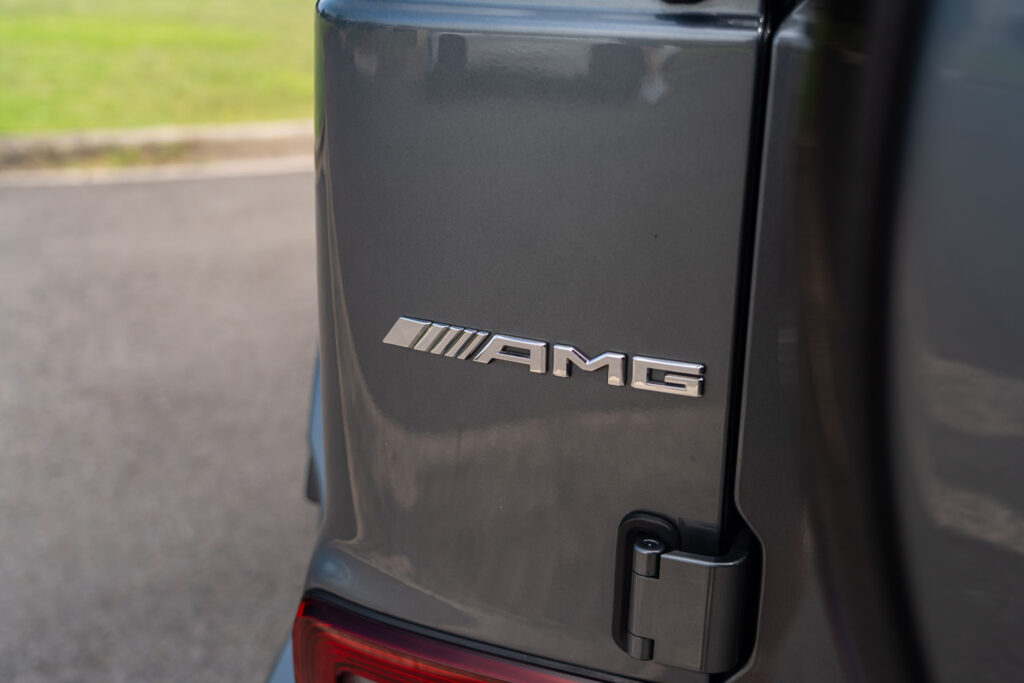
Some examples report rust forming along the body, with the areas around the windscreen seals, side door hinges, and rear tailgate handle being common sites. Reportedly, this is due to subpar paint applied from the factory.
The rear hatch lid should open and close securely – if it doesn’t, chances are the hinges need a bit of lubrication, or the weight of the rear-mounted spare wheel has caused them to be out of alignment.
Like other fairly boxy, angular SUVs, the G-Wagen’s windscreen is more susceptible to stone chips and cracks from debris.
If you do need a replacement windscreen, it’s highly recommended for insurance to cover it, as replacement glass can cost anywhere between $2,500-5,000 (thanks to various ADAS safety tech and other modules integrated within that might also need to be recalibrated upon installation).
The side-mounted exhausts are a great aesthetic feature, but if occupants aren’t careful, they can easily burn themselves getting in or out of the vehicle.
Interior:
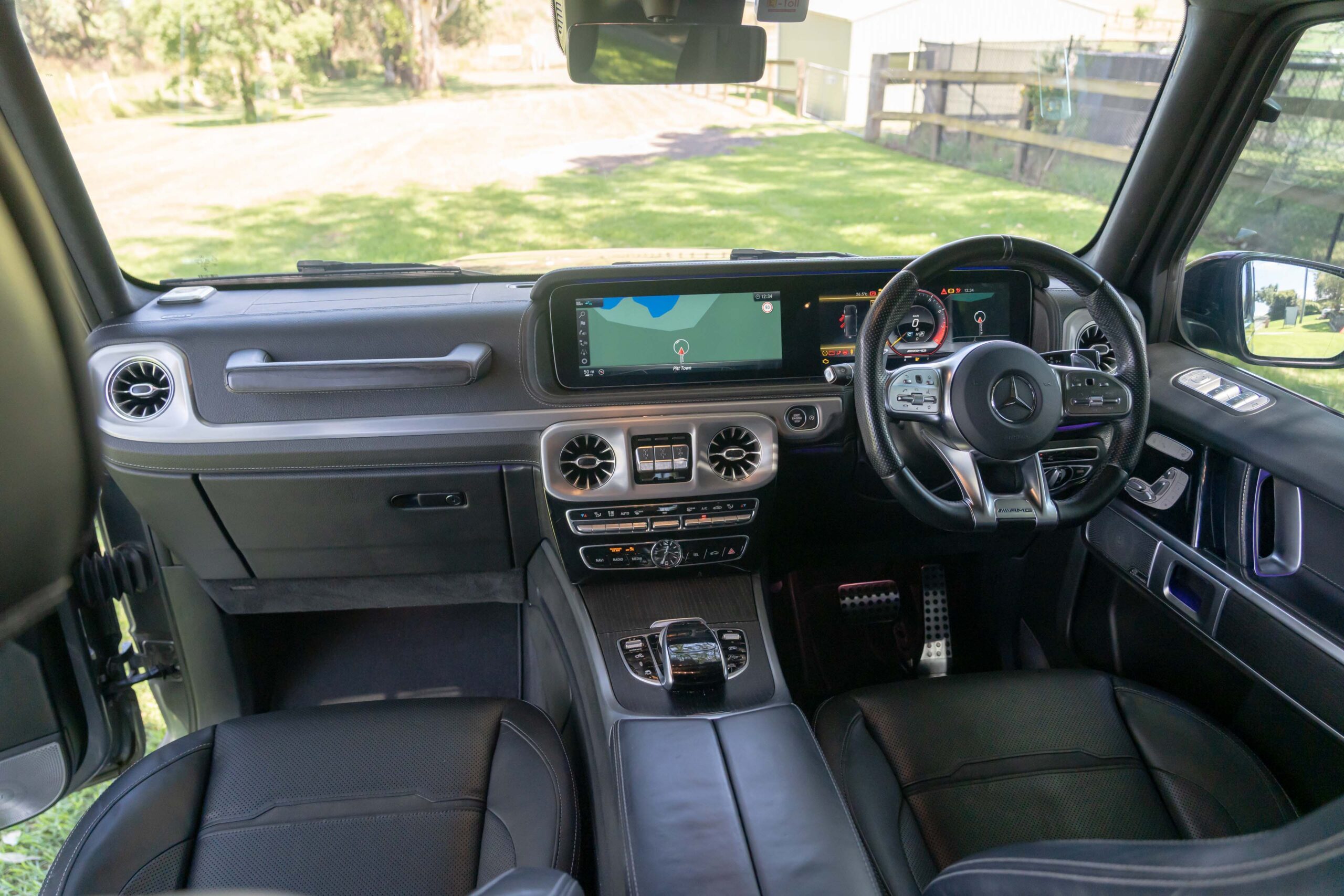
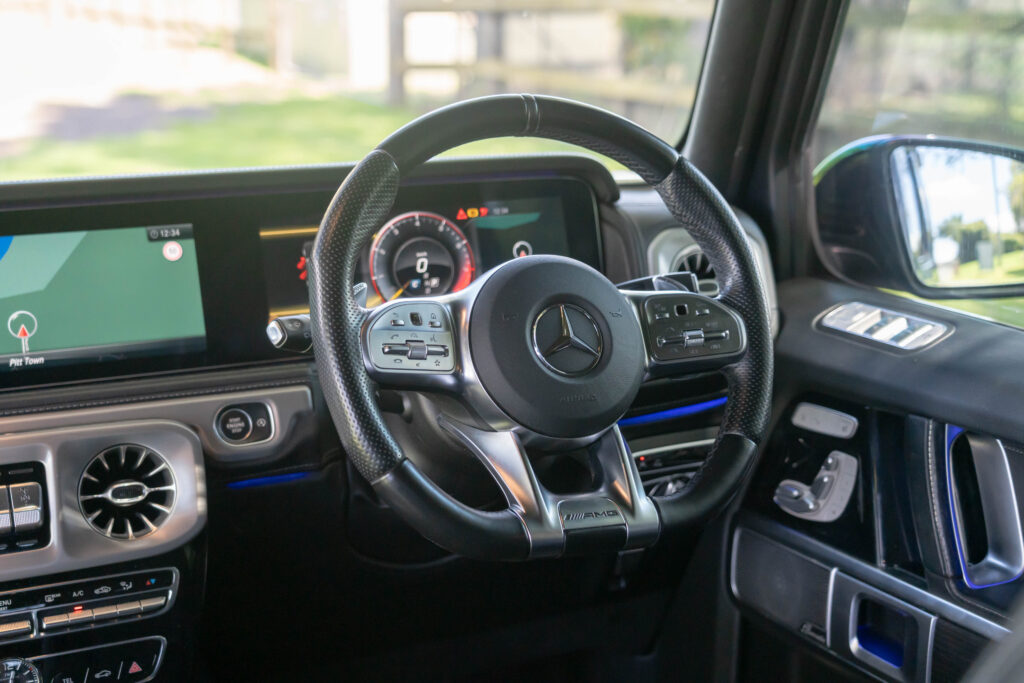
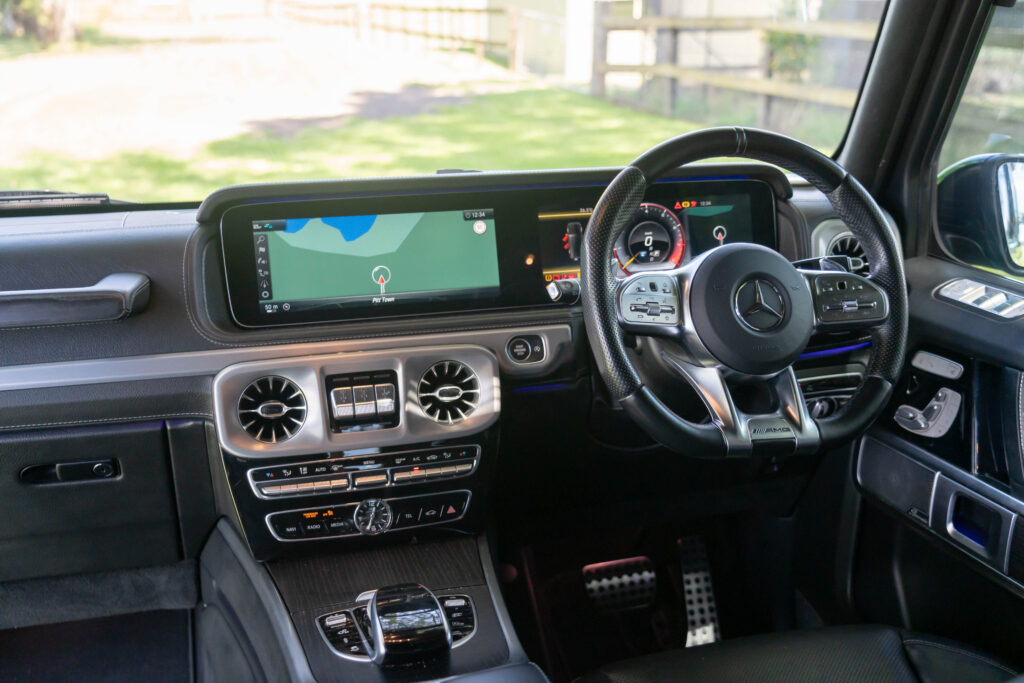
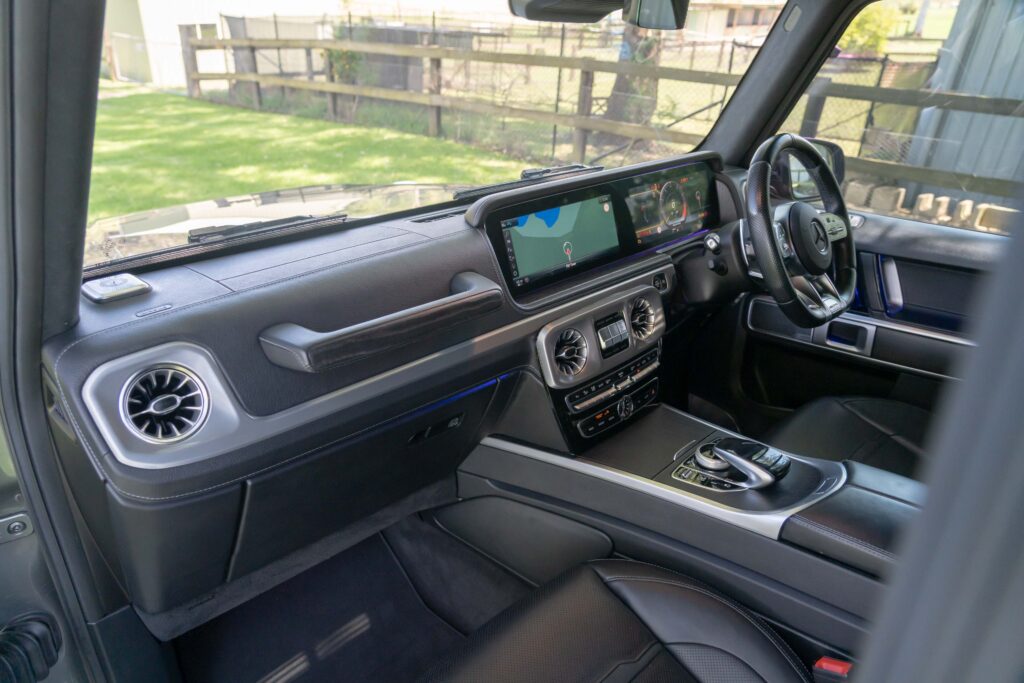
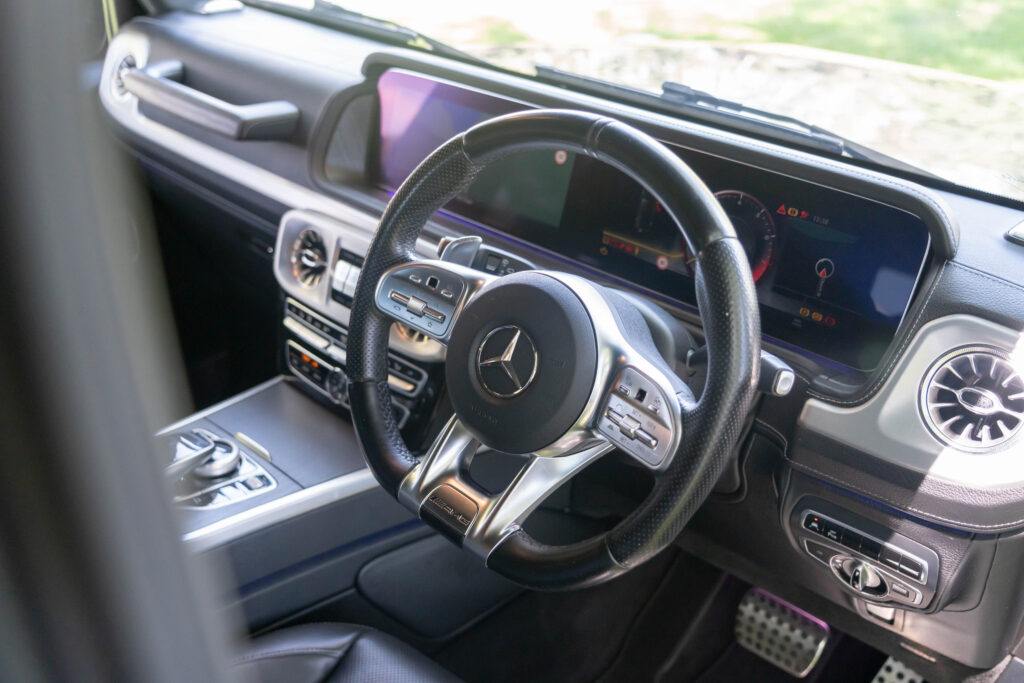
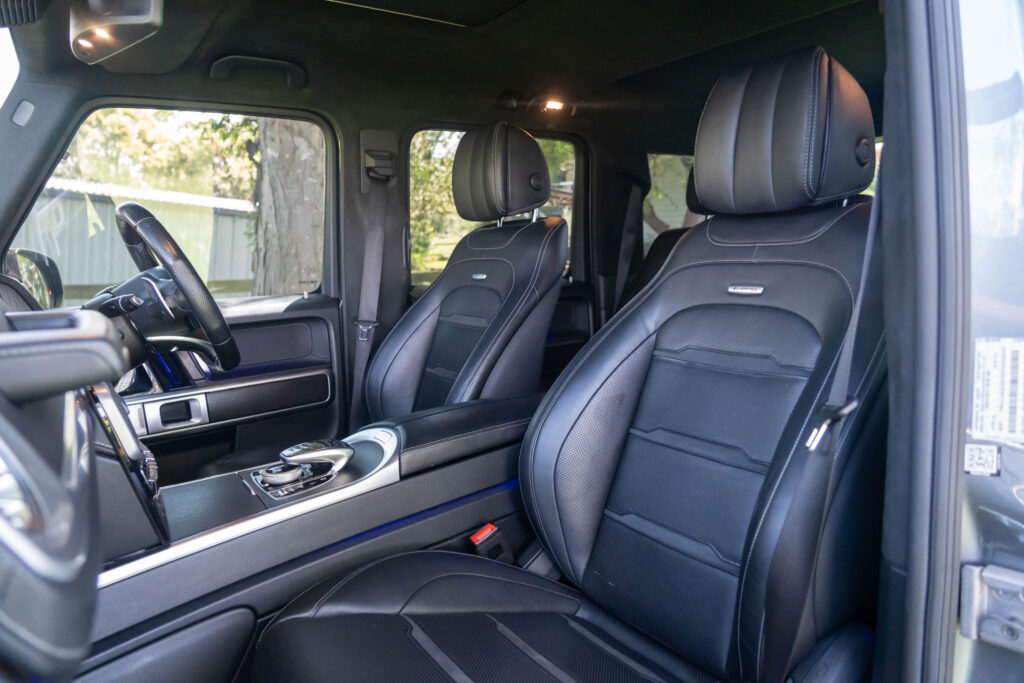
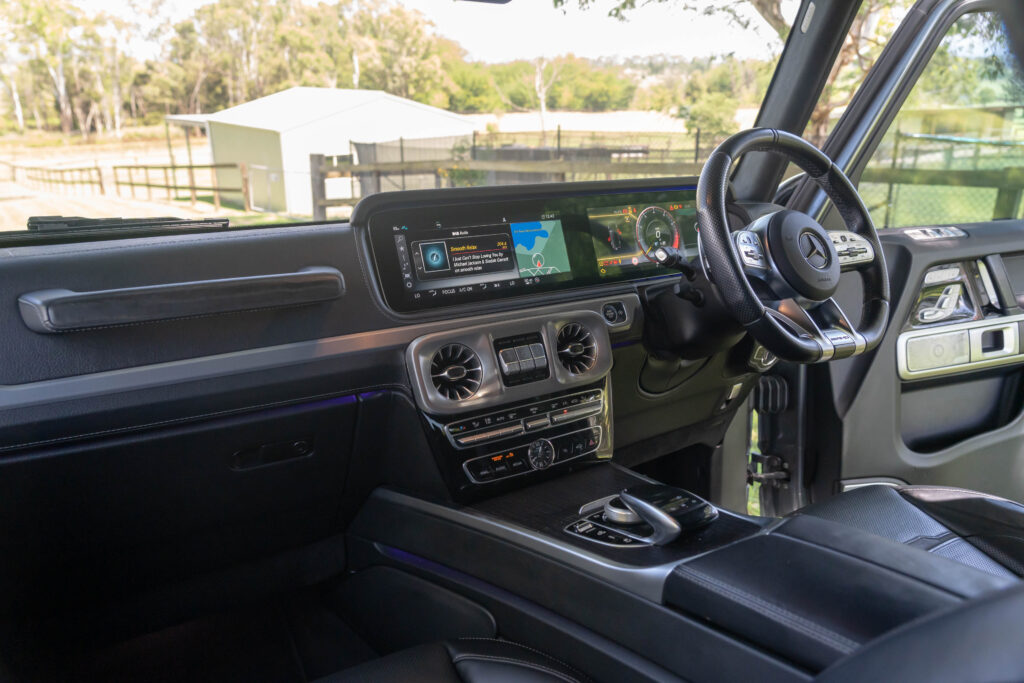
The inside is the same excellent balance of premium luxury with a go-anywhere, rugged feel spirit that is also felt on the outside.
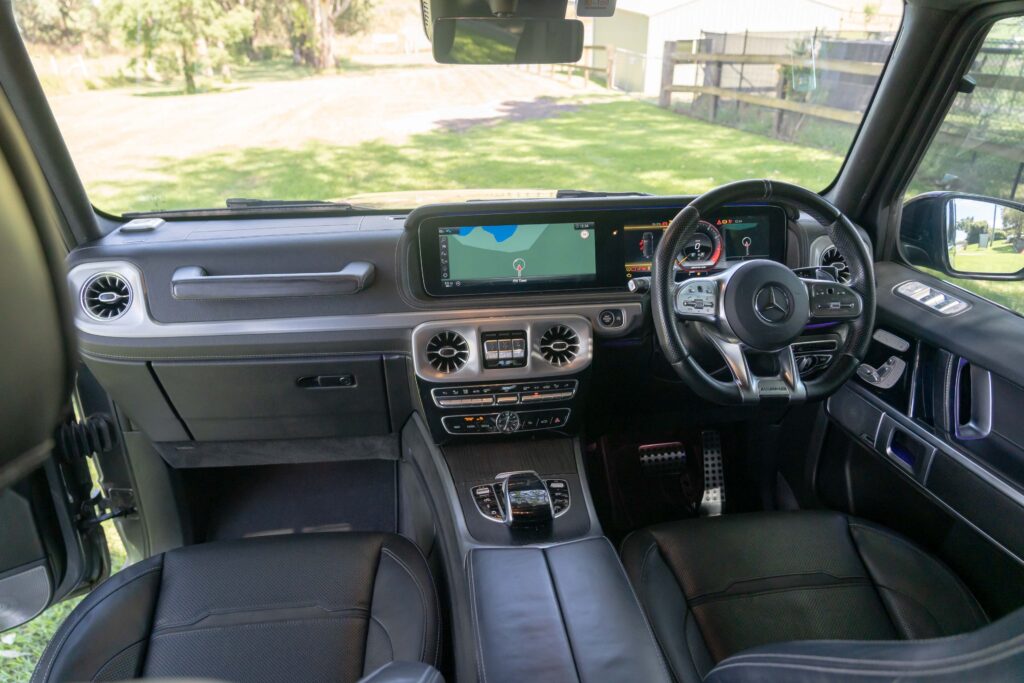
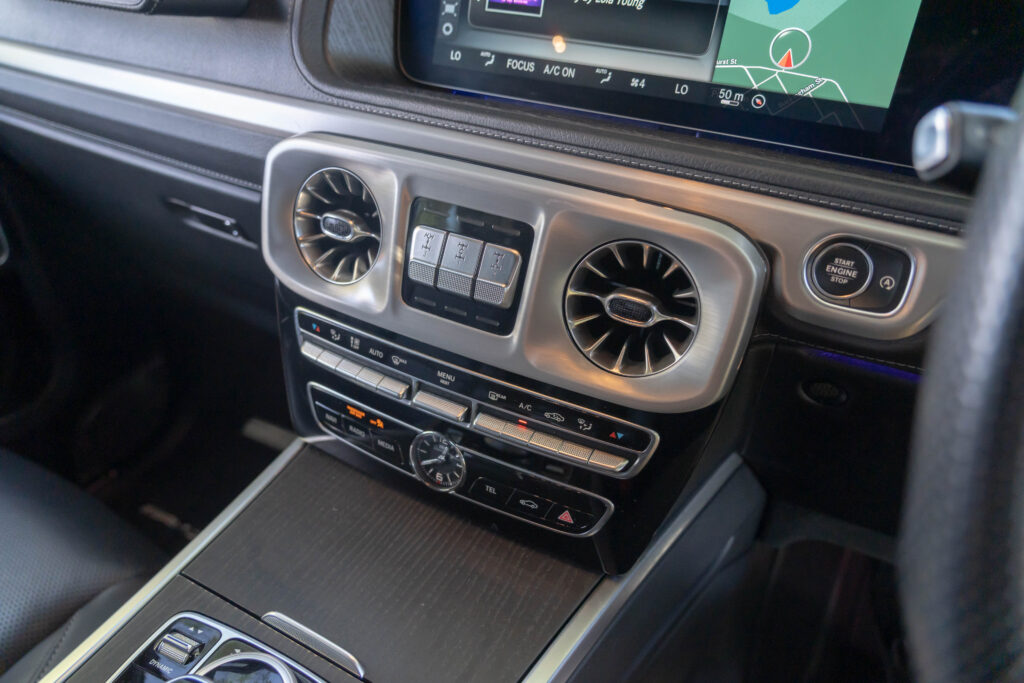
You’ll find plenty of high-grade materials throughout the cabin, with everything well screwed and assembled together with decent fit/finish levels you expect with a luxury SUV at this price point.
But its worth considering whether these will prove to be resilient in the long run. Some complain that the nappa leather upholstery can become susceptible to wear, from surface wrinkling on seat bolsters and sections becoming loose, and the material itself can discolor/crack if not well cared for.
Those featuring metallic or wood trim are proving to be resilient, but on the other hand, models that feature gloss finishes/areas can easily attract scratches.
All the cabin switchgear and buttons feel very solid and reassuring to use, though some owners report that the touch-sensitive areas, such as the steering wheel pads, can sometimes be unresponsive.
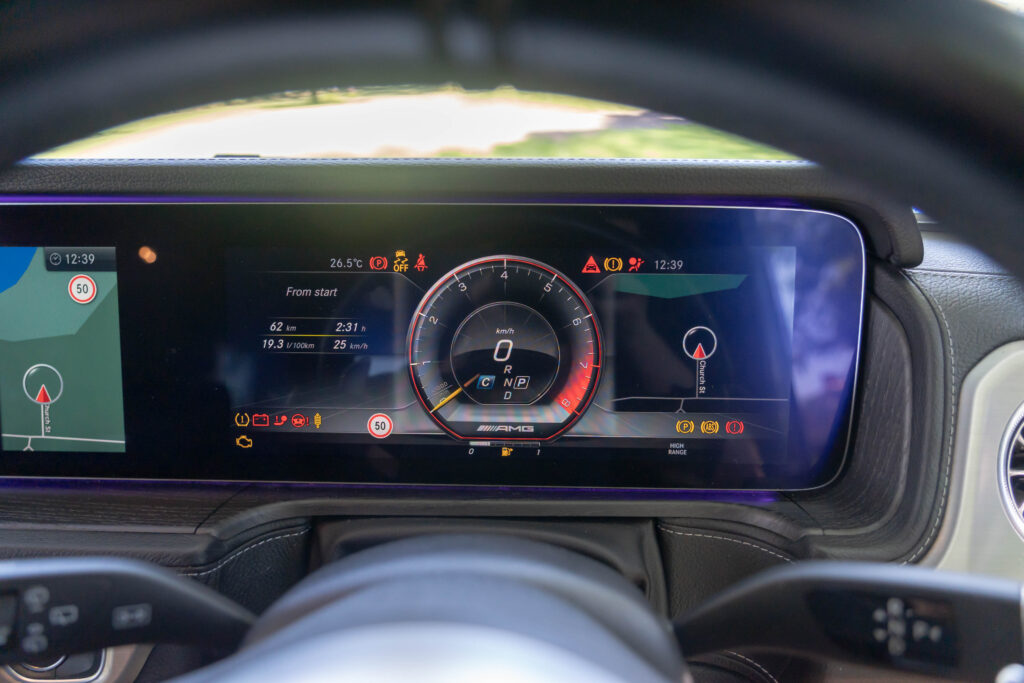
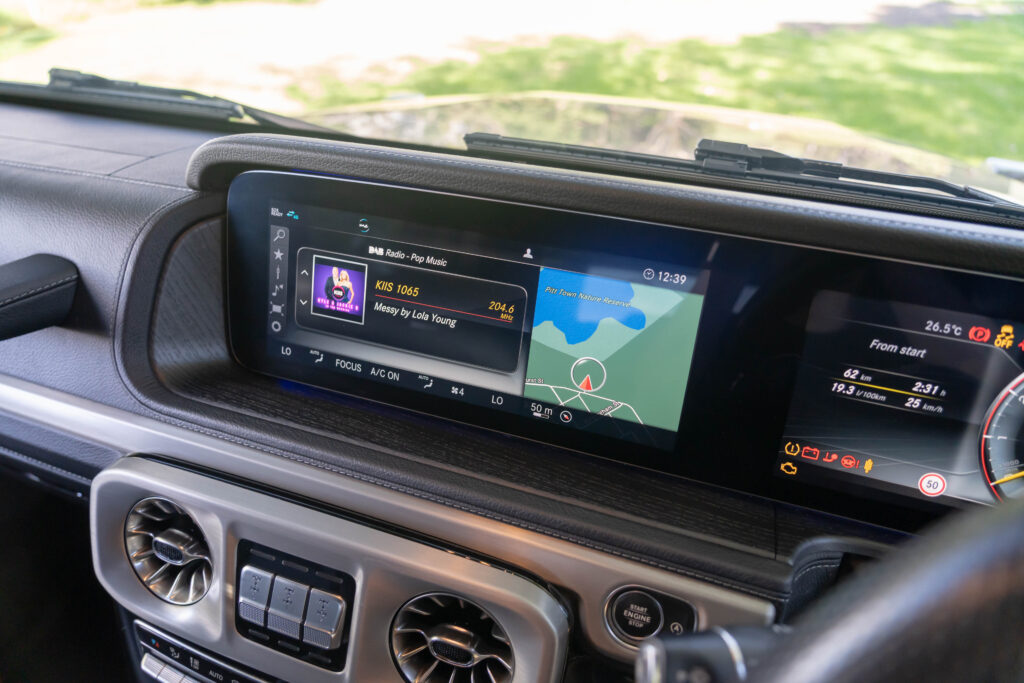
This iteration of the G-Class features the up-to-date ‘MBUX’ infotainment system that is very intuitive to use and is arranged nicely, joining the centre screen with the digital instrument cluster as one.
But as with modern systems, some owners have reported intermittent Bluetooth/Apple CarPlay/Android Auto connectivity issues, or the screens/UI freezing, rebooting, being slow to operate, or just failing altogether.
In addition, models featuring the 360-degree around-view camera function can sometimes experience stuttering or show a ‘System Unavailable’ error message; this reportedly happens more frequently in cold weather.
Generally, software updates should resolve these tech gremlins, but some owners have reported that these same issues come up again shortly after the updates were installed.
At the same time, any software or electronic equipment glitches could be due to a drain or a weak charge from the main 12V battery.
Many owners recommend using a trickle charger to avoid any of these battery drain issues, especially if the internal modules happen to not deactivate properly when the vehicle is switched off for extended periods.
Mechanically:
Mercedes-Benz implemented independent front suspension with this iteration of the G-Wagen to make it more user-friendly and stable when driving on normal road conditions.
While this does make maneuvering this tall SUV less nerve-racking compared to previous iterations, owners report this can still wander about at highway speeds, along with torque steer under hard acceleration.
Also, some experience that the steering racks can grind while travelling at low speeds (producing undercarriage noises is a telltale sign), which might necessitate a full outright replacement, and that can be costly if the warranty has lapsed.
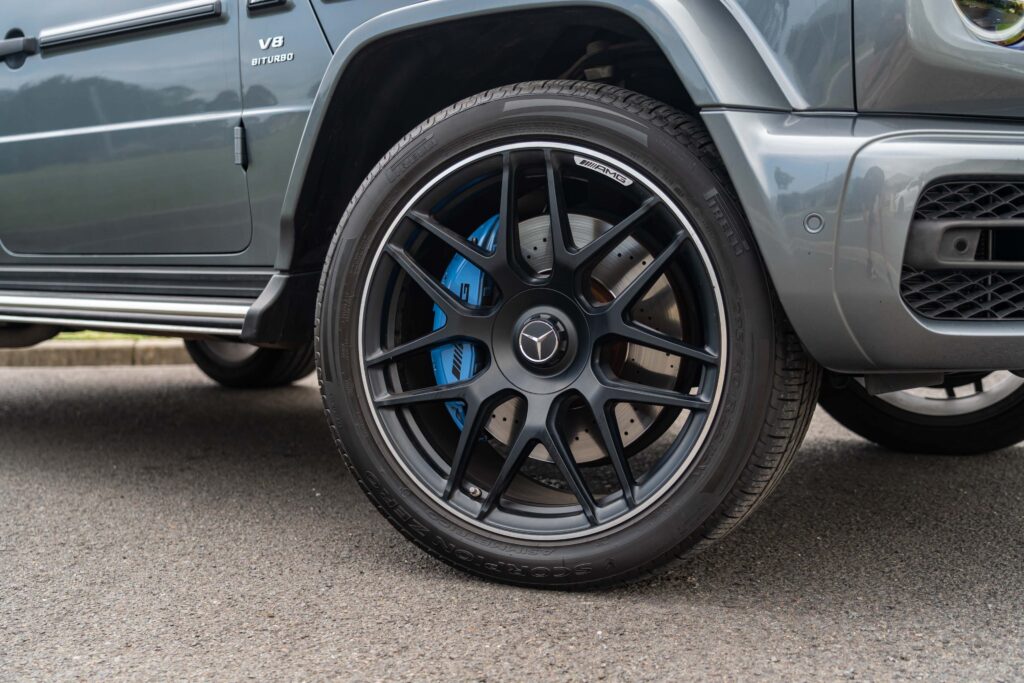
Given that these weigh up to 2.5 tonnes, this SUV can easily put a lot of wear on its brakes. Some owners report they had to replace pads and rotors every 20,000 kilometres, or for those who really drive these hard, every 10,000 kilometres.
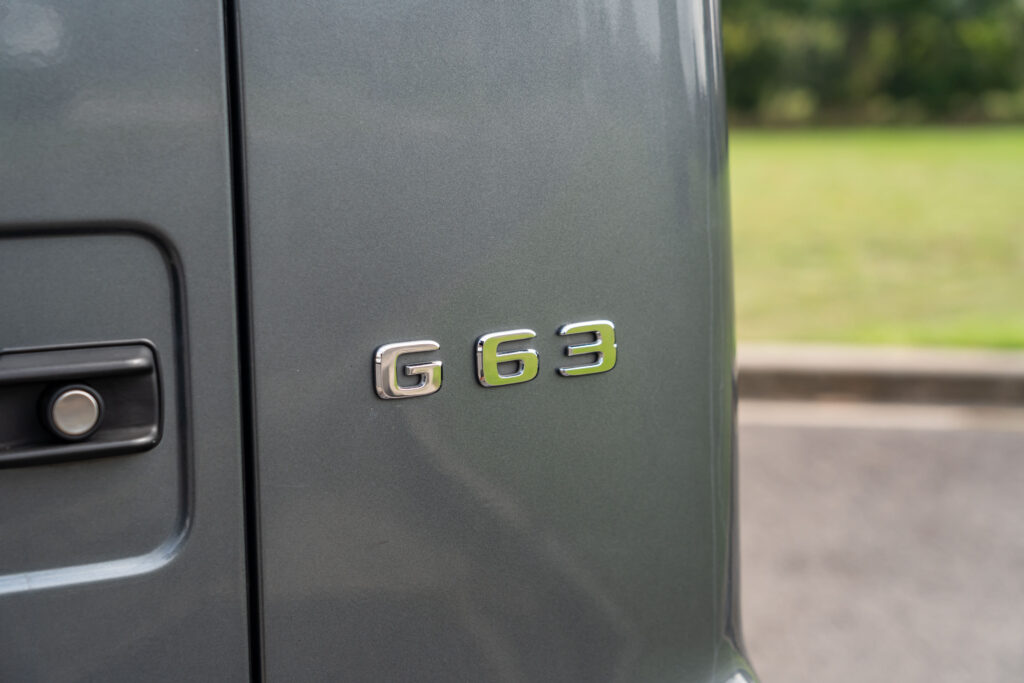
The performance-spec G63 AMG models in particular require a lot of stopping power to match their speed, and replacement brake pads/rotors can set you back as much as $5-7,000!
Consumable parts, like suspension and brake components, can also be quite expensive, and depending on your driving style, you might rack up a fairly expensive bill for new parts. Technicians we spoke to state that even though this iteration is still fairly new, they’ve seen suspension pumps, bushings, and control arms wear or fail prematurely.
Though if you do want to save a bit of money when it comes to sourcing parts when they eventually need replacing, many owners recommend looking into aftermarket equivalents that can outperform and outlast OEM Mercedes parts – without the price markup.
Like its predecessors, this iteration of the G-Class features multiple advanced all-wheel drive tech to go with its three lockable differentials. It’s very unlikely you’ll need any of these, but do check that they all function without issue; whether these will be permanent ‘pavement princesses’ or go slightly off a beaten path.
Engines:
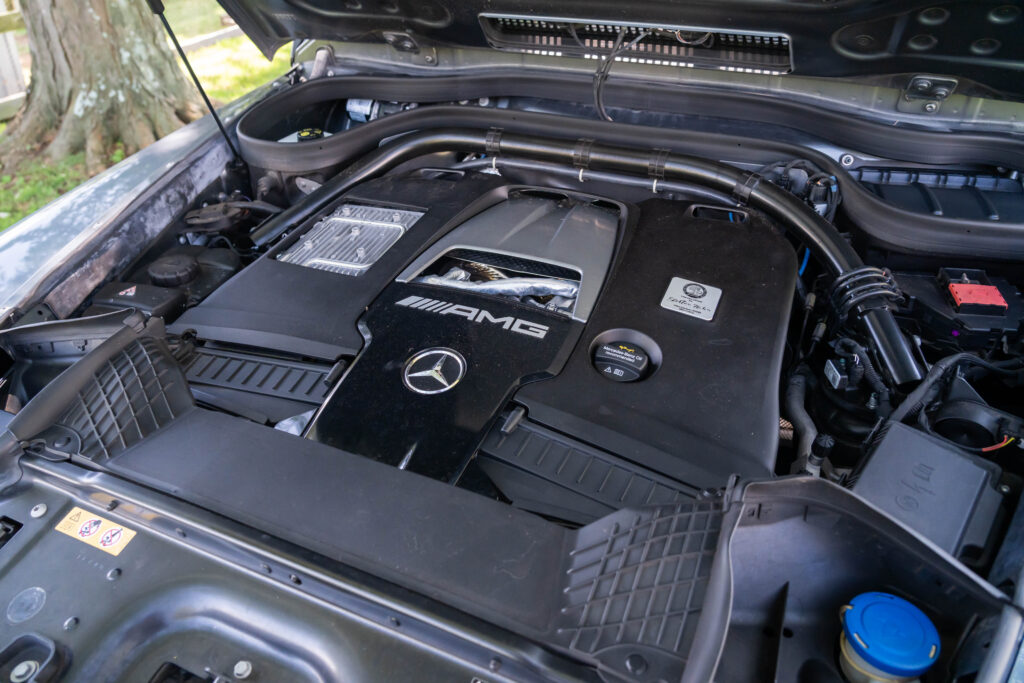
4.0L Twin-Turbocharged V8 (M176/177)
This is featured prominently within the G63 AMGs, and it’s a familiar powertrain utilised among a host of other Mercedes-AMG models. Generally, it has quite robust internals – if looked after and not seriously modified.
The engine’s ‘hot-vee’ configuration does mean it is susceptible to a few problems. Cooling system complications are a well-known weakness of the twin-turbo V8, especially with how complex its setup is, with any number of coolant hoses/pipes/fittings located deep within the ‘V’ regions.
The thermostat is an electronic unit and can be faulty – namely, getting stuck open and not closing properly, and therefore less likely to cause overheating problems.
Charge coolers are prone to leaks, as their location within the engine bay makes them vulnerable to damage. Therefore, keep an eye out for any internal leaks of coolant or fluid.
The same goes for the intercooler heat exchangers – protip is if you’re experiencing coolant loss, but there are no external leaks, look internally to see if it’s coming from within.
Air/oil separator problems (aka the PCV system) can experience vacuum leaks, leading to lean air/fuel ratio issues, as well as excessive crankcase pressure that leads to oil leaks. Oil leaks are also frequently reported from around the rear main seals and valve covers.
Misfiring can occur, rooted in the spark plugs, ignition coils, or, in some cases, the fuel injectors. Diagnosing where it’s happening can be hard to pinpoint, so ensure the workshop or dealer knows the vehicle well to avoid wasting time and money.
It’s worth highlighting too that the valve cover gaskets are particularly difficult to access, hence labor to replace or fix these can be quite expensive. Note that if the coils have failed due to oil getting onto the spark plug tube, the covers have to be removed to access them.
In some cases, technicians recommend dropping the engine out entirely to address any number of the preventive maintenance/issues mentioned above in one go.
Engine oil changes should be done regularly and ideally, if you want these to last, ahead of schedule (every 5,000 kms). This will especially help alleviate the well-known turbocharger oil supply issues caused by clogged oil feed lines.
The V8 offers plenty of support for modifications and tuning for those who want these engines to push out even more power (though it is somewhat ridiculous to even consider for a vehicle of the G-Class’s size).
If you are exploring modifications for the V8, as we’ve emphasised with previous European performance models, ensure all mods and tuning are done correctly, and within the powertrain’s limits, that doesn’t risk affecting its longevity.
As a reminder, don’t forget quotes for a full replacement crate V8 from Mercedes-AMG, supplied and installed, can start from at least $100,000!
Diesel:
2.9L Turbocharged Inline Six-Cylinder (OM656)
These are very robust units and well set up for a heavy vehicle like the G-Class, but they are known for several issues alongside the usual range of modern-era diesel powertrain faults (EGR, DPF faults etc.), as well as AdBlue/Nox sensor complications.
These have a very complex camshaft and valve train setup, and those made between 2018-2020 are known to be particularly troublesome (due to weak rocker arm bearings that can lead to internal engine damage). Thankfully, post 2021 models are reported to use more robust units.
The tandem vacuum and oil pump can also experience issues, and it can be an expensive fix. Also fun fact, it will require the engine to be removed just to access these parts.
Occasionally, water pump failure can happen, and if it does, it will be quite a laborious job as accessing this part is difficult in the diesel six-cylinder engines.
One thing to emphasise with the diesel powertrain is that they do not do well with poor-quality fuel. In fact, official instructions from Bosch regarding their fuel systems explicitly warn that these powertrains do not tolerate dirty or subpar fuel. It’s also worthwhile to change the fuel filter at least every 20,000 kilometres.
We’d also mention that the manufacturer-quoted service intervals are far too long – servicing every 10,000 kilometres is highly recommended.
Both the petrol and diesel-powered G-Wagens are also known for a few driveline complications, the most frequent being problems with the differential locks and transfer cases.
The Mercedes-Benz technicians we spoke to highlighted that the brand currently doesn’t have a permanent solution for these particular issues, so be aware that fixes for these components may have to be on a case-by-case basis.
This iteration of the G-Class commanded a very high premium when new, and it still very much applies among examples currently in the secondhand market.
Depending on specifications and what type of options they came with, they were priced between $260,000, all the way up to $450,000 new in showrooms. Nowadays, depending on factory specifications and options selected, they can typically go for $200,000 to up to $400,000.
Compared to other luxury SUVs in this segment, the G-Class is proving to be one of the better ones when it comes to retaining most of its original value – especially when compared to the likes of the Porsche Cayenne, BMW X5 M, Audi RS Q8, or any Range Rover product.
That being said, it still depreciates more on average compared to Japanese luxury SUVs, such as 300-Series Toyota Land Cruisers, Y62-gen Nissan Patrols, or Lexus GXs; the latter of which still proves to be less of a financial liability, yet offers the same elevated levels of premium feel and build quality.
Plus, more G-Class models are beginning to follow current luxury segment depreciation trends, which may be concerning for owners who paid a hefty premium for these new.
The W463 second-gen G-Class continues to bridge elevated luxury with one of the most solidly constructed platforms in the same manner as its predecessors. But, it’s hard to ignore that many examples on the used market can be a potential liability, given that most were owned under lease agreements.
The result is that some may have major gaps between scheduled maintenance, or past owners skipped them altogether (given they didn’t intend to own these long-term), something which technicians we consulted mentioned frequently.
Therefore, a used G-Class could be a massive liability, but examples do exist that have been treated with care, have a meticulous service history, and have experienced no major mechanical faults since new – and it’s these that we would target if you ever decide to enter ownership of one of these luxury SUVs.
We understand the appeal models like the G-Class carry and their cult following, as much as they are heavily associated with suburbanites that hardly use these in harsh environments, they were engineered to handle.
Just remember, playing your cards wrong and ending up with a poor example can cause significant financial ruin in the long run.
MORE: Explore our SUV reviews
MORE: Explore our Mercedes-Benz reviews


Co-creator, presenter & writer, ReDriven

Yes. But only the right example.

 6 hours ago
 2 weeks ago
 3 weeks ago