Australia’s No. 1 Used Car Review Website
Australia’s No. 1 Used Car Review Website
+16 Photos
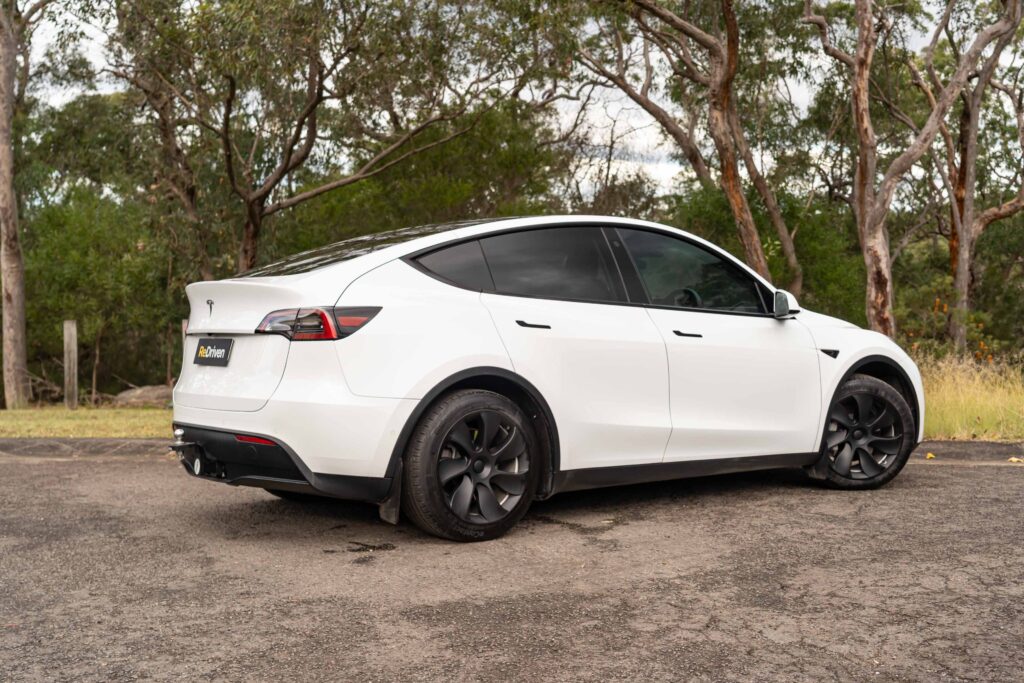

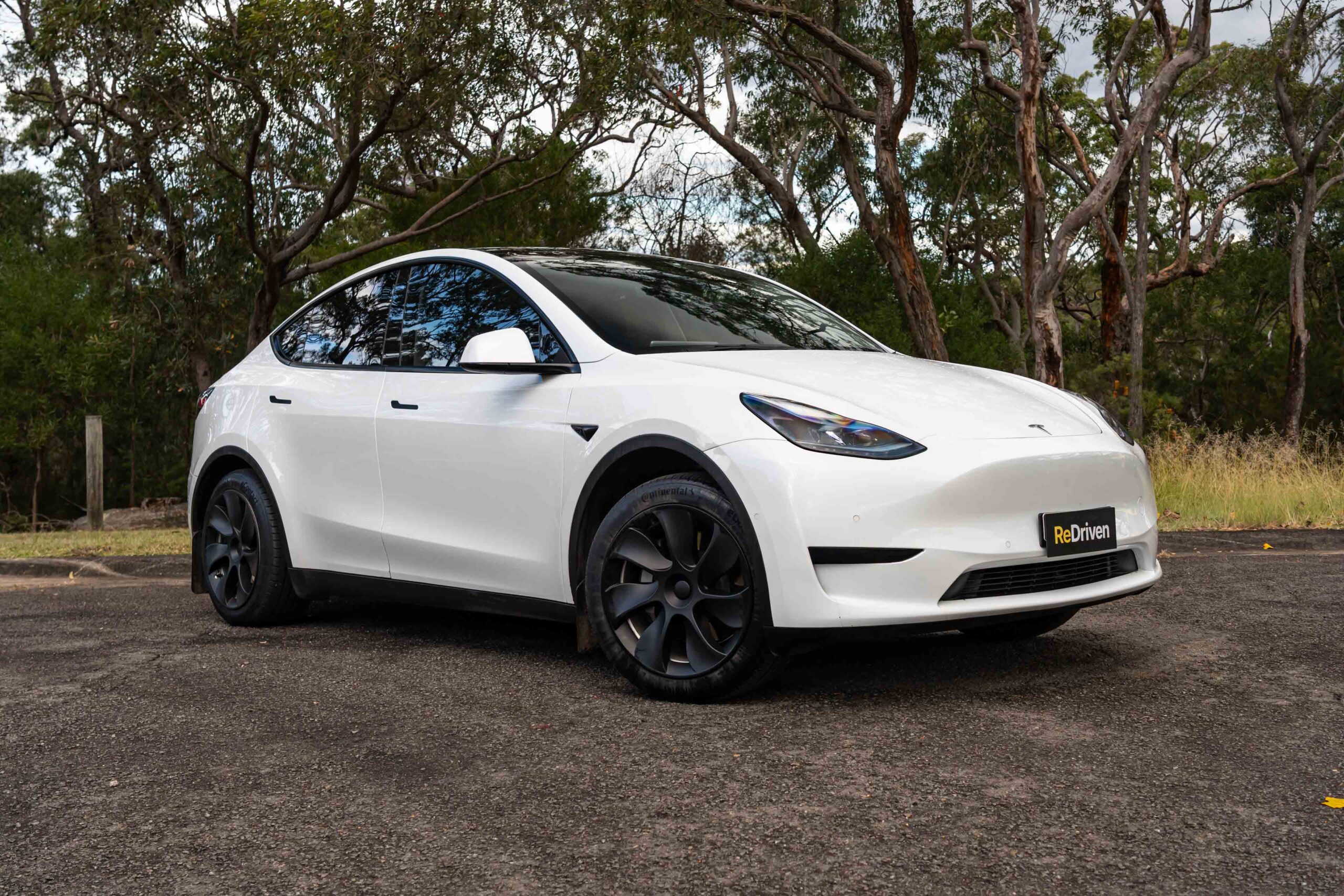
2024 Tesla Model Y RWD

03 July 2026
Yes. But only the right example.

2024 Tesla Model Y RWD

Used car review
03 July 2026
The Tesla Model Y first launched in 2020, serving as the electric car brand’s fifth model to enter production, following the introduction of the Model 3 sedan (which it shares a platform with, and reportedly, at least 75% of the same components).
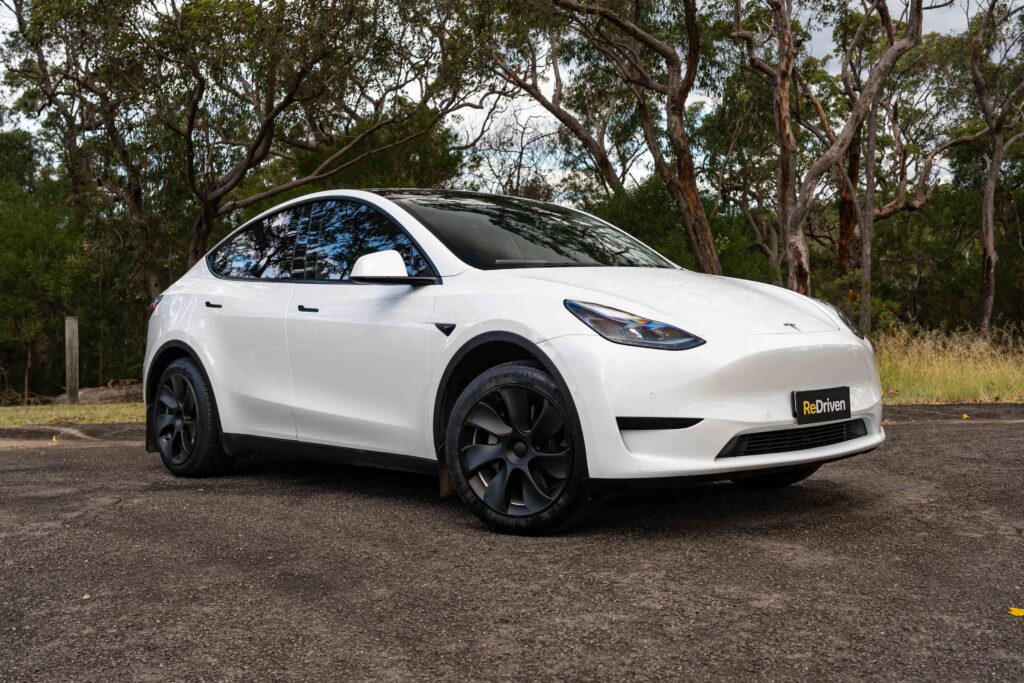
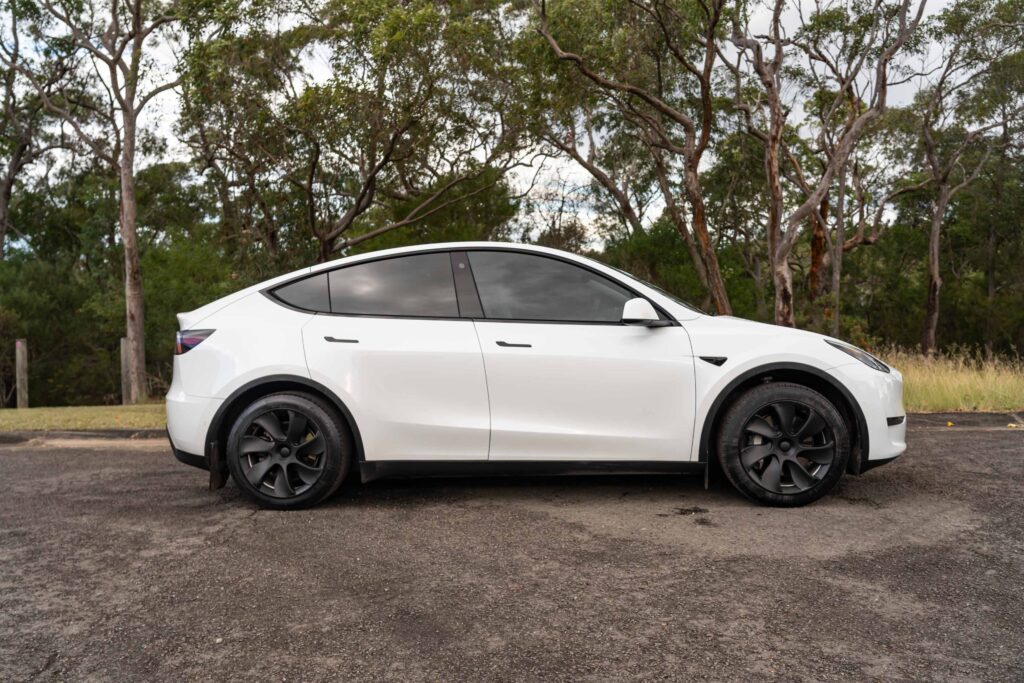
Positioned below the larger Model X, the Model Y adopts a similar crossover SUV body, but notably omits rear doors similar to the Model X’s ‘Falcon’ [gullwing] setup for traditional front/rear doors all around.
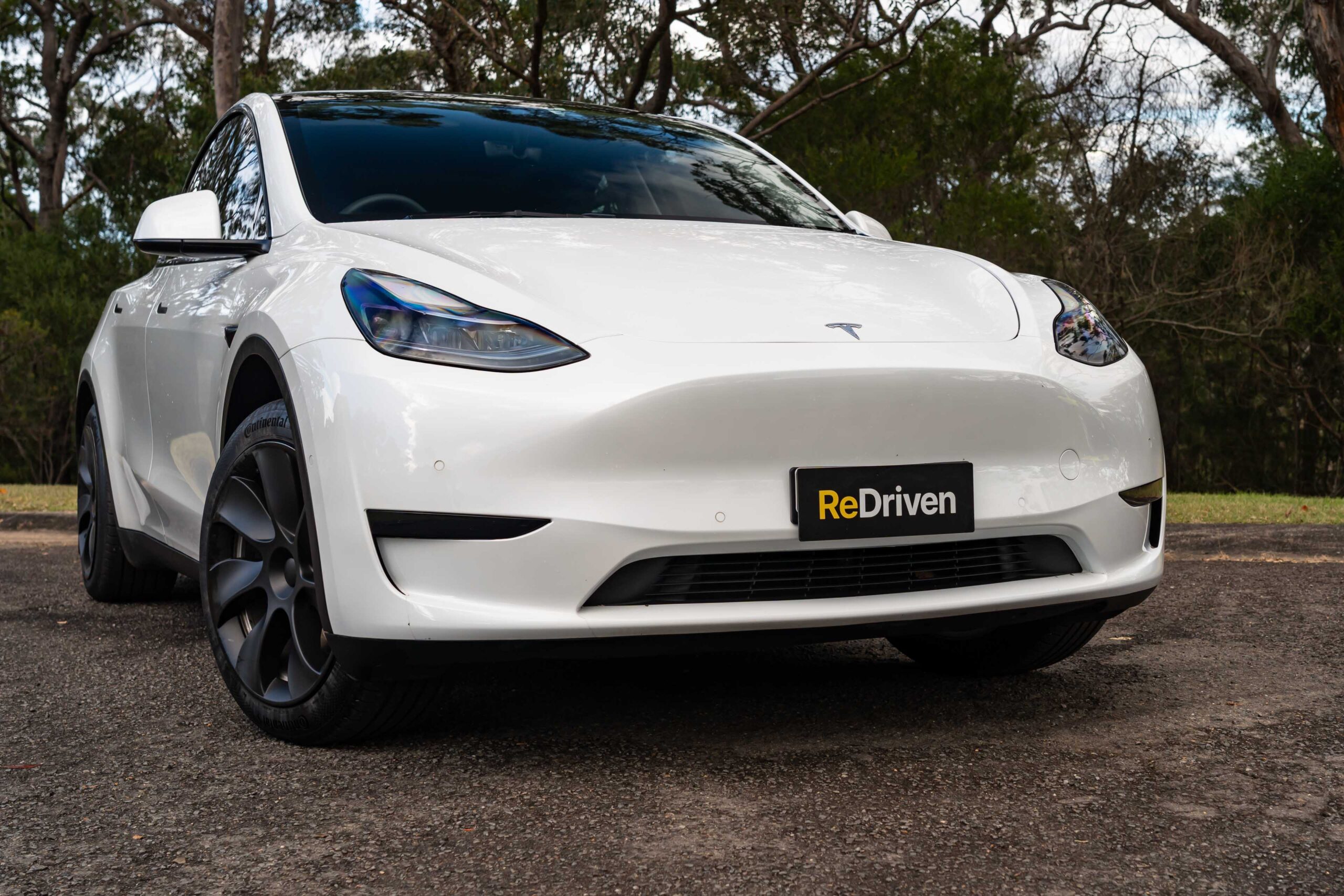
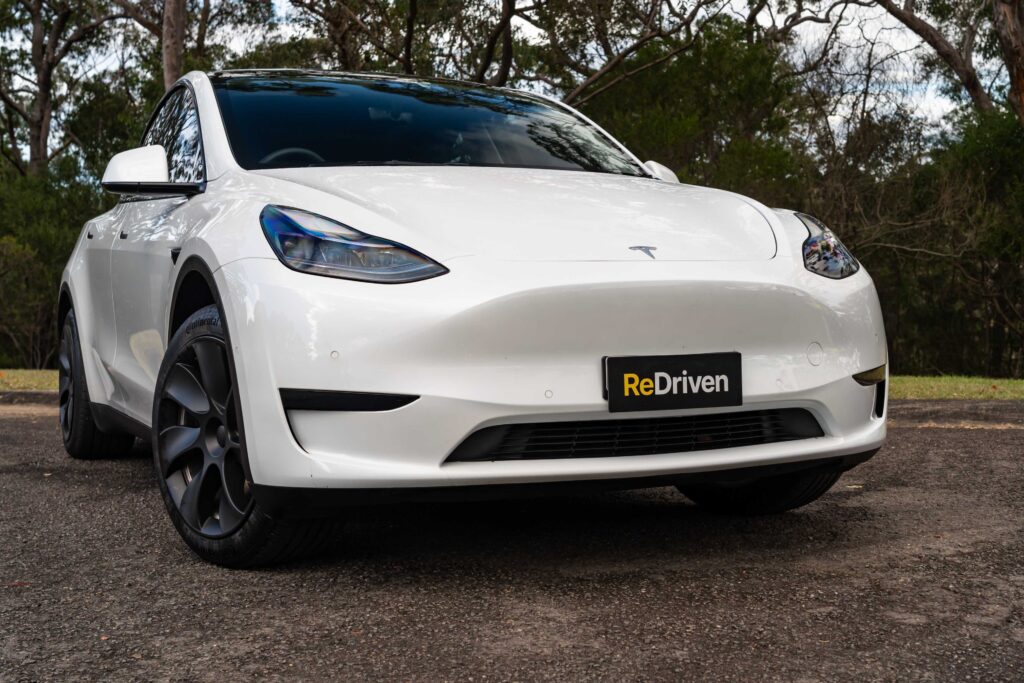
Early 2025 brought a comprehensive refresh to the Model Y, also known as the ‘Juniper’ update, with new bumper and exterior lighting designs, new cabin features, and up to 50% new parts. A long-wheelbase, three-row variant (Model Y L) was also added.
Just like other Tesla products, powertrain choices were never consistent from year to year (as is the nature of modern EVs). Model Ys for Australia, like other countries, can feature battery packs in different sizes that bring different range estimates (standard/long range and performance), sending power to the rear or all four wheels.
Rivals of the Tesla Model Y are no short, consisting of the various crossover EVs available from BMW’s ‘i’ range, the Audi ‘E-Tron’/Mercedes-Benz ‘EQ’ series of SUVs, alongside options from Volvo/Polestar, Volkswagen, the Ford Mustang Mach-E, Toyota bZ, Lexus RZ, Hyundai Ioniq 5, Kia EV6, and of course, the many Chinese equivalents available now (or soon to be released).
Exterior:
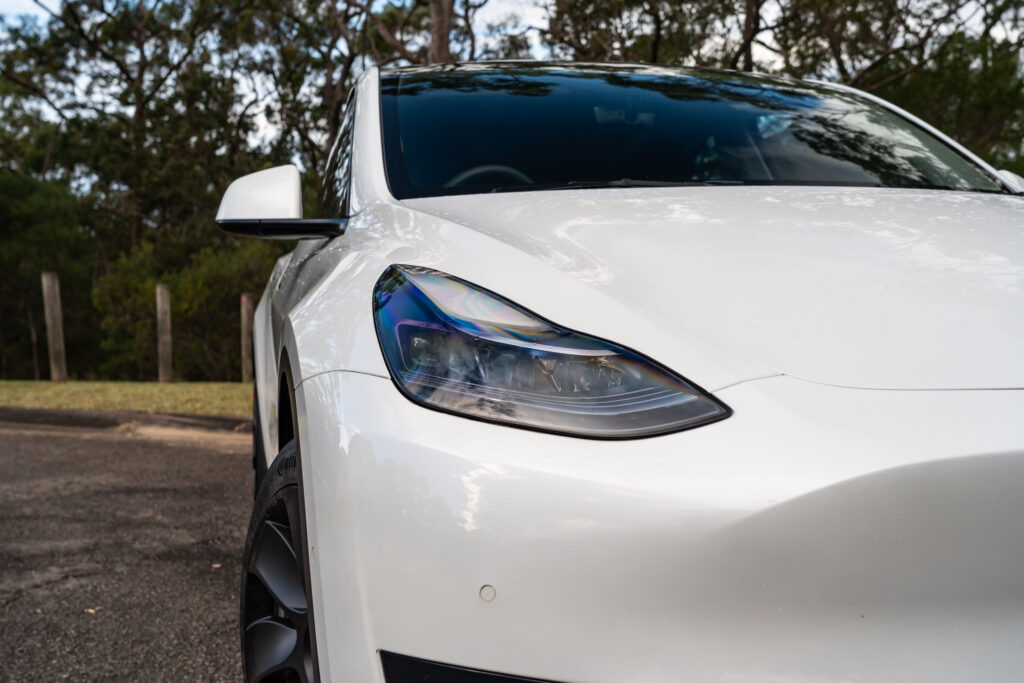
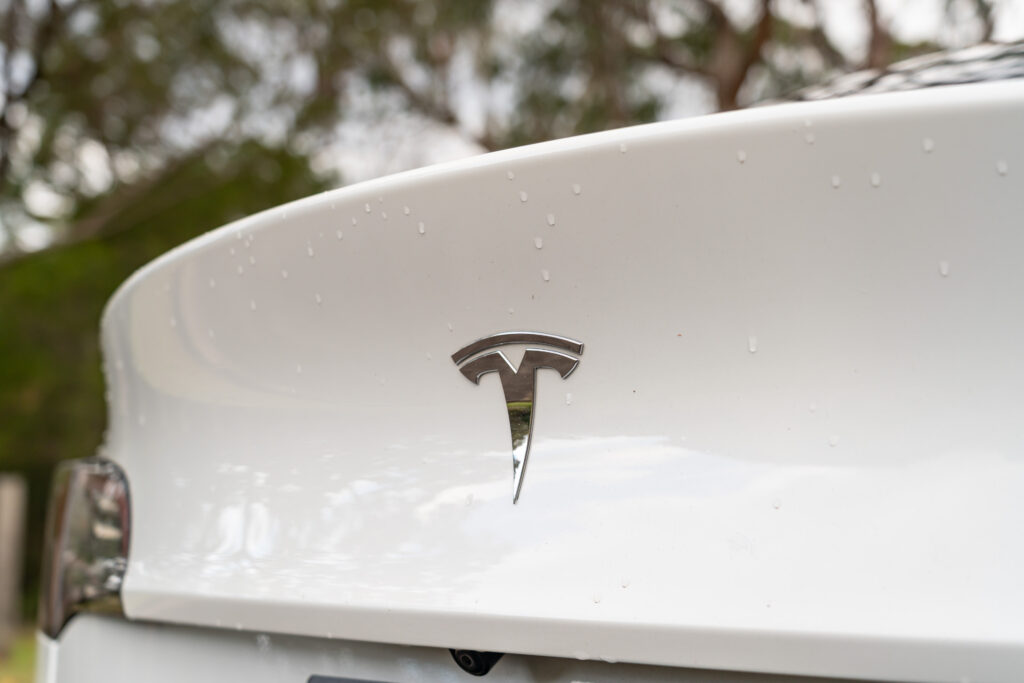
Like many new cars, we’ve heard many complaints of poor paint quality, with owners reporting its very thin and can easily be scratched/chipped. It’s worthwhile to invest in having paint protection film applied, especially if you primarily drive on roads where stone chips and debris can easily collect.
Early models were known for irregular panel gaps and misaligned exterior trim, which significantly improved on more recent models (and largely unheard of on most Juniper update ones) – though to this day, US-made Model Ys still report more panel gap issues compared to the Chinese-made ones.
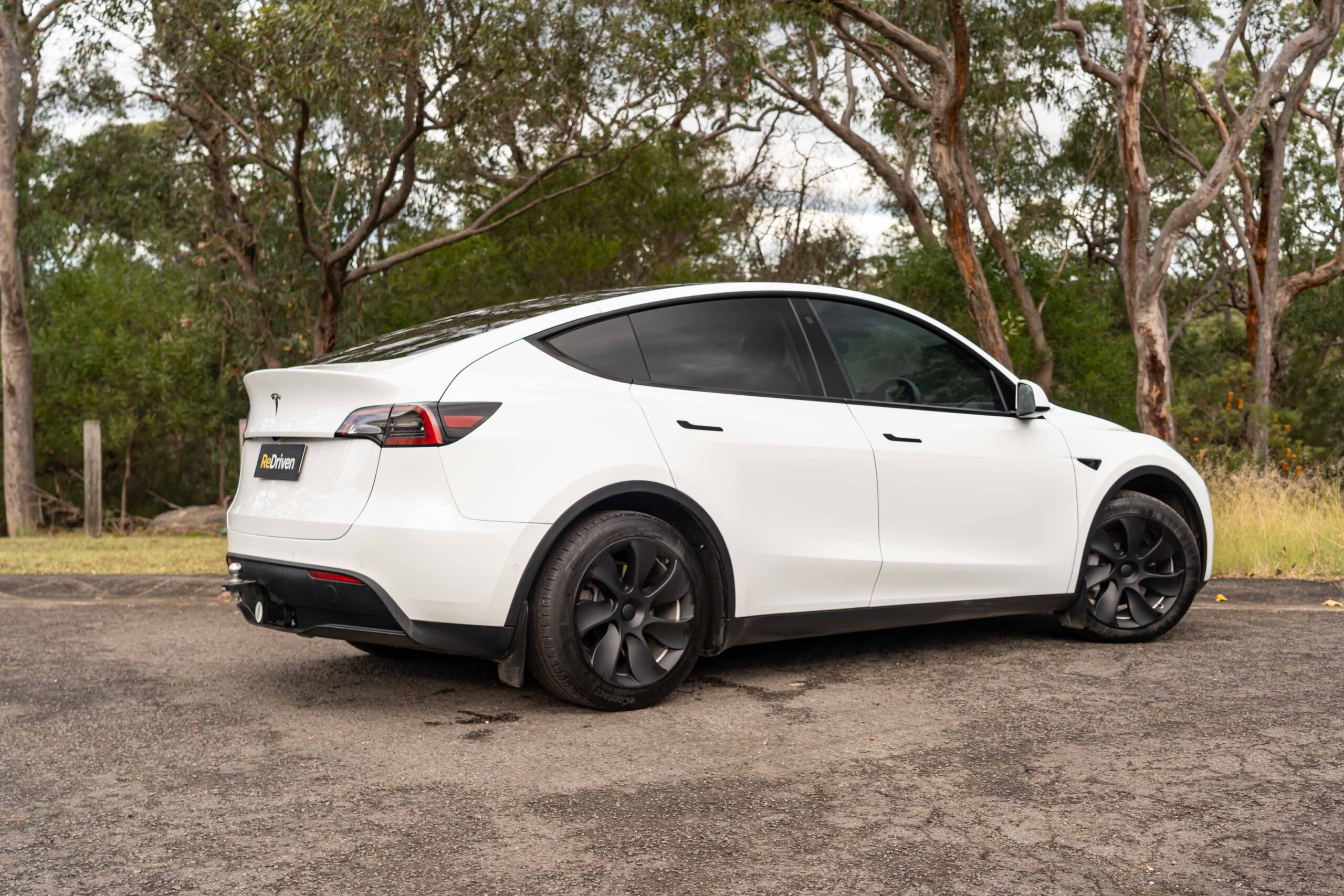
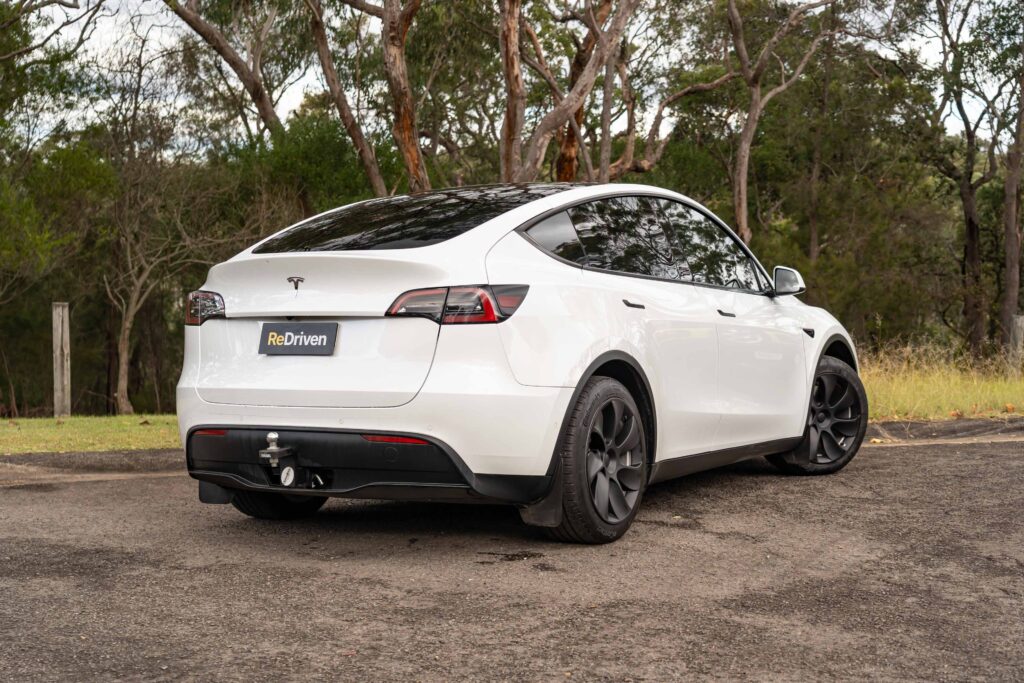
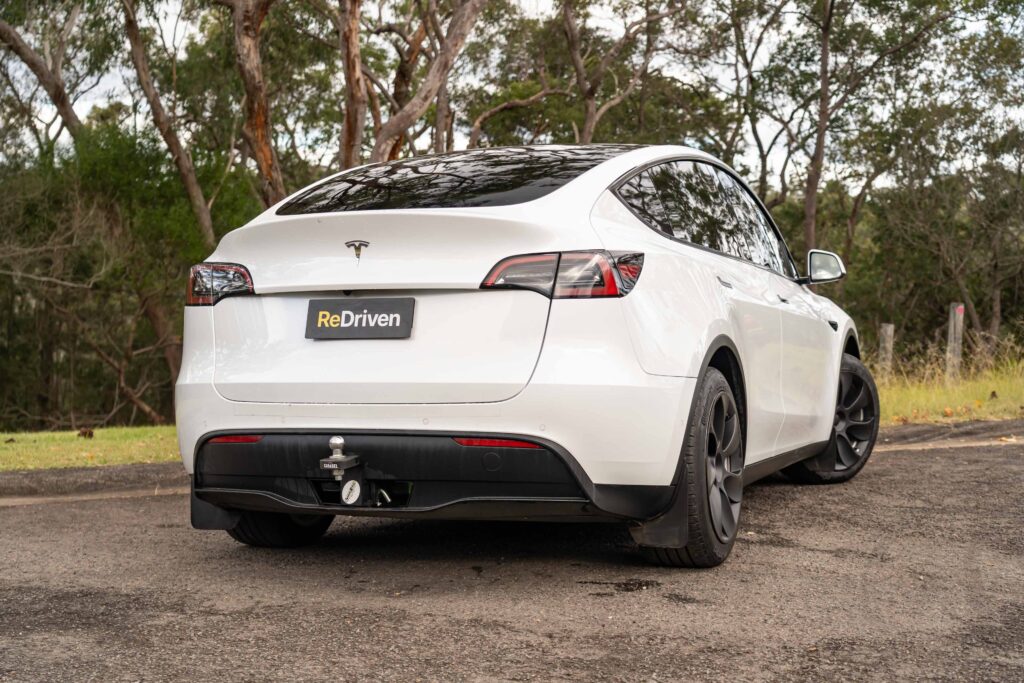
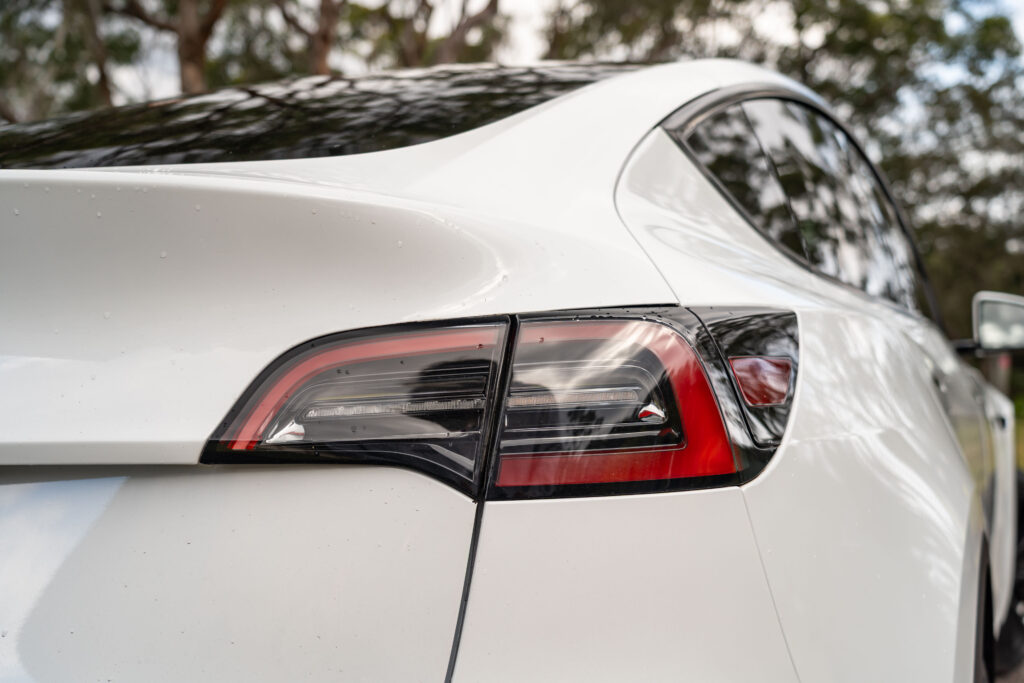
No matter where they were made, some report misaligned rear tailgates, causing water to leak into the rear cargo area. Tesla did issue a global service bulletin to address this specific issue. When reviewing any used Model Y, ensure this fix has been performed.
Some also report the window glass can ‘shift’ out of position over time and become misaligned with the overall profile of the car. Though often, this is caused by careless owners pushing upon the glass surface, and not the doors when closing them.
Also, many complement the Juniper refresh addressed how the window glass frequently ‘rattled’ within the doors, sounding ‘cheap’ when the doors are closed shut.
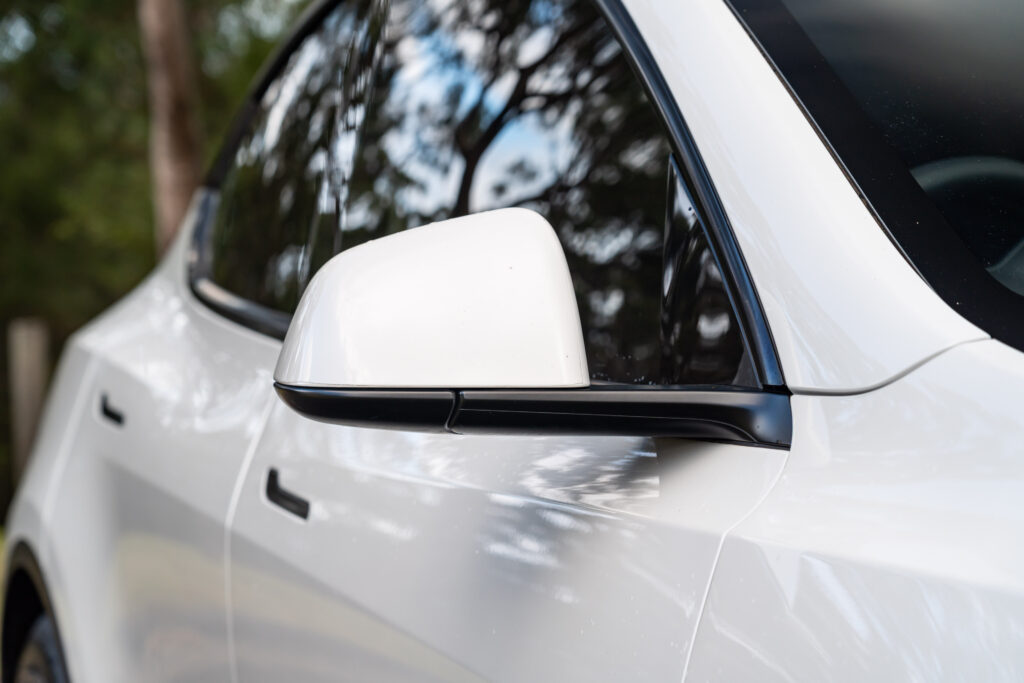
Check thoroughly that all the powered exterior features function properly – this includes the powered rear tailgate, the folding door mirrors, and the charging port cover.
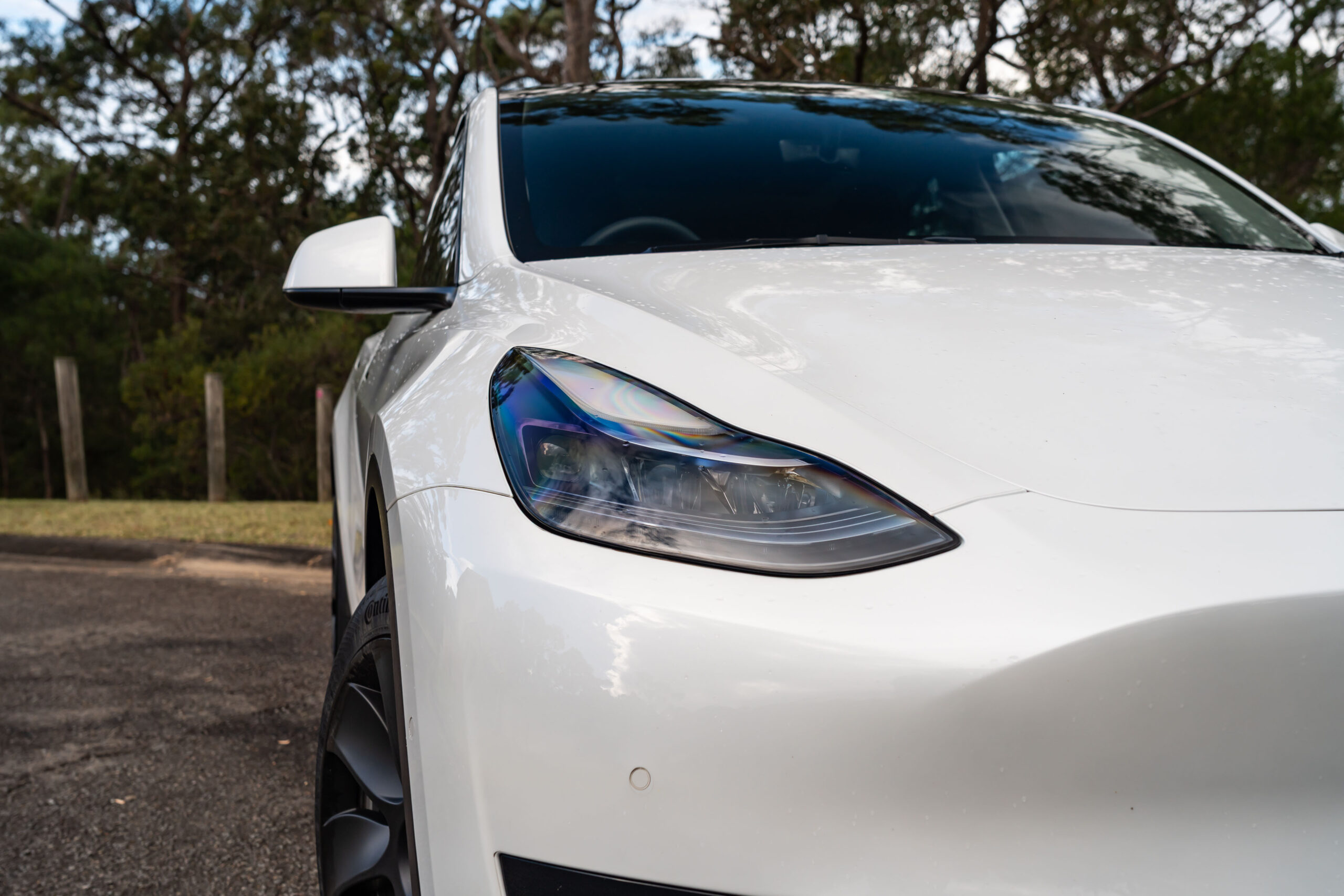
Note that from MY2023 onwards, Model Ys no longer feature ultrasonic parking sensors, relying solely on exterior cameras (aka Tesla Vision) for all of the ADAS features. We’ve heard that this camera-only setup is not as precise and can struggle to maneuver in really tight areas or at night.
Beyond this, there aren’t any extraneous complaints we’ve heard about the exterior. Though the only slight complaint we would bring up is with the unnecessarily complex door handle design, making something that should be easy to operate harder than it needs to be.
Interior:
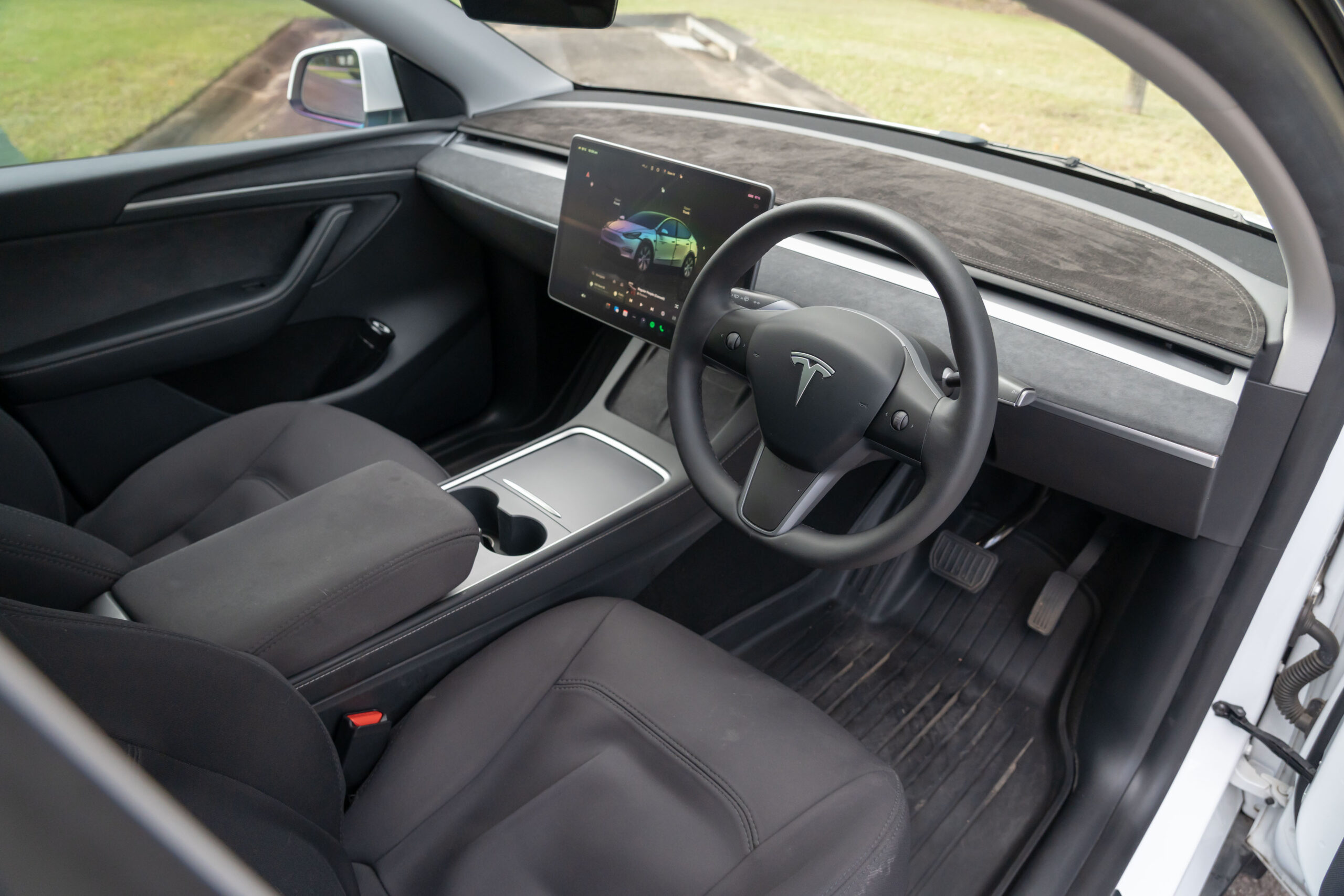
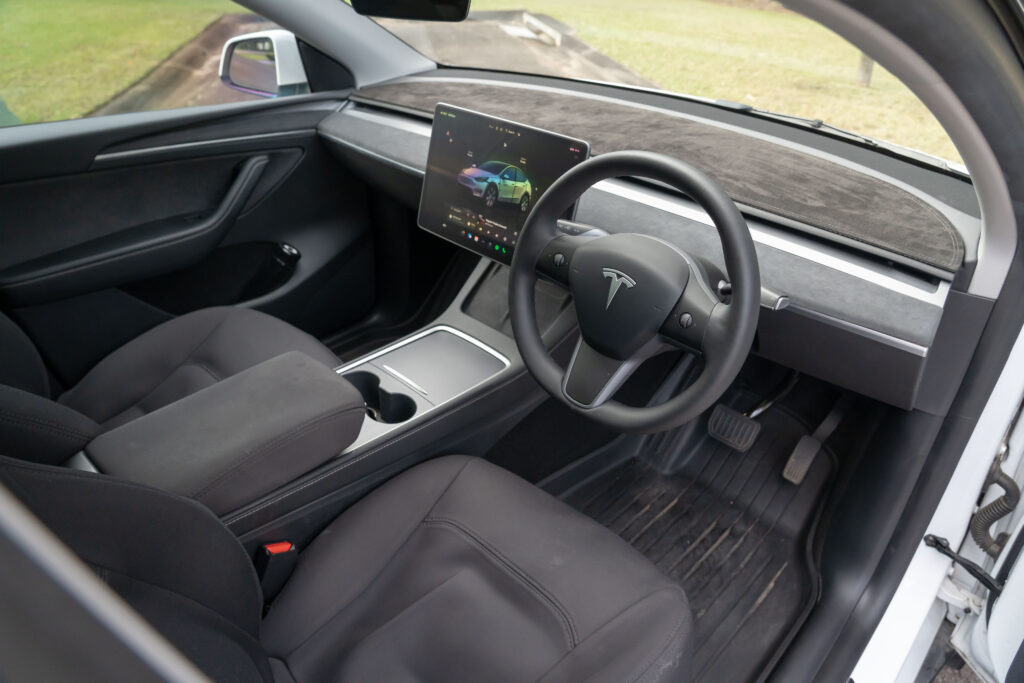
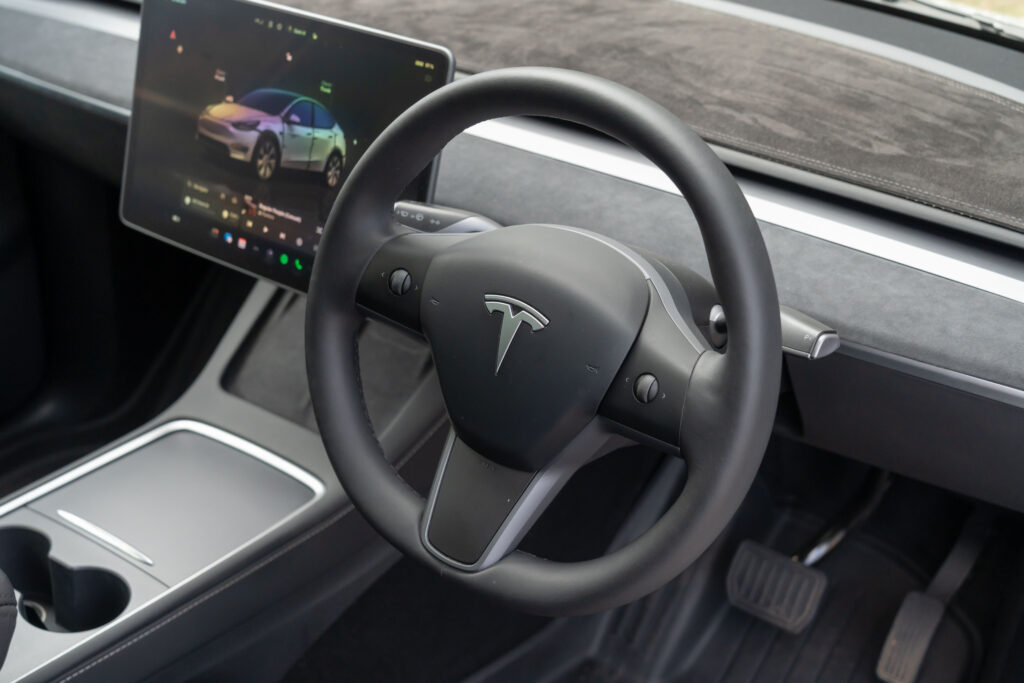
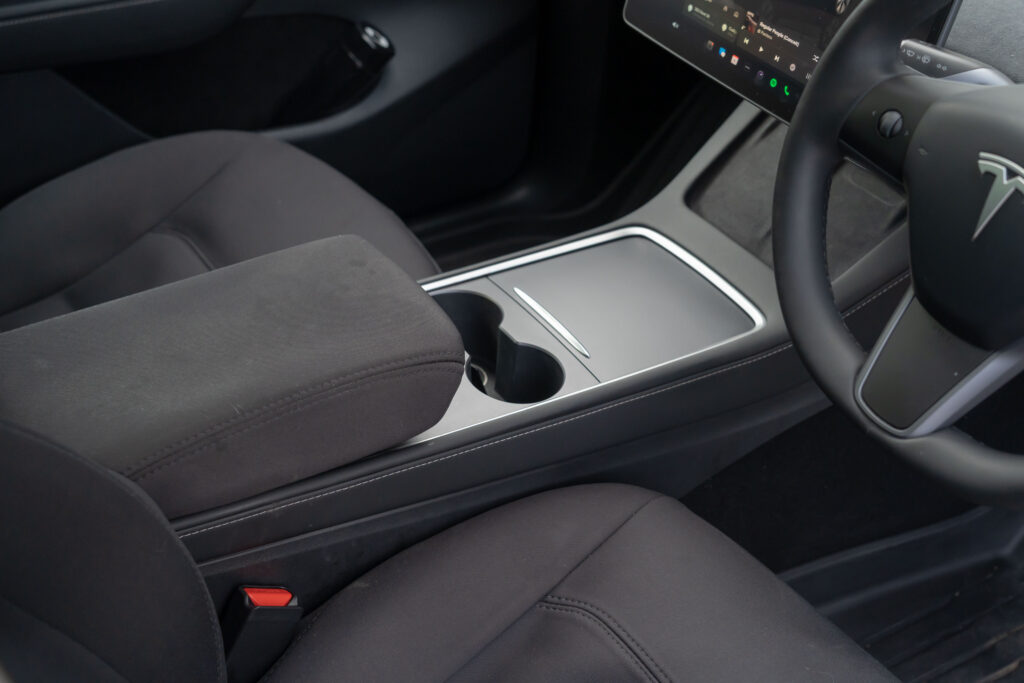
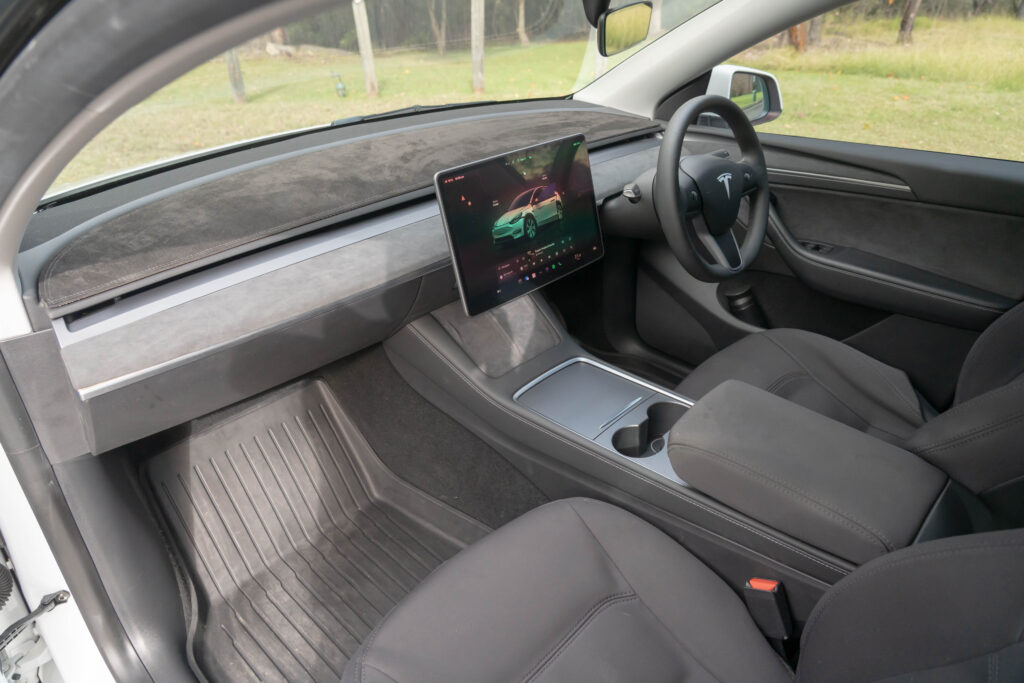
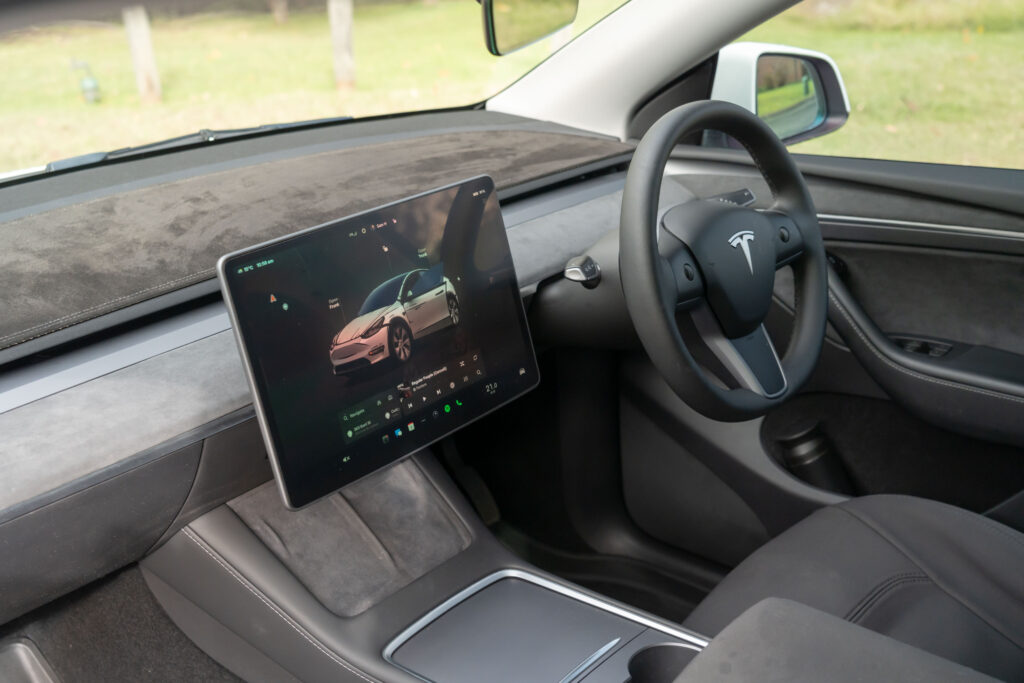
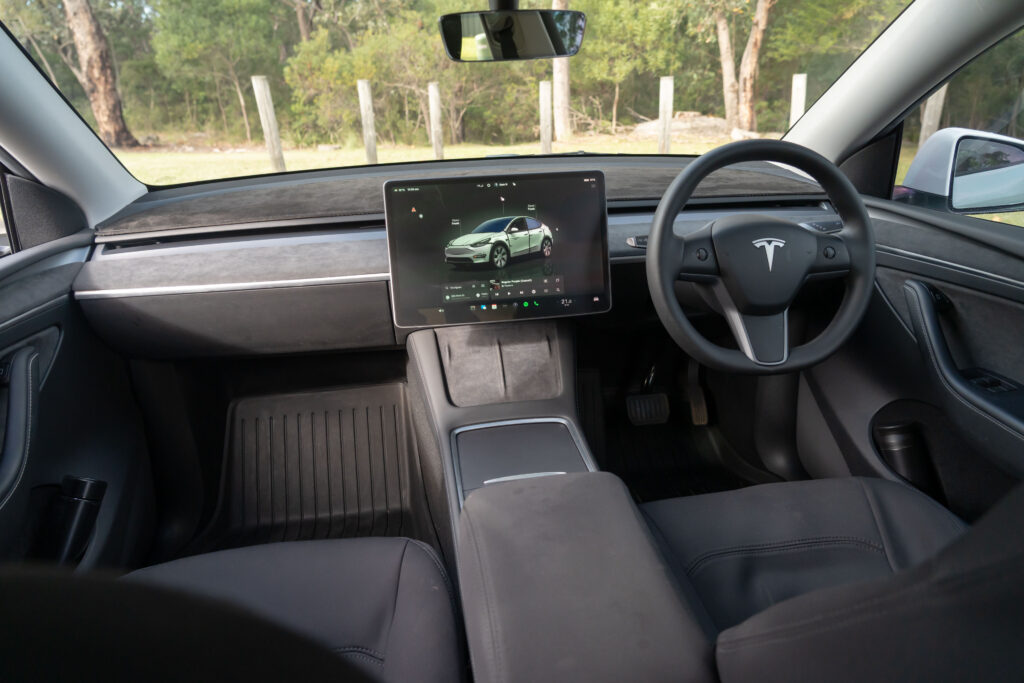
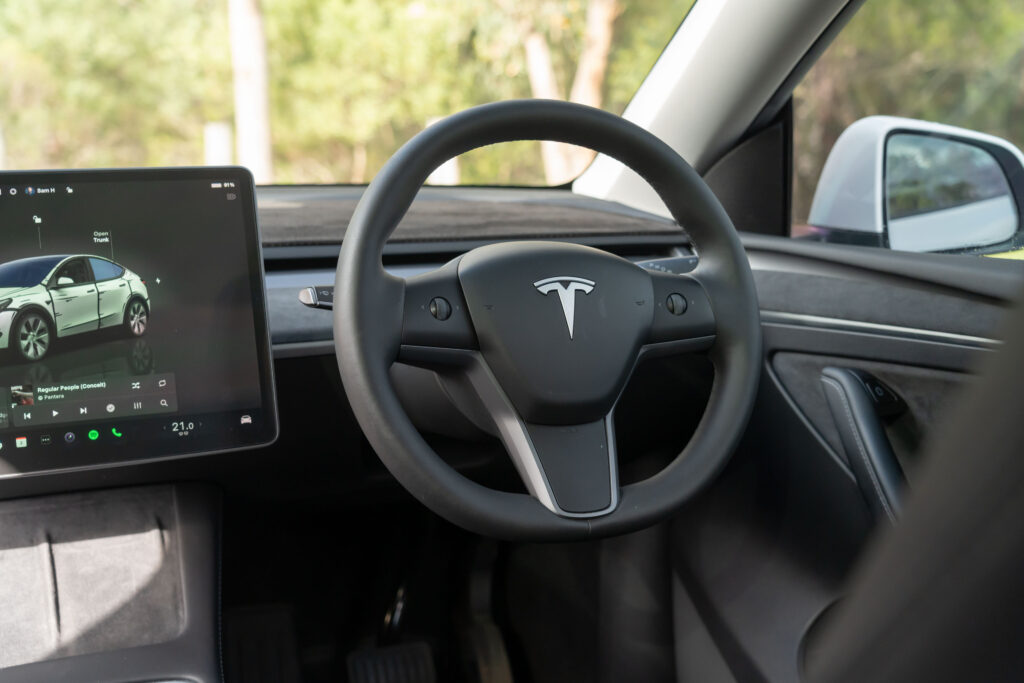
Tesla set the standard for modern EV cabin design, and it continues with the Model Y throughout all of its iterations – minimalist, with a steering wheel and a large, dashboard-mounted screen define the cockpit.
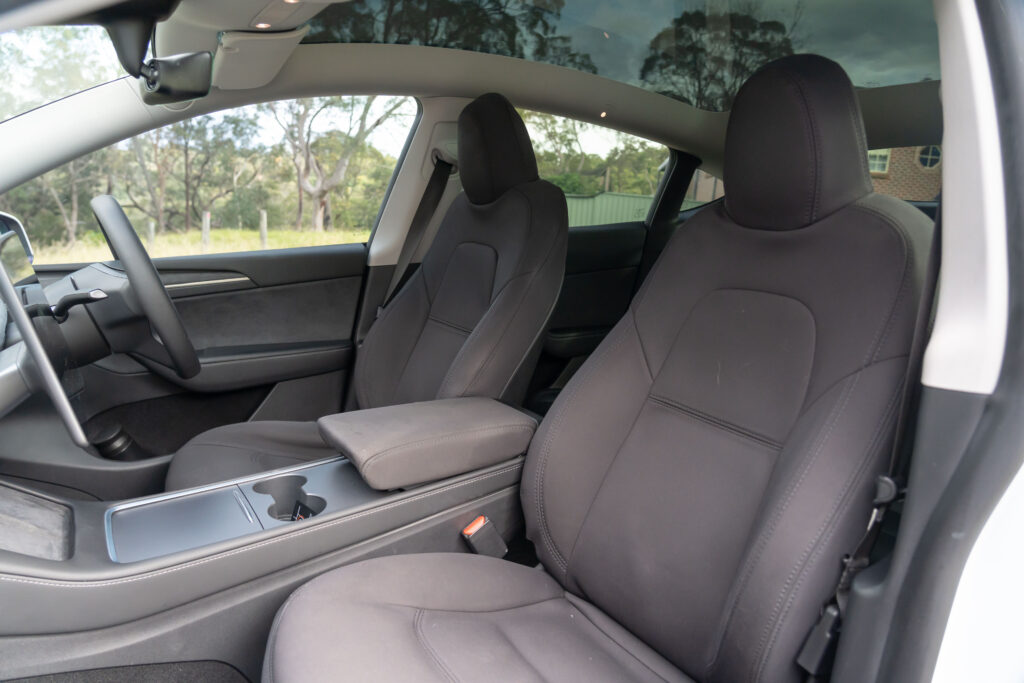
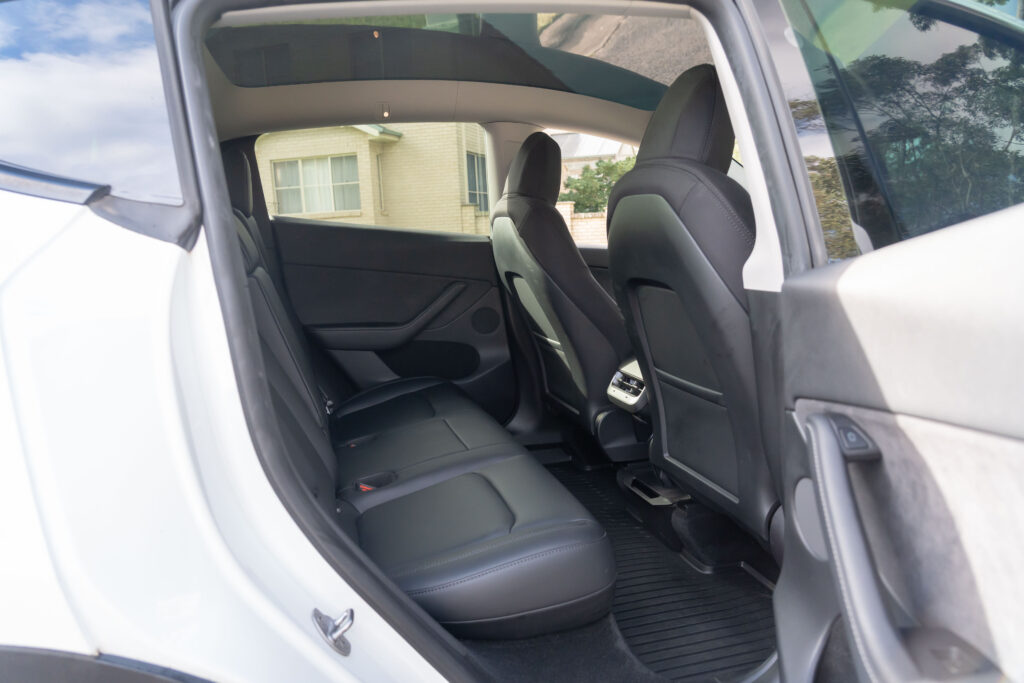
The cabin is also very stylish, with a good amount of ergonomics and comfort for everyone on board. Owners also compliment the amount of space onboard for cargo and occupants – combine the capacities of the sub and rear-trunk, along with the ‘frunk’, and you have far more room than equivalent SUVs/crossovers in this segment.
Just like the body, a few issues can creep up on the general build quality of the interior.
The steering wheel surfaces are known to delaminate or show wear prematurely, with some Australian owners reporting it can happen below 40,000 kilometres. It’s actually a known quality issue among early MY2022-2023 Model Ys, and replacements have regularly been covered under warranty; with this issue pretty much unheard of on cars made late 2023 onwards.
Those with white leather upholstery are more susceptible to stains if not properly cared for.
Some Model Ys also report random interior rattles from the trim pieces or sections, which can be more prevalent on high-mileage, early model-year cars, and compared to other luxury models, road/wind noise can be more audible at highway speeds.
We also heard globally, especially among Model Ys in cold climates, have experienced issues with the heater pump having software lockouts or mechanical failures of its internal components. Over-the-air updates or fixes under warranty easily put this right, whereas in warm climates like Australia, heater/air-conditioning issues aren’t too common.
Everything to access the car’s functions is housed within the central touchscreen display, or as Tesla refers to it, the Media Control Unit (MCU). While you won’t find your standard Apple CarPlay/Android Auto connectivity, this system offers more than enough services and features for what you expect from a connected-era vehicle.
The Tesla MCU uses Google for navigation (which can also locate nearby chargers and plan trips based on charger availability along the route), plus access to games, streaming platforms, Grok AI assistant, and endless car operations that you need to utilise the most out of the car.
As with modern vehicles, the dedicated Tesla mobile app can also bring far more functions aside from serving as the key and displaying battery status – such as pre-cooling the interior via the A/C system.
The exterior camera displays are also class-leading, being one of the best quality cameras you’ll find among current-gen vehicles, and the visual distance guides incorporated as part of ‘Tesla Vision’ come in very useful for navigating tight spots (and make up for the thick C-Pillars hindering visibility)
Plus, these receive regular over-the-air updates that add new features or resolve infotainment bugs overnight. Also, it’s worth noting that post-Juniper update Model Ys not only increased the size of the MCU, but added an 8-inch individual touchscreen for the rear occupants, allowing them to access their own climate settings, entertainment, on top of Bluetooth connectivity for up to two headphones.
But this minimalist cockpit design may take some getting used to, especially if you are coming from a more traditional setup with more physical controls – thanks to Tesla’s cost-cutting measures to make their latest vehicles set up for left/right-hand drive markets without the expense required to design and engineer them for different regions.
This is all down to the vehicle functions being controlled not through switchgear but via various menus on the centre screen. The multifunction scroll wheels on the steering wheel operate many vehicle functions, but you first need to select the right menu on the centre screen to control what you need.
In addition, simple actions like adjusting the mirrors, steering wheel position, air vents, or opening the glove compartment all have to be done via the touchscreen, which can be a major distraction while driving.
You may also find the lack of a centre display for the current speed reading (and no heads-up display) not as intuitive, though via Tesla aftermarket parts, you can add one if you can’t stand looking towards the centre screen.
Even on newer models, you won’t find a gear selector on the steering wheel column, as Tesla has swapped this for swipe controls via the screen – although, there is a pressure-sensitive panel on the roof (as a backup), and aftermarket options to retrofit a gear stalk are available.
Tesla’s full suite of ADAS features is available with the Model Y, including their well-known ‘Autopilot’ adaptive cruise control, or in some regions, hands-free FSD (Full Self-Driving).
But as with any technology, it’s not error-proof: owners have reported unexpected braking or irregular speed changes with Autopilot active, especially on highways/overpasses due to the system misreading speed signs or objects. In extreme cases, some have had these occur when following traffic closely, increasing the risk of accidents.
Model Y owners also report that the lane keep assist can intrude forcefully during minor course corrections at speed, or when attempting to avoid imperfections (ie. potholes) on the road, making driving on country roads without side markers/defined edges more frustrating.
Tesla has rolled out continual software updates to fix some of these issues with the ADAS/Autopilot features, but owners still report that these issues can persist.
Mechanical issues:
As an electric vehicle, these don’t experience any problems that typically plague internal combustion engines and traditional manual/automatic transmissions – meaning you can save considerable amounts of money when it comes to running costs.
Weak points that affect the Model Y tend to revolve around the suspension, tyres, brakes (from lack of use), the HVAC/heat pump, electronics, overall build quality, and expensive Tesla-only parts/servicing.
Build quality, as reported with other Tesla products, is something the Model Y can be inconsistent with. Speaking with owners and local Tesla service centres that receive both US- and China-built examples, those made in Tesla’s Shanghai plant encounter fewer issues than the American-made ones (from Tesla’s California/Texas production lines).
This is something that benefits all Australian-delivered Model Ys, as these were all manufactured in China.
But similar to how Japanese brands like Toyota and Lexus approach updating their vehicles, Tesla continually rolls out build quality improvements/refinements every 1-2 years, meaning the Model Y constantly evolves each model year, beyond software updates to the powertrain and other electronics.
Powertrain:
The Australian-delivered Model Ys use two types of batteries: LFP (lithium iron phosphate) and NMC (Nickel-based lithium ion), and both are proving to be very reliable.
LFP batteries tend to be more tolerant of 100% charge and are more thermally stable, but have slightly lower energy density, whereas the NMC units have higher energy density and longer range, but don’t like being charged up to 100%.
The LFP batteries used in entry-level, rear-wheel drive models are well-suited for most users, and the NMC batteries are better for those who want the Long Range/Performance variants and all of their benefits (greater range per charge, speed/power output). But in the real world, under regular use, you’ll be hard-pressed to notice any differences between the two.
Average degradation, or ‘lifespan’ of the battery pack, can be a concern. But given these Teslas are not too old yet, battery degradation should still be fairly minimal, with replacements still covered under warranty.
Owners still advise checking the estimate range when it’s charged at 100% to see if it aligns with the quoted factory specifications, and on average, most report 85-90% battery health up to and from at least 200,000 kilometres.
While Tesla claims WLTP figures for the Model Y range can be anywhere between 514-622 kilometres per charge, realistically, owners report driving between 300-500 kilometres per charge; though, this figure will also depend on factors like temperature, driving style, and tyres.
By now, Tesla’s Supercharger network has grown considerably (depending on your region), but if you live somewhere with plenty of these available, and your Model Y has access to them, this eases any anxiety over long-distance road trips.
Here in Australia, that isn’t a problem, given Tesla boasts the largest and most reliable DC fast-charging network. Compared to past generations of EVs, you can even receive close to or a full charge in less than an hour using these rapid chargers.
Battery pack aside, the only thing to look out for with these EV powertrains is the drive units – any bearing issues will produce noise, and coolant leaking into the unit can lead to premature wear/failure.
It’s also worthwhile to check the undercarriage to ensure the battery pack hasn’t suffered any major surface scrapes/dents from debris on the road. Also, keep in mind that any heat pump/HVAC issues are likely to increase with age, and these are very complex systems as well.
Drivetrain:
Suspension issues affecting Model Ys are well known within Tesla communities. These are especially prevalent on early MY2022 cars, with owners reporting these have very firm/harsh rides and are especially prevalent on rough roads; some of whom claim they are the worst suspension setups they’ve experienced across all cars they’ve owned, and not what they expect of a Tesla.
Tesla did readjust the suspension to be more comfortable and less harsh on late MY2022 models/MY2023 onwards, and significantly as part of the Juniper update. If your budget is more flexible, many owners recommend looking at these models that benefit from the updated suspension settings, alongside better grade of noise/vibration insulation materials.
Premature wear of control arm bushings is also a well-documented issue affecting early models (MY2022-2023), causing clunking noises from the undercarriage, along with off-centre steering and uneven tyre wear.
This premature wear was so frequent among mechanical complaints that Tesla issued a TSB (technical service bulletin) to resolve the clunking noises – for the Australian market, these fixes were covered under warranty, but some owners report having to replace the bushings twice within the applicable warranty period.
Reports of premature bushing wear are far less common on more recent cars, though there have been some instances among recent American-built MY2026 Model Ys (produced from the Austin, Texas, facility).
Worn sway bar end links can also contribute to the clunking noises or loose steering feel mentioned earlier, but these aren’t too commonly reported and are part of the broader suspension wear patterns these Model Ys experience.
Brake components can also have issues if they are not used frequently. Brake rotors can corrode and glaze up, and the calliper slides can seize. Telltale signs include vibrations when the brakes are applied or abnormal brake wear.
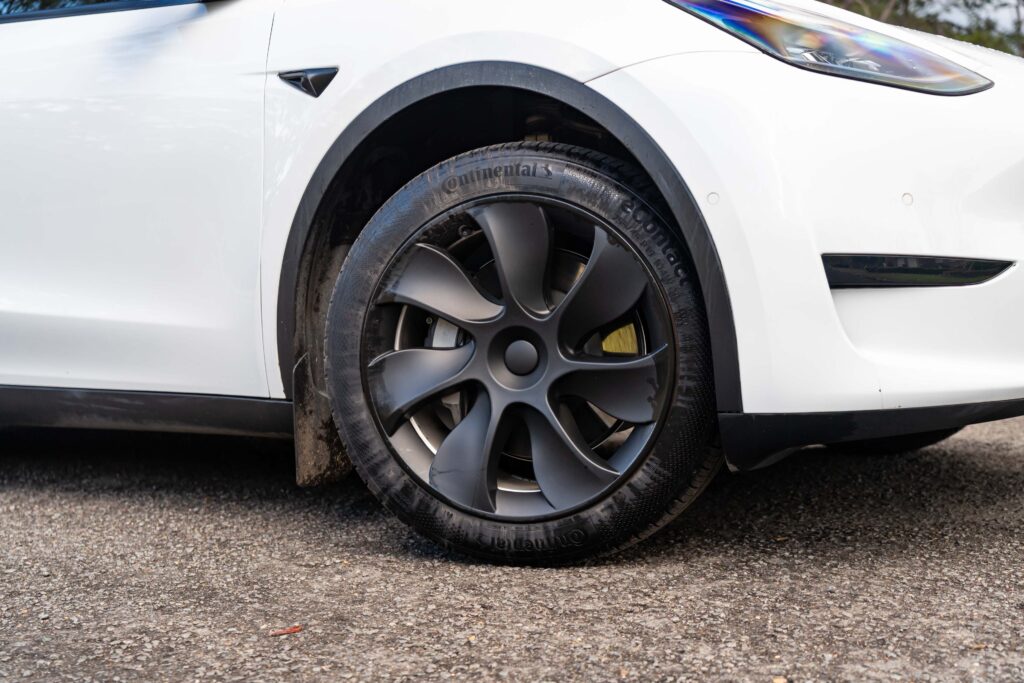
Premature tyre wear can also affect these, and is more prevalent in the Performance models – multiple owners have reported accelerated inner tread wear from the rear or all four wheels, and this can be worsened if they are not rotated regularly.
But given it’s a heavy vehicle that can sprint 0-100 km/h in 3.5 seconds, accelerated tyre wear under that amount of power/torque is something you have to live with. No matter what variant you are targeting, don’t forget these are heavier compared to the average internal combustion engine vehicle, so more frequent tyre changes are something to budget for.
Currently, used Model Ys start from around $30,000 for an early, base rear-wheel drive model, while close to $85-90,000 will net you a more recent/post-Juniper update, all-wheel drive Performance variants.
You might be drawn into buying one of these new, but our advice is not to buy one at retail price.
Thanks to market trends, an influx of cheaper EVs from China, and company head Elon Musk testing his customers’ loyalty(among other factors), many Model Ys have lost a significant amount of their original value.
Even among slightly used models that are barely a year old, these will have depreciated considerably, allowing you to acquire them at a significant discount.
Compared to rivals like the Hyundai IONIQ 5, Kia EV6, or Ford Mustang Mach-E, most Tesla Model Ys are losing their value faster, with advancements in EV battery and vehicle technology each year making early models slightly more obsolete, and could accelerate their depreciation further.
But, it’s not like you will get anything less buying a used Model Y, as many are still covered under warranty, and all the over-the-air updates should keep them up-to-date for the foreseeable future.
The only concerns we would bring up when considering a used Model Y will be what else your money can get, as more of its rivals from legacy automotive companies and the latest, emerging Chinese brands enter the secondhand market.
Also, depending on where you are based, given the higher repair costs, parts supply issues, and not as many specialised, Tesla-approved bodywork repairers out there, insurance premiums may be far higher than what you’d pay for a non-EV.
These can still save you considerably on fuel and servicing expenses, but do your homework to see if the heavy depreciation, high running costs, and potential higher insurance premiums are sustainable for you in the long-term compared to an equivalent petrol hybrid.
Also consider whether your living situation and vehicle lifestyle can be suited for EV charging, without dictating your lifestyle too far – especially if you don’t have access to charging stations at home or within a short distance.
Still, ensure to get one checked out by a pre-purchase inspection to confirm no glaring issues, and above all, make sure EV ownership will work for your lifestyle; a used Model Y will be a great way to enter the world of modern EVs.


Co-creator, presenter & writer, ReDriven

Yes. But only the right example.
 3 days ago
 2 weeks ago
 2 weeks ago