Australia’s No. 1 Used Car Review Website
Australia’s No. 1 Used Car Review Website
+18 Photos
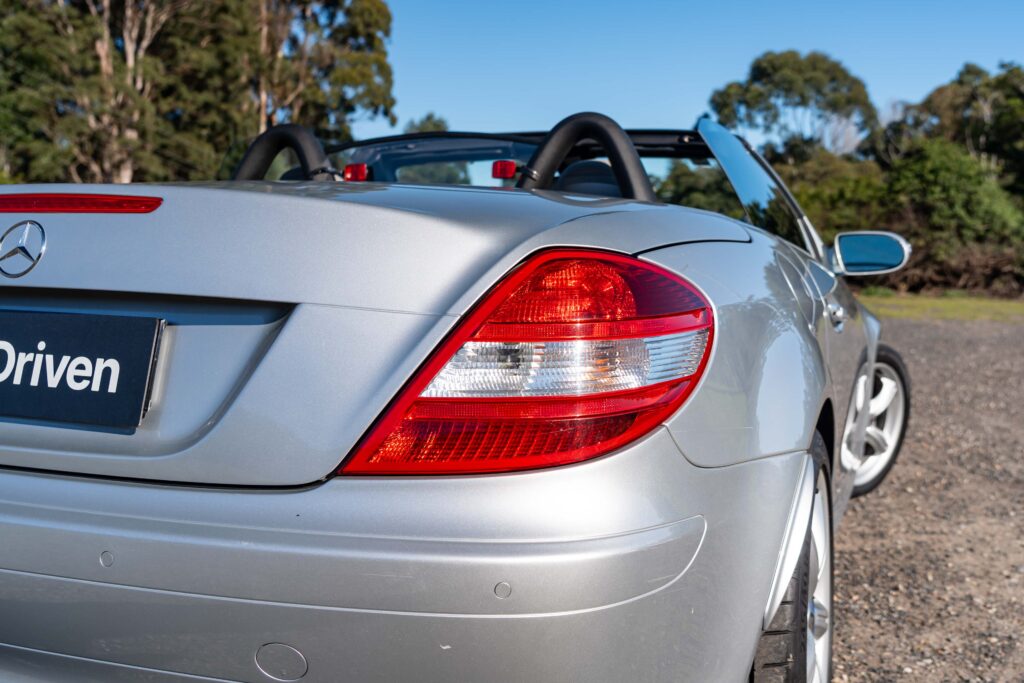
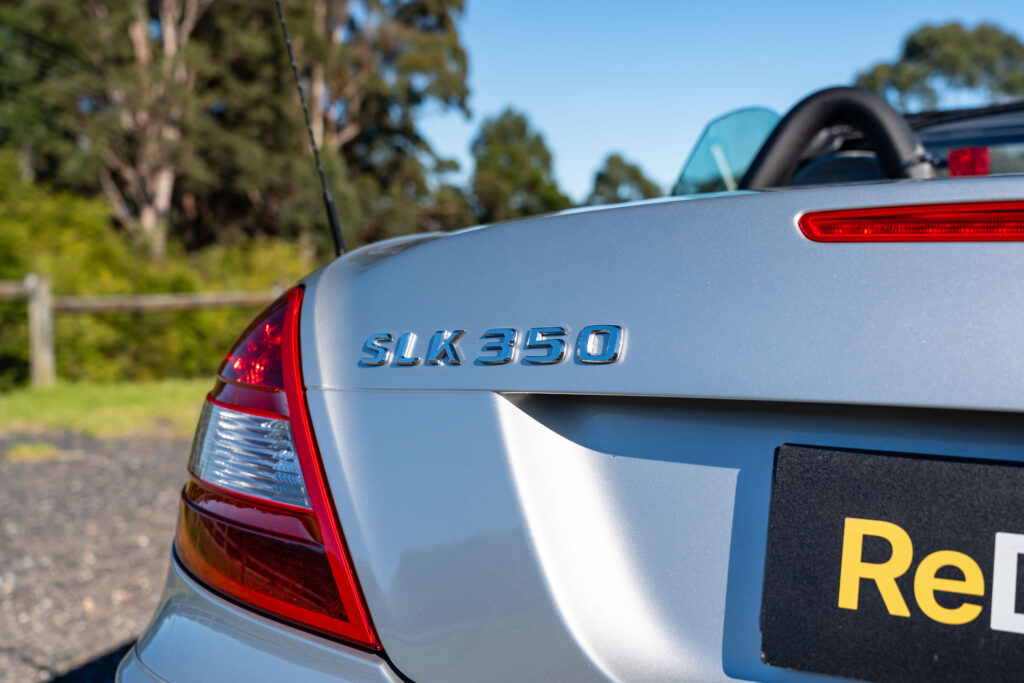
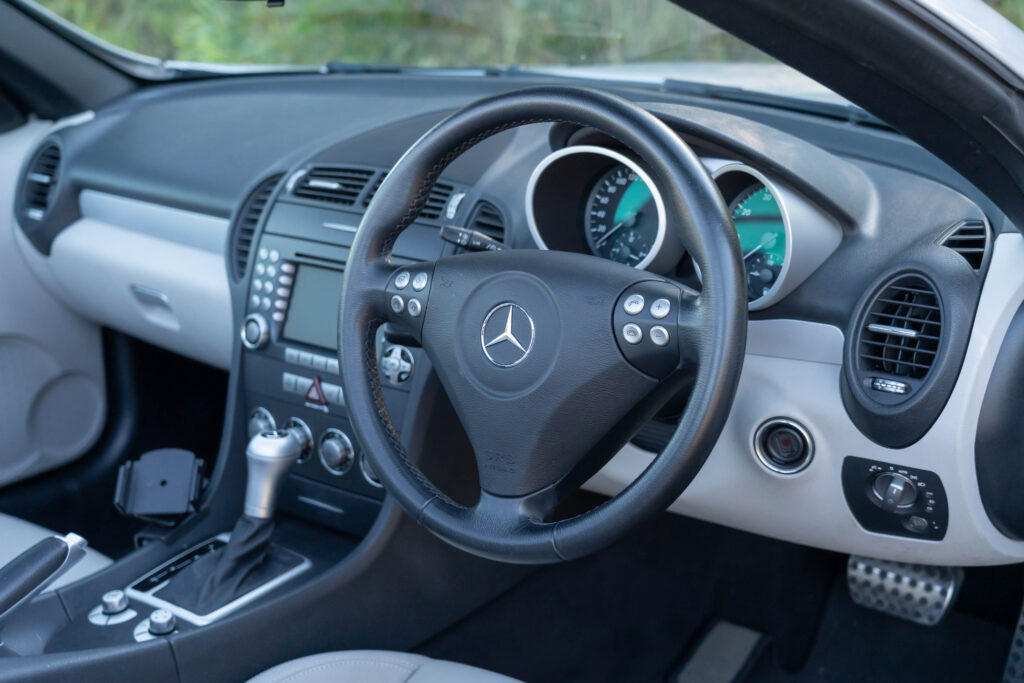
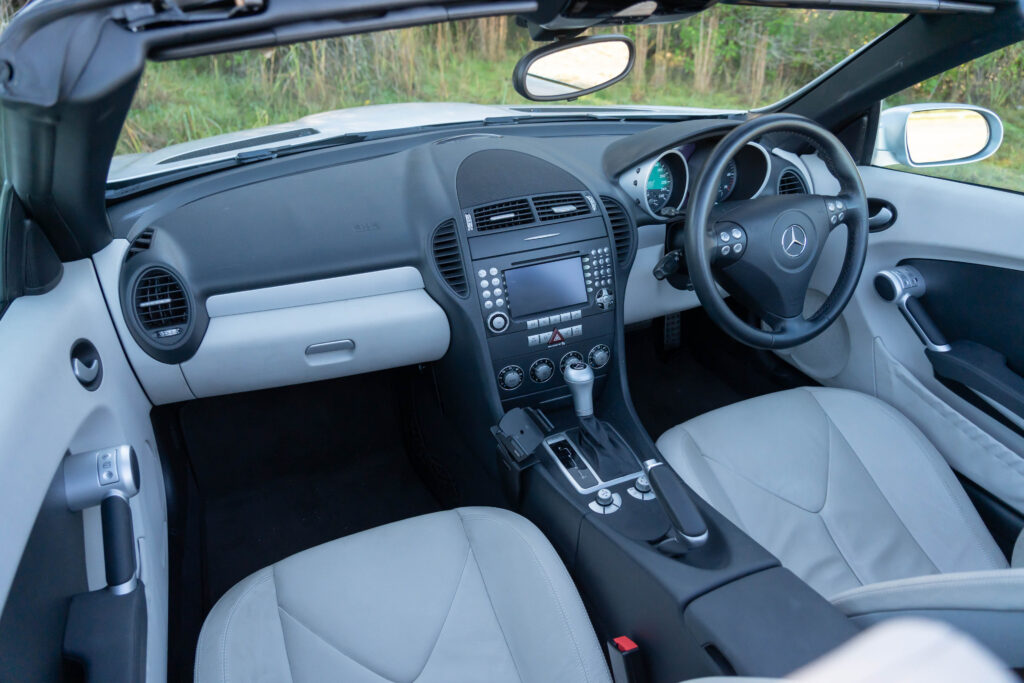

2007 Mercedes-Benz SLK 350 (R171)

24 July 2026
There are better cars out there.

2007 Mercedes-Benz SLK 350 (R171)

Used car review
24 July 2026
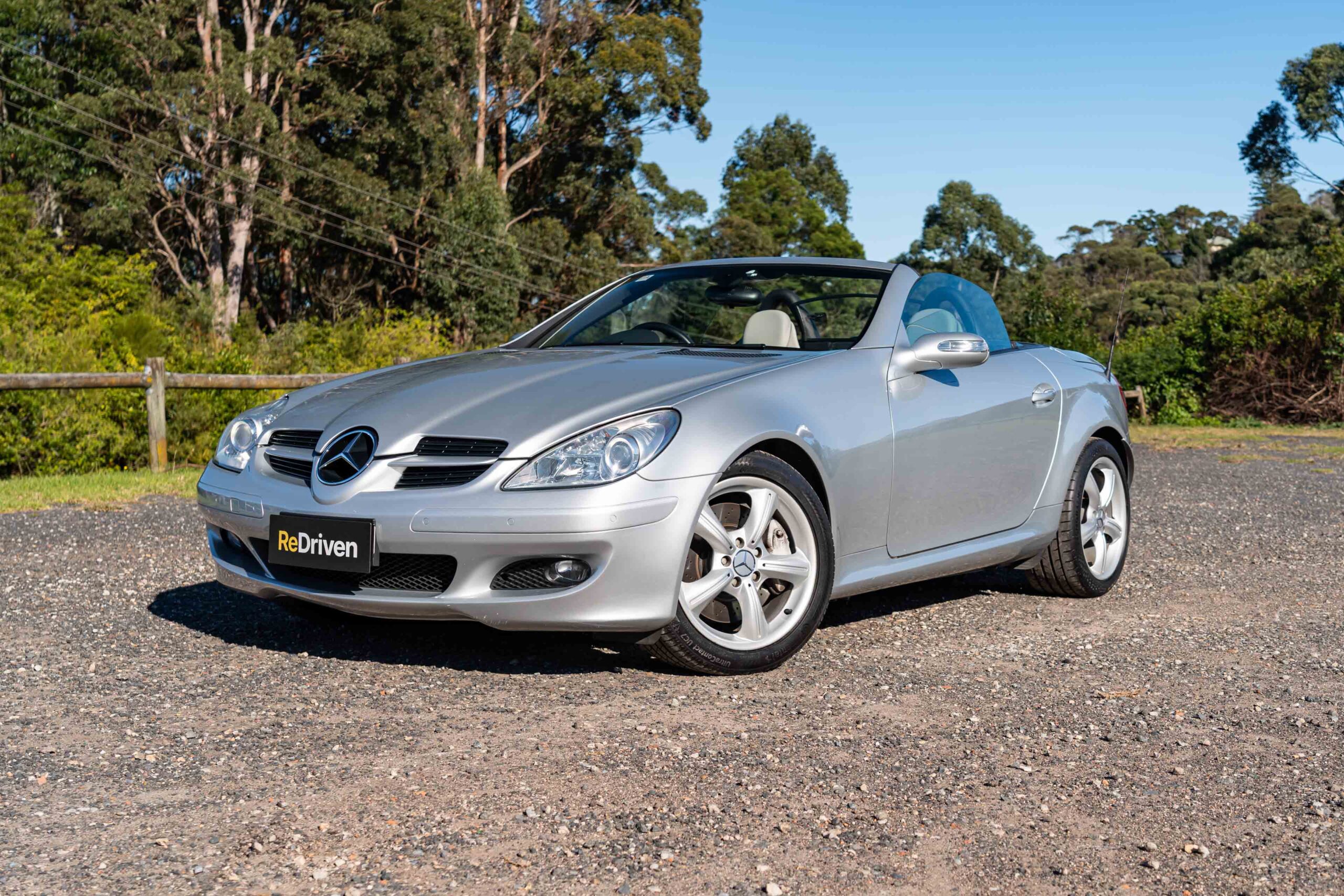
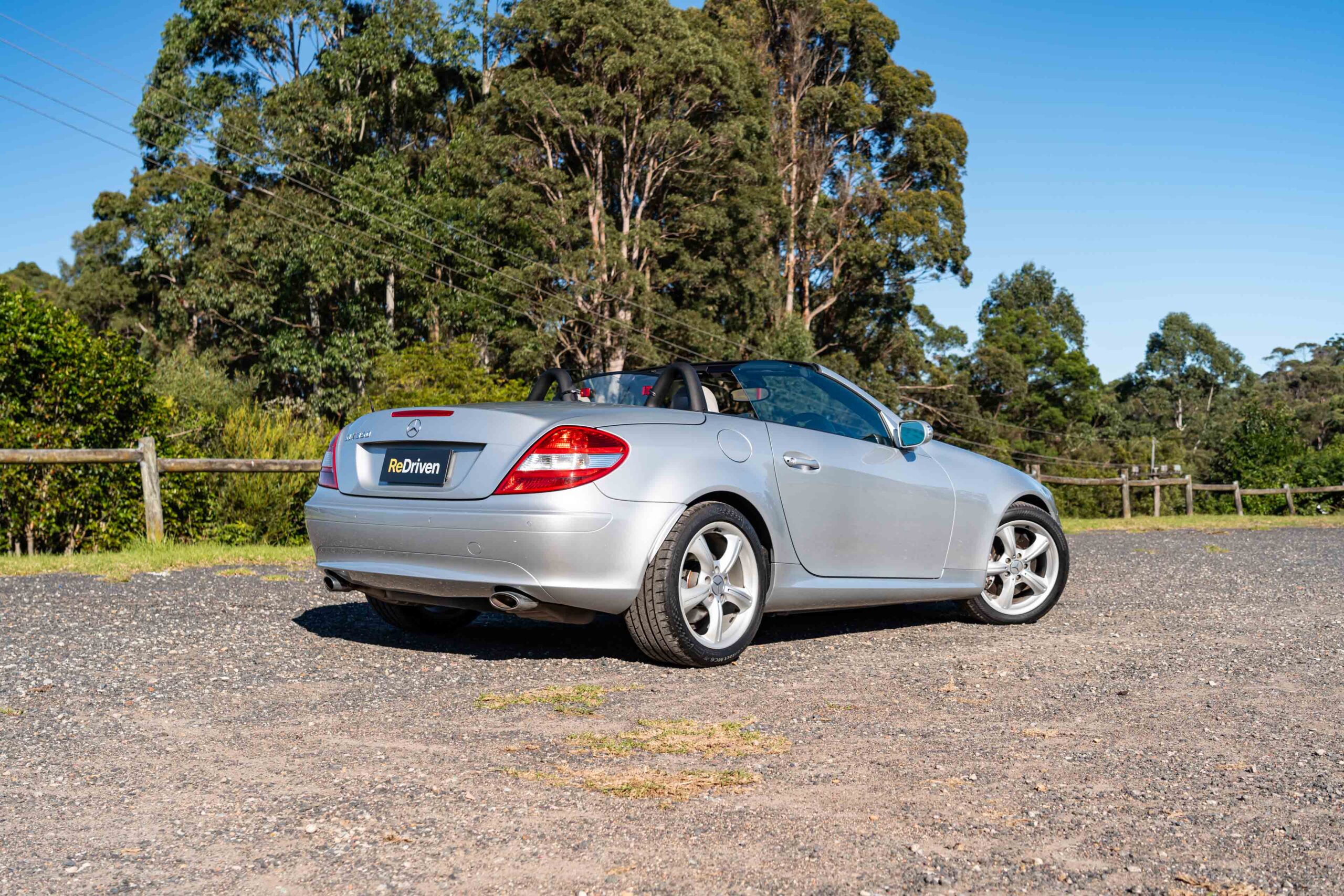
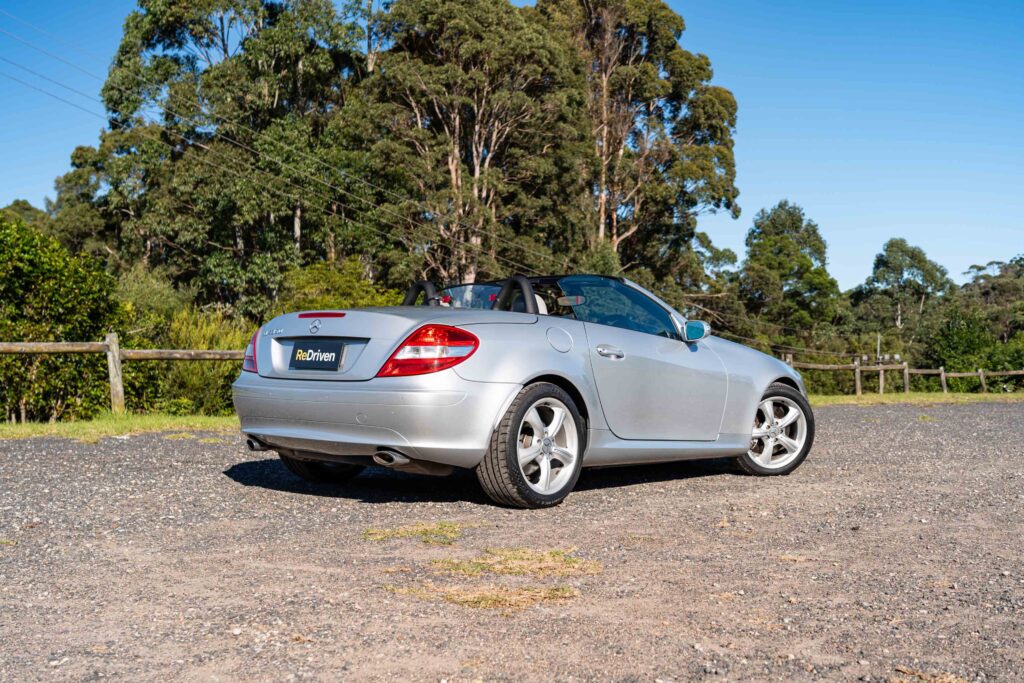
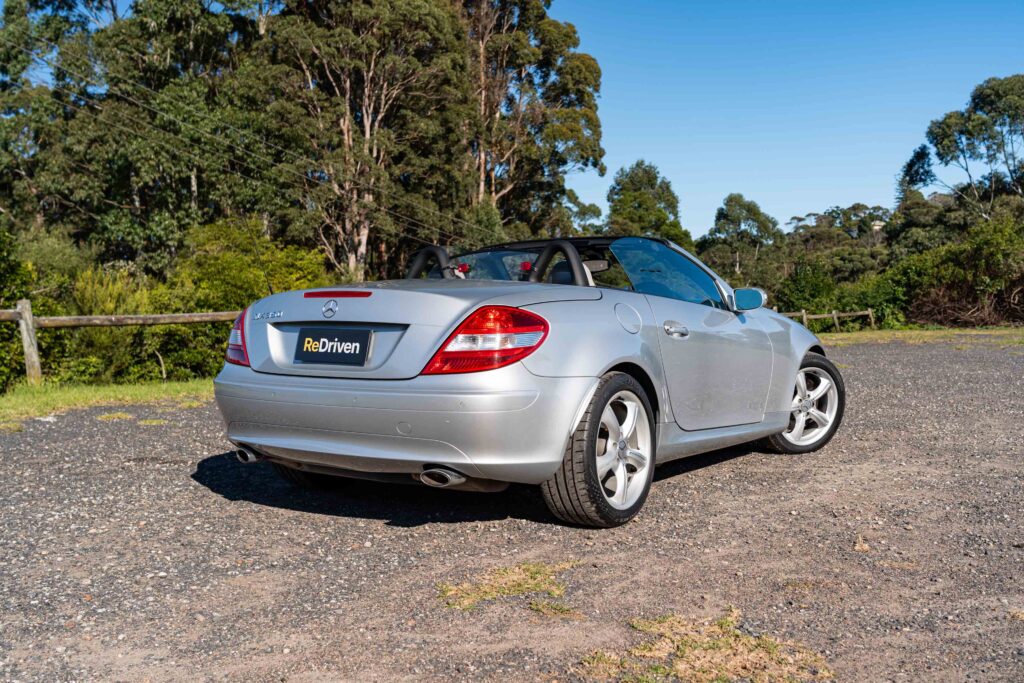
Abbreviating the words Sportlich (sporty), Leicht (light), and Kurz (compact), the Mercedes-Benz SLK, aka the German brand’s compact roadster, entered its second generation (R171) in 2004. It continued to be positioned below its larger, grand-tourer sibling, the SL-Class.
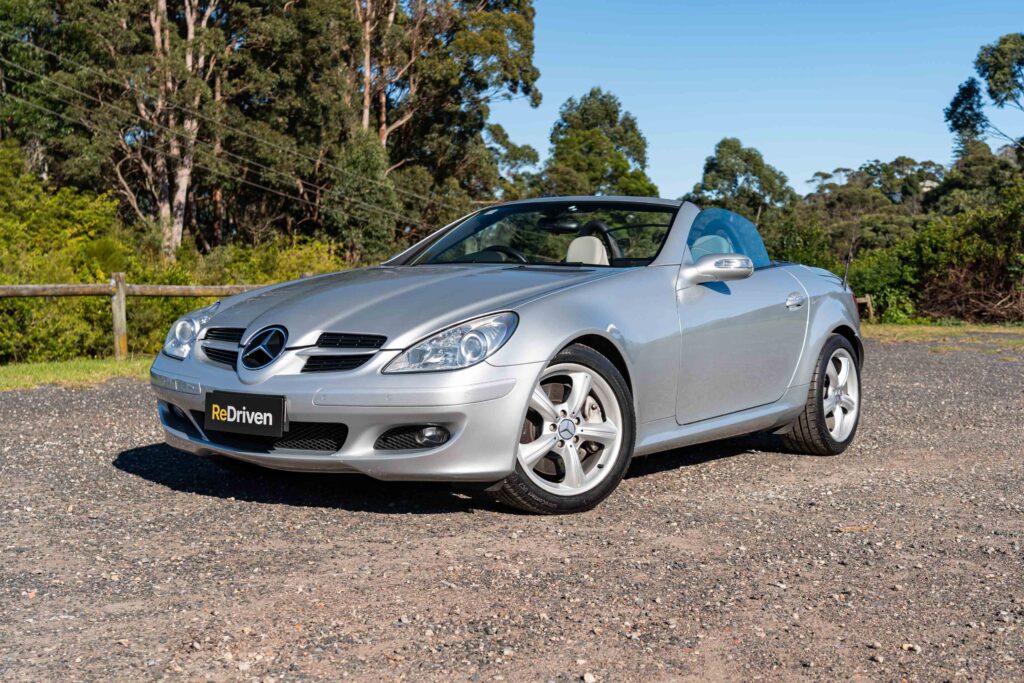
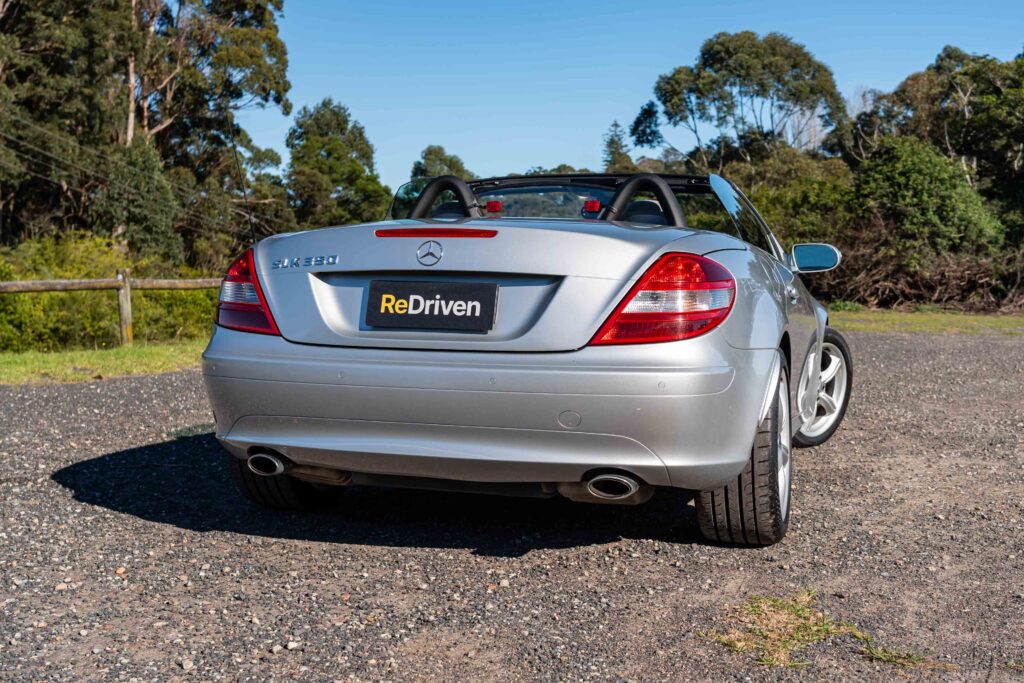
Just like its predecessor, the second-gen SLK stood out among rivals at the time by offering a power-folding, metal roof (known as the ‘Vario-Roof’) – combining the best of both worlds at the press of a switch within twenty-two seconds: the security of a hardtop coupe and the freedom of an open-top convertible.
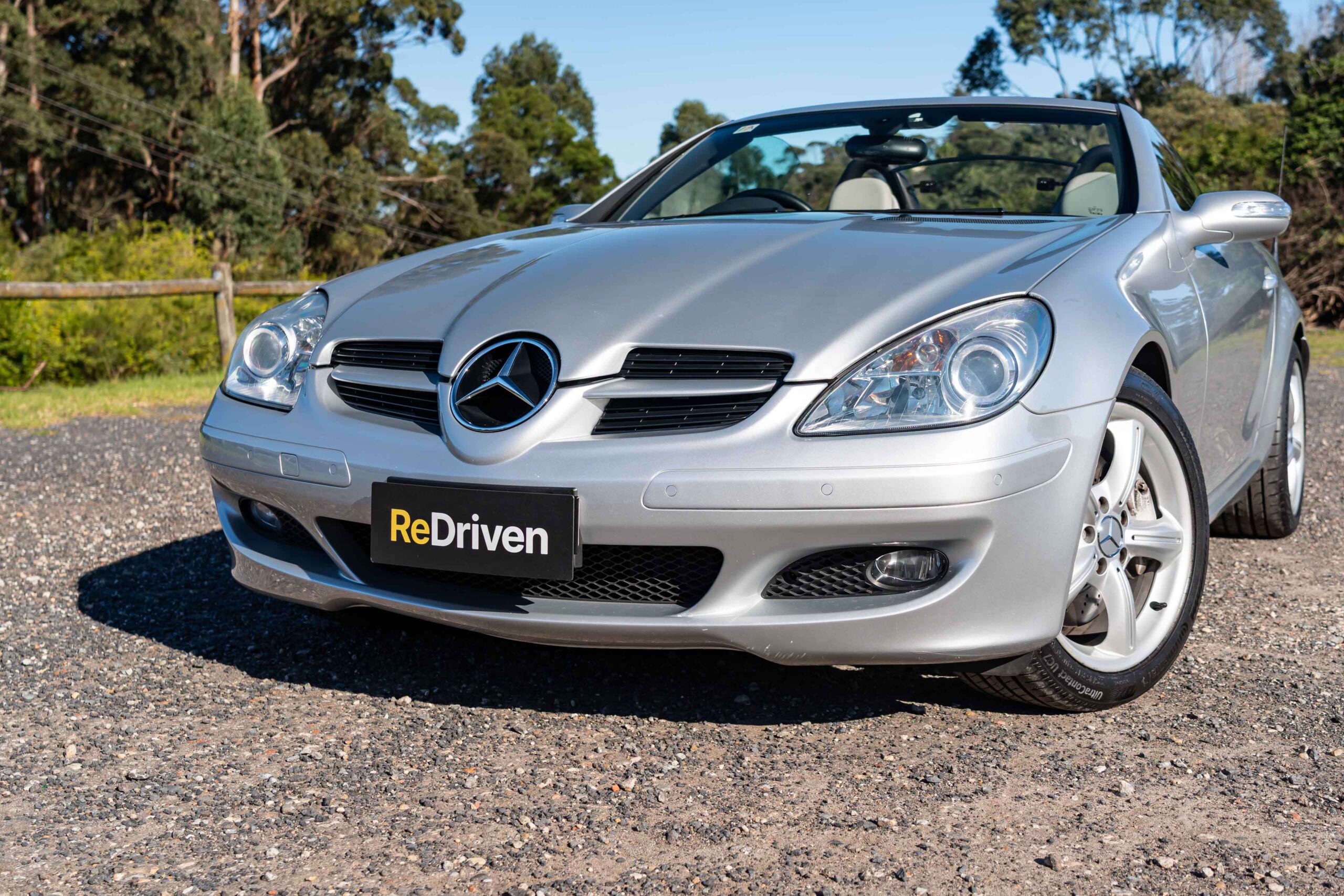
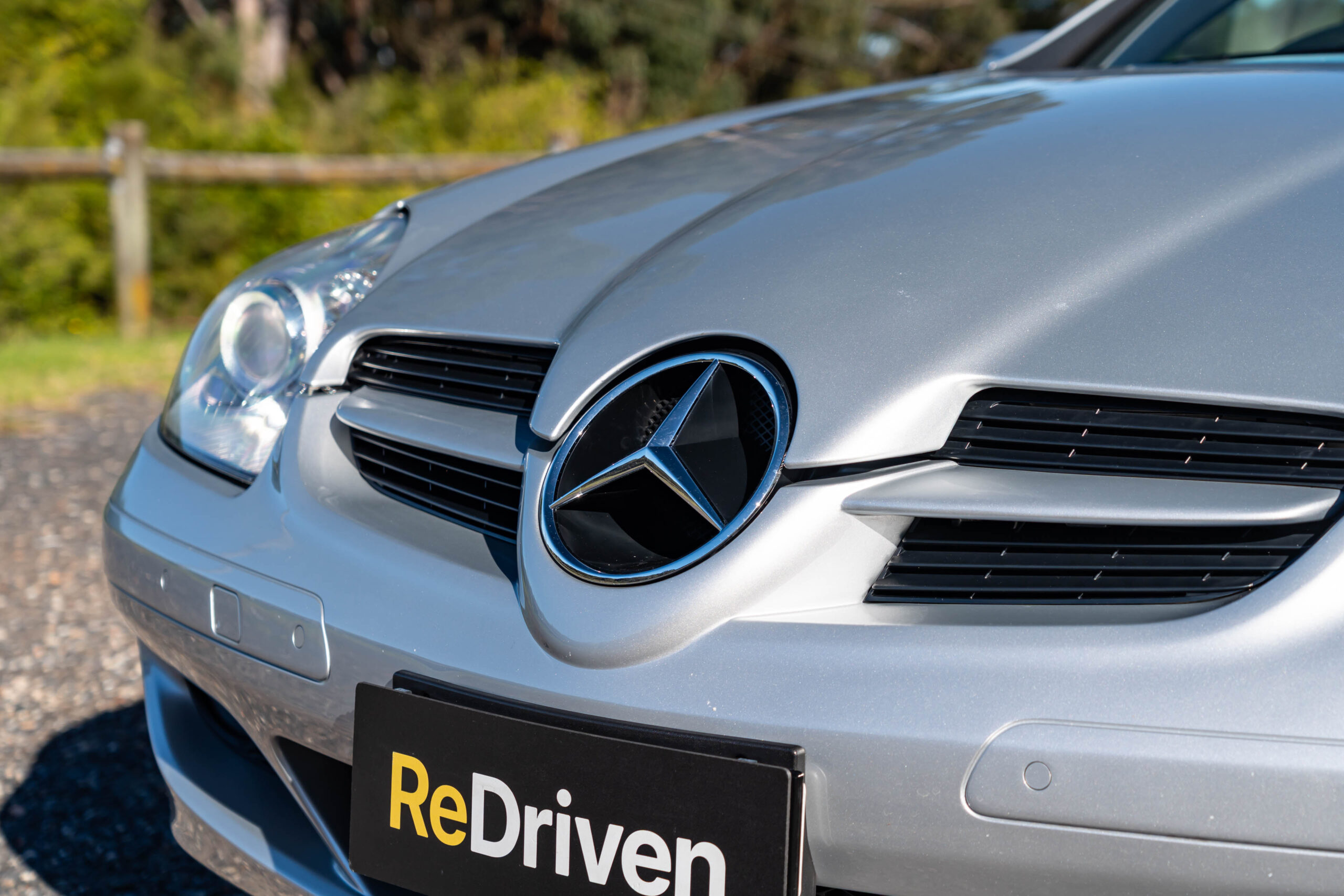
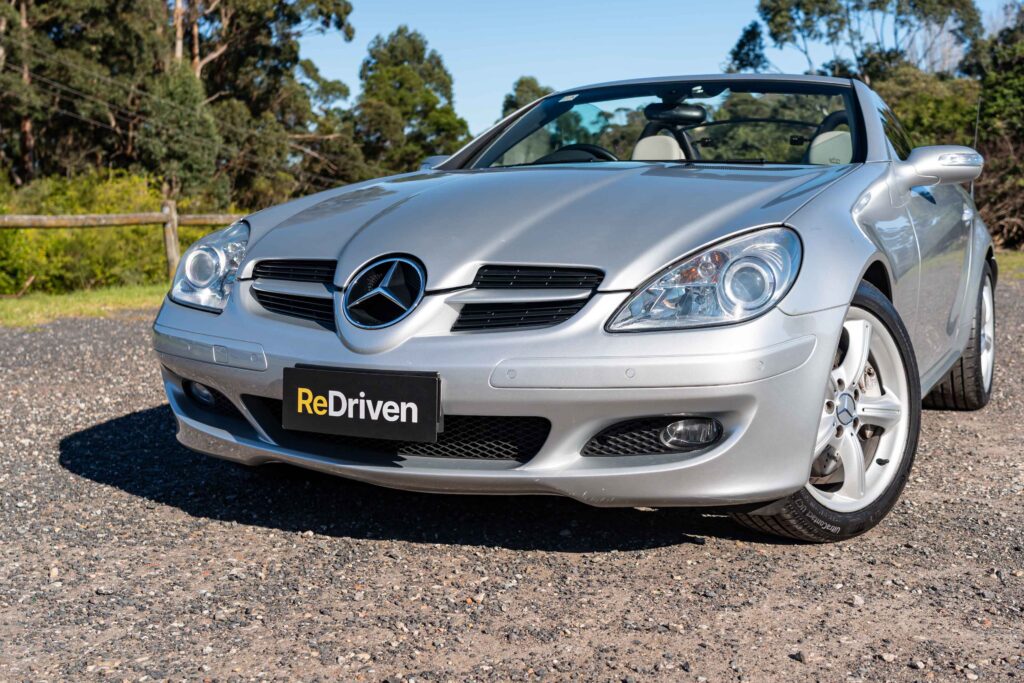
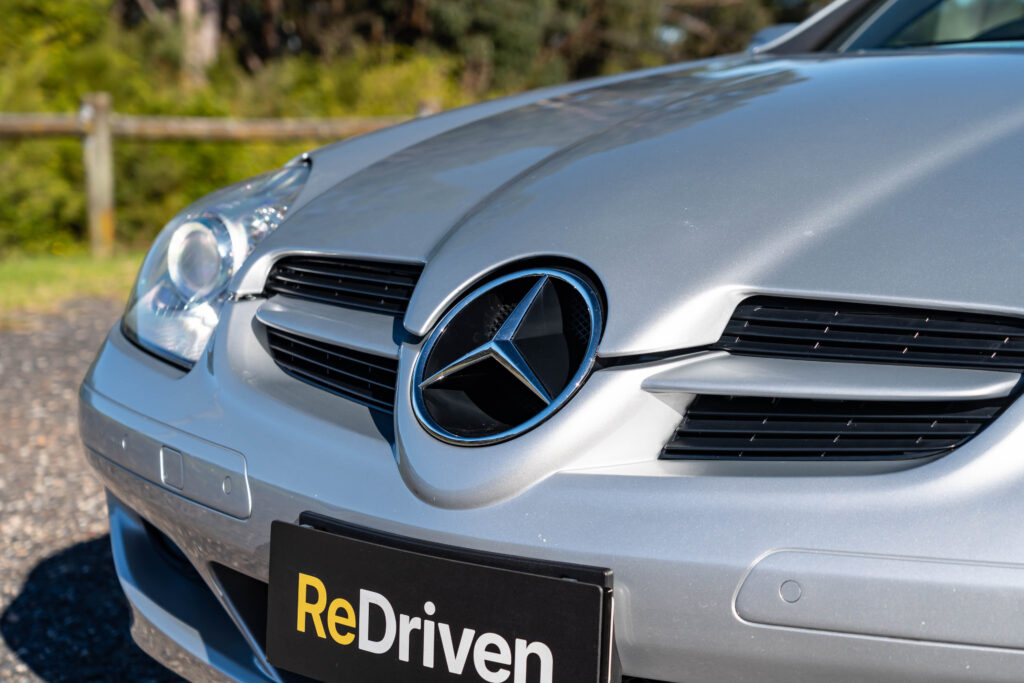
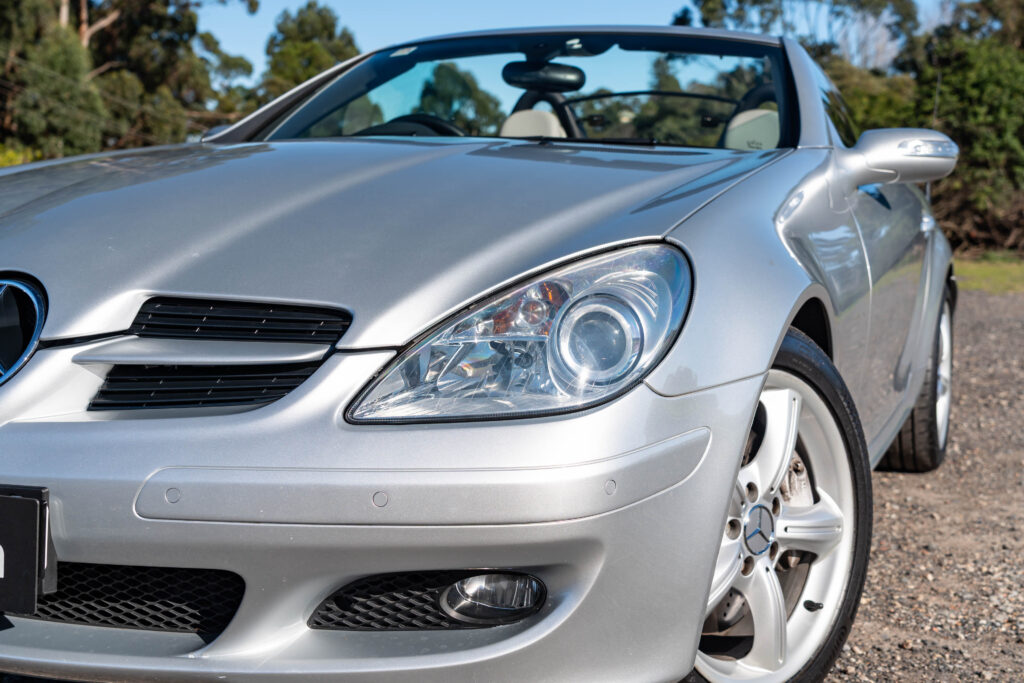
The R171 SLK’s design was inspired by other two-door models within Mercedes-Benz’s range, with the ‘Formula One’ front end drawing from the SLR McLaren, along with other design elements found in the larger SL-Class (R230) – leading some to also refer to it as a ‘mini-SL’.
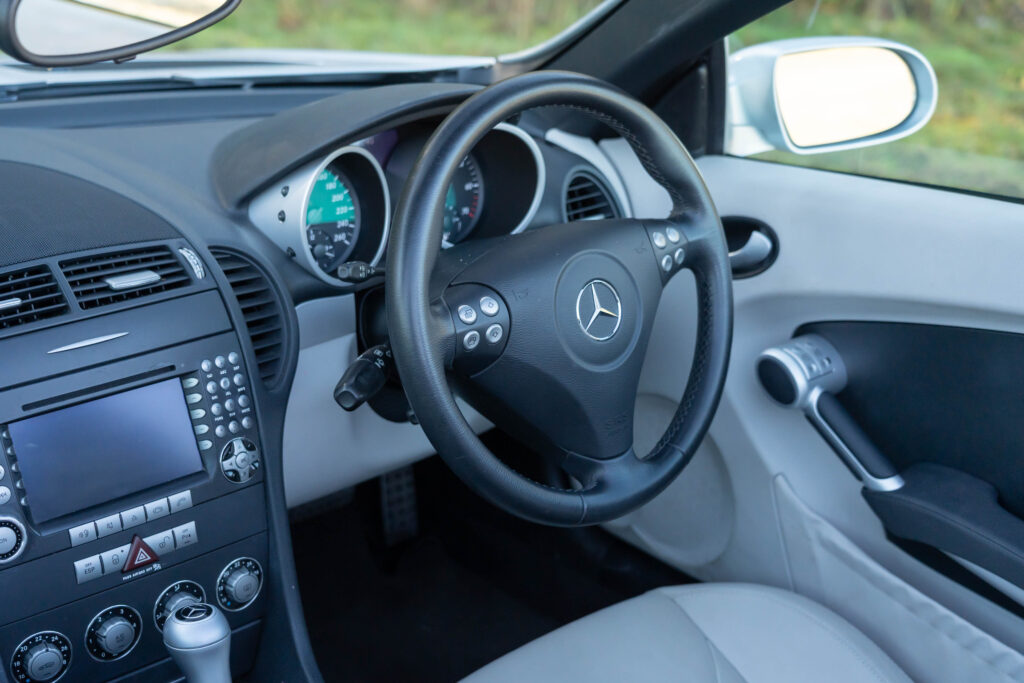
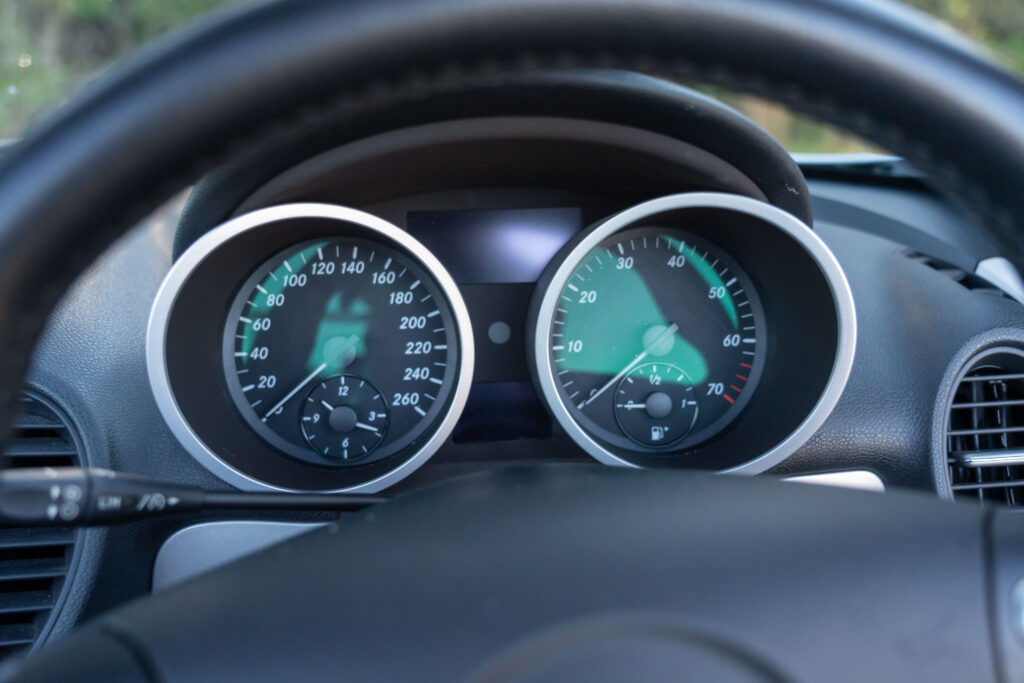
A midlife update was introduced in 2008, updating the exterior appearance (new bumpers, LED lights), the redesigned cockpit (new instrument cluster, dashboard, steering wheel design), and minor improvements to performance and cabin tech, before production ended in 2011.
Australian-delivered R171-SLKs came with either a 1.8L supercharged (Kompressor) four-cylinder, a 3.0L-3.5L naturally aspirated V6, or a 5.4L V8 exclusive to the SLK 55 AMG/AMG Black Series models. These were also paired with either a five- or seven-speed automatic transmission, or a six-speed manual.
As with other models within Mercedes’s lineup, AMG-tuned variants were also introduced (SLK 55 AMG), but special mention has to go to the ‘Black Series’ models.
Being one of the first models released under Affalterbach’s skunkworks division, these featured a more powerful V8, better cooling/aerodynamics, a fixed roof, carbon fibre door panels/trim, and specially-tuned KW suspension; with less than 800 built and only 150 reported to be in right-hand drive.
Exterior:
The folding hardtop, aka ‘Vario-Roof’, is the SLK’s main exterior selling point, offering far superior rigidity, driving and cabin refinement compared to soft-top roadsters.
But as it’s a very complex part with various folding mechanisms and other components, it can suffer plenty of faults that can affect its regular operation.
This power roof primarily operates via a series of hydraulic components (pumps), and they are known to leak, causing them to fail. Issues with these parts can leave the Vario-Roof unable to open/close, be very slow to retract/raise, or in rare cases, cause the roof to be stuck halfway.
Fixing plenty of these hydraulic parts or the folding metal roof’s motors can be potentially very expensive, so we highly advise checking that this roof mechanism is faultless by opening/closing it several times and listening for any abnormal noises or inconsistent operation.
The bodywork on the SLK may also need some attention if not cared for. Body paint, for instance, is reported to be very easy to scratch/mark, and the clear coat on certain colours is not proving to be as resilient.
You really have to watch out for corrosion on any of the body sections. It isn’t as prevalent for cars in warm climates like Australia, but we highly recommend doing a thorough pre-purchase inspection, no matter where the car has primarily resided.
The front quarter panels are very susceptible, with corrosion forming from a bracket underneath these, which then causes the rest of the front section to ‘bubble’.
Also, if body panels need to be resprayed, owners report being quoted around $1,000 per panel from Mercedes-Benz, with labour costs for panel installation and paint application ranging between $2,500-4,000.
One of the more serious issues is rust/corrosion forming from the inside out on the rear subframe – if it gets bad enough, the entire subframe will need to be replaced (costing between $5-8,000).
There are reports Mercedes-Benz was aware of this defect from production and changed the subframe supplier for cars made 2007 onwards – this did reduce the number of rear subframe complaints, but didn’t fully resolve this quality issue.
Support brace bars underneath the car are also prone to rusting through. As Mercedes-Benz has discontinued producing this specific component, it can make sourcing compatible replacements difficult – we heard some SLK owners spend 6-12 months to find ones, or fabricate a replacement part instead.
The exterior plastics can also show their age and may need attention by now.
Also, pay attention to how the exterior rubber seals are holding up – seals around the bootlid and roof seals can perish, allowing water to get into the car (leading to electronic/corrosion issues).
The SLK’s body also has some less-than-perfect drainage holes that need to be regularly cleaned to avoid plenty of water ingress (and associated electronic issues).
Those underneath the front bonnet block can be especially problematic: upon collecting debris, they can cause water to get into electronic parts, from the wiring loom to the ECU, leading to these electrics going haywire.
Interior:
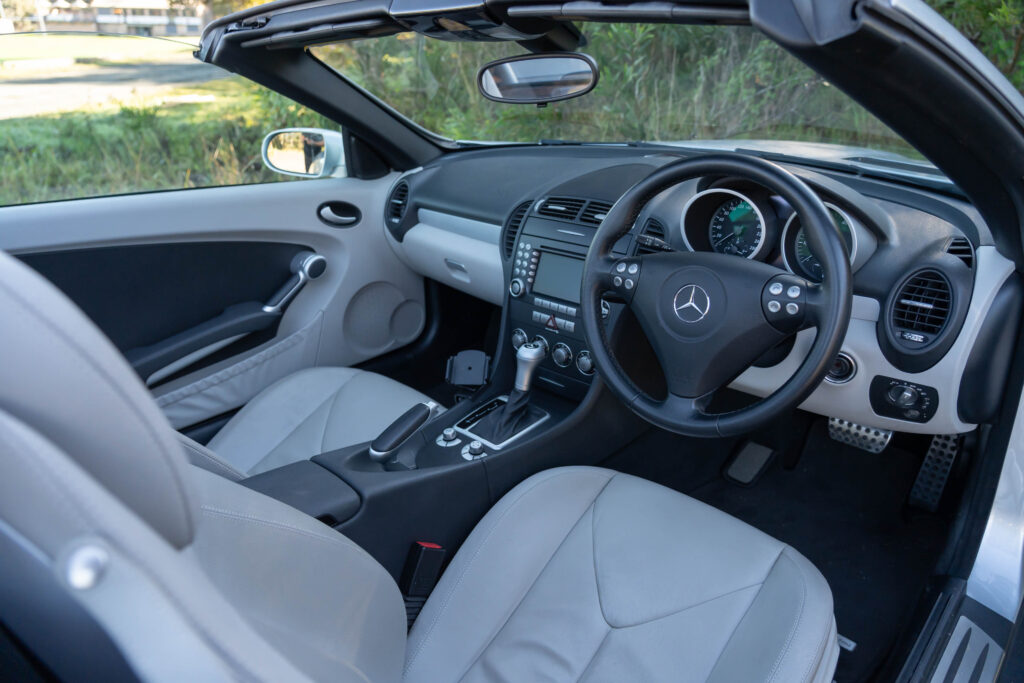
While the Vario-Roof has its strengths, do note that when stored completely in the rear boot space, you’ll find that much of it has been compromised (by the roof storage lid and roof itself), leaving you with far less room than with it raised.
The result is that you’ll find the SLK in convertible form is not the roomiest compared to other open-top sports cars. Therefore, if you are packing for a road trip, it might be better to leave the car in hardtop configuration for the entire journey.
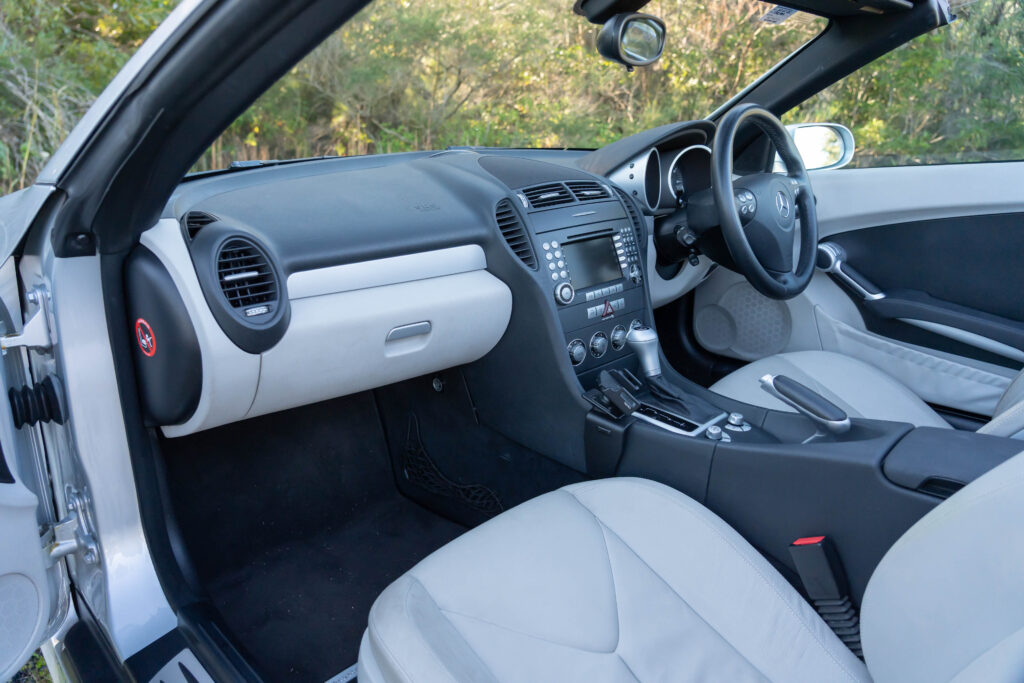
Unfortunately, this era of Mercedes-Benz products is when the brand began to cut corners, and as a result, you’ll find more issues surrounding the general build quality of various interior components.
Plastic components are more brittle and can break easily, or produce more rattles/noises compared to older Mercedes vehicles, especially those exposed to hot climates.
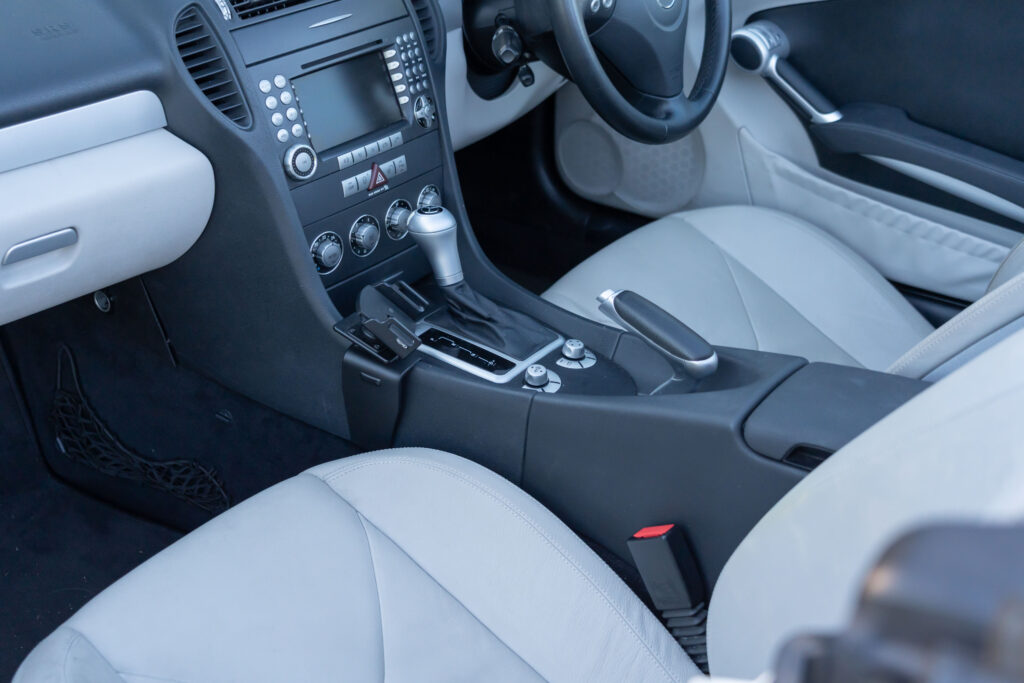
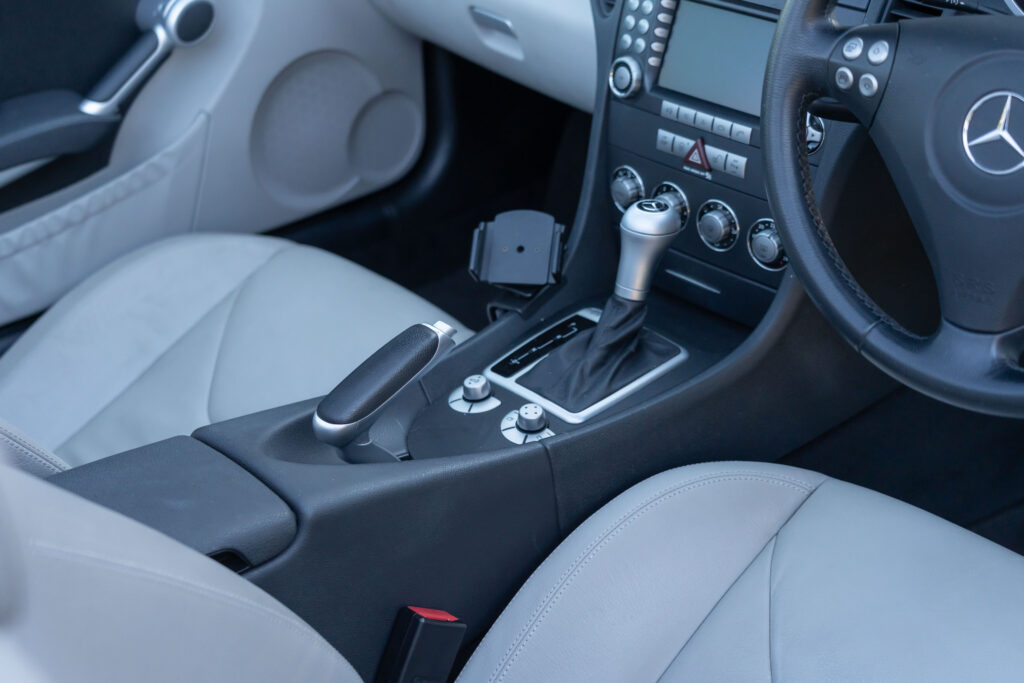
Minor items like the center console lid mechanism are also known to fail easily – but research via owners’ groups and you can find DIY solutions to put them right.
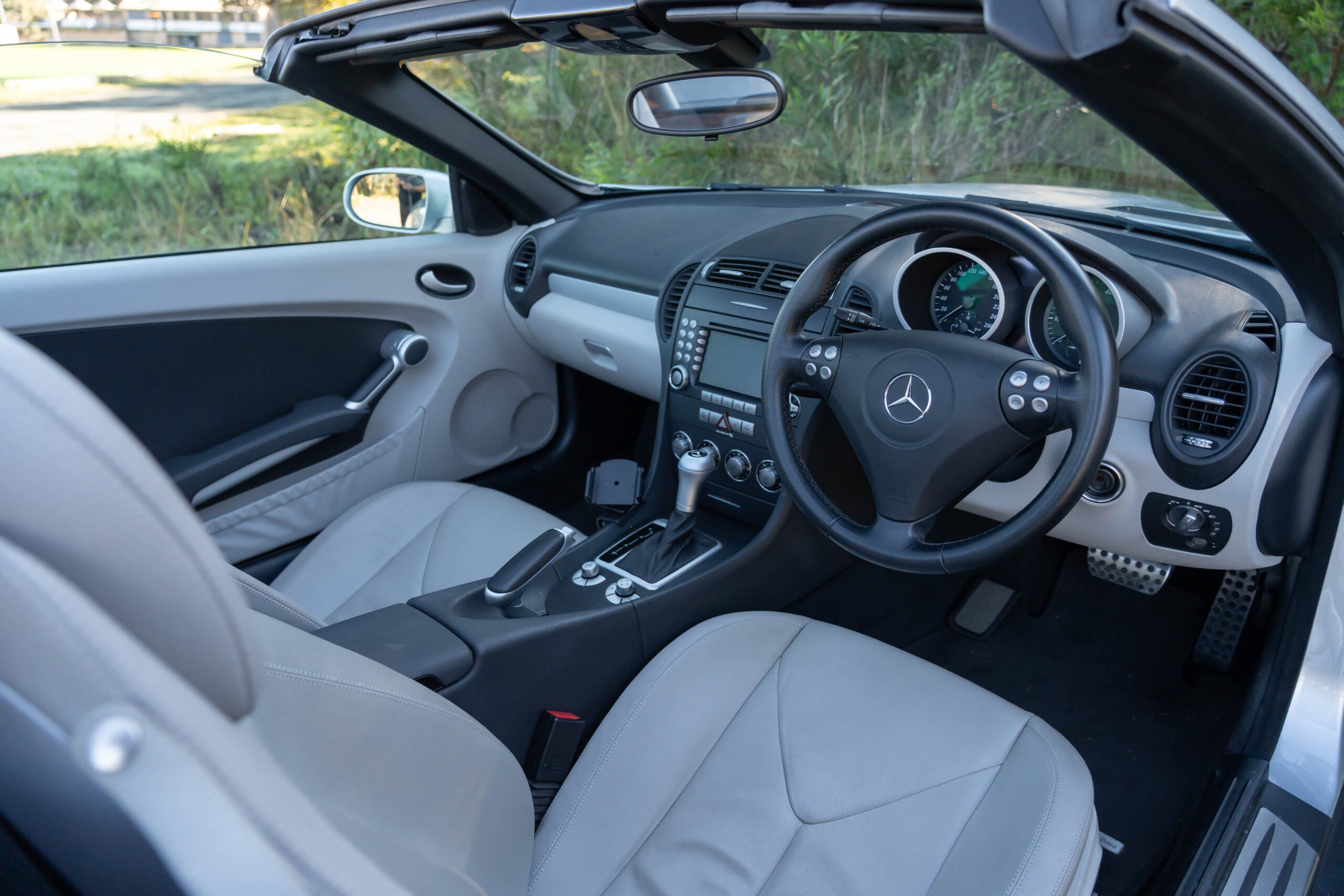
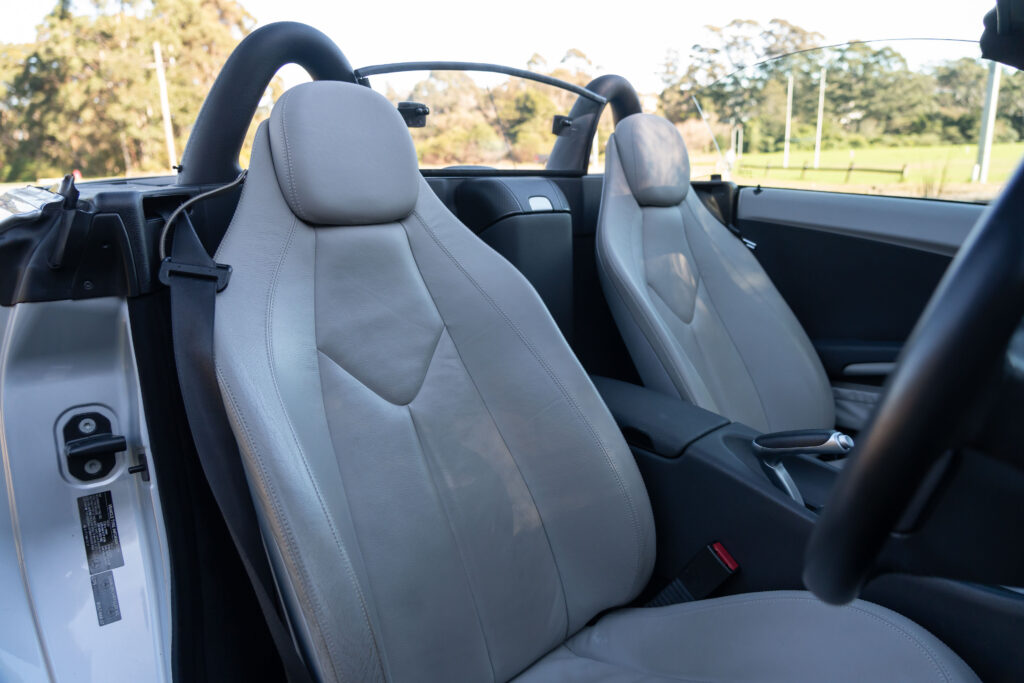
We’ve heard from many owners complain that the quality of the leather seat upholstery is inconsistent, with the seat bolsters and base padding being known to be very weak. Standard (non-Nappa) leather seats can display wear more quickly than expected for a high-end car, by contrast to the Nappa leather equivalents, which are proving to be more resilient.
Though if you are somewhere with warm climates similar to Australia’s, those with Black upholstery easily trap heat when the interior is exposed to sunlight (especially with the roof down). If you are leaving this car for extended periods outdoors, you may want to target one with white/light beige upholstery instead.
Electronic gremlins are also not small in number, and there are quite a few to keep an eye out for.
One common fault is the heater blower motor can sometimes only work at certain speeds/settings, and if it fails, owners have been quoted at least $1,500 to repair it.
In addition, the air conditioning compressor can also go out – we’ve heard quotes of around $3,000 to fix or replace it if it needs attention.
The window mechanism controller can fail, with some owners having it fail annually. More often, the mechanism stops working when a window is lowered fully, meaning it’s stuck in the position until it’s fixed.
The siren for the alarm can also go out, as well as the parking sensors (either the sensors themselves failing or the visual ‘PARKTRONIC’ distance guide being inaccurate).
The multi-function steering wheel control buttons can also fail – it’s worthwhile to check that they all work while performing an inspection.
Owners we spoke to recommend targeting examples featuring integrated air vents within the headrests, aka the ‘AIRSCARF’ feature, which can offer heat relief around your head when the roof is down; though it can also experience issues, and you should check it works, or budget $1,500-2,000. Mercedes-Benz dealers may attempt to charge you for a fix.
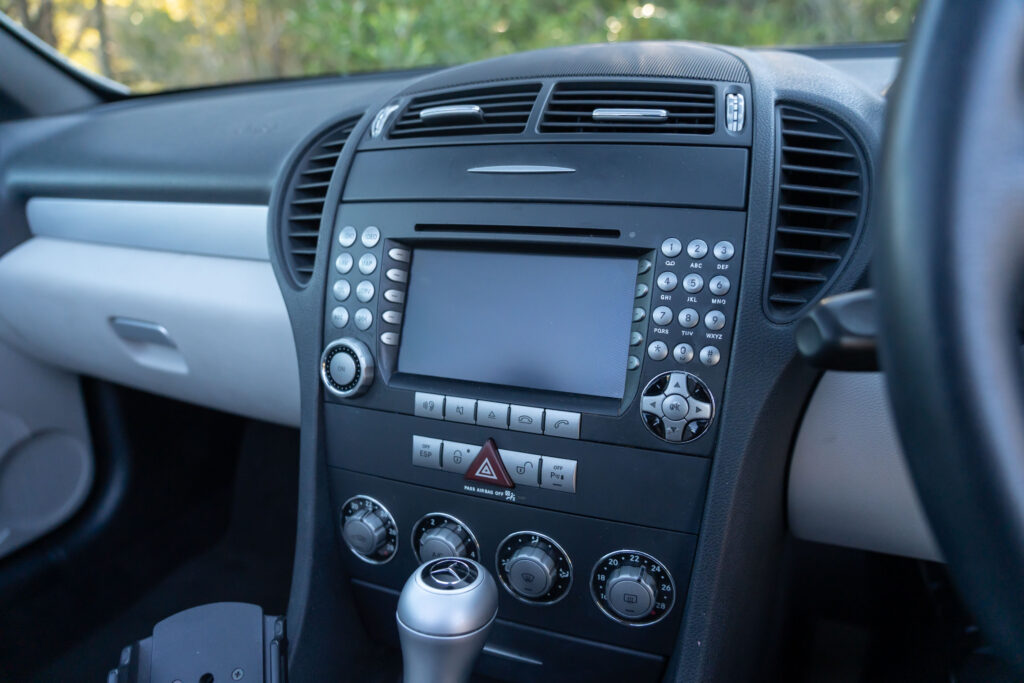
Like other markets, Australian models came with an early version of Mercedes’s ‘COMAND’ infotainment system, whose features and tech are very underwhelming by today’s standards. Owners have also reported a variety of issues through their use of these systems, which have gotten worse over the years.
But the upside is that this piece of cabin tech can easily be replaced with better aftermarket head units, which can bring all the modern connectivity features you need (Apple CarPlay/Android Auto/up-to-date Bluetooth/parking cameras).
Mechanically:
Early/mid-2000s Mercedes-Benz models, the SLK (R171) included, are prone to more mechanical issues compared to preceding generations of vehicles – once again, due to the brand applying cost-cutting measures that shook off the mechanical superiority these cars were renowned for.
From cheaper materials to lighter-weight composites and other production measures that maximised efficiency over attention to detail and longevity, it’s no wonder that by the early 2000s, Mercedes-Benz ranked at the bottom in multiple reliability surveys.
The German luxury brand ultimately relied upon its brand value and image to sell its products, with high price tags that also translate into high premiums for upkeep and spare parts, especially now that these 2000s-era cars have further aged.
Adding to this, some owners report getting fairly high insurance quotes for this iteration of the SLK, due to various parts becoming scarce and harder to find; in addition to the premiums they can ask for.
It’s worth exploring aftermarket parts versus immediately going for genuine Mercedes consumables. Items like brake pads, rotors, or suspension parts can ask significant premiums, whereas aftermarket equivalents can often cost far less and outperform the OEM parts. It’s worthwhile to consult available owners’ groups/forums for suggestions on what parts might be suitable.
We also advise that when it comes to servicing, shop around to find a reliable independent mechanic or Mercedes-Benz specialist workshop; often, these third parties can deliver far superior quality service/workmanship at more reasonable prices, compared to Mercedes-Benz dealers.
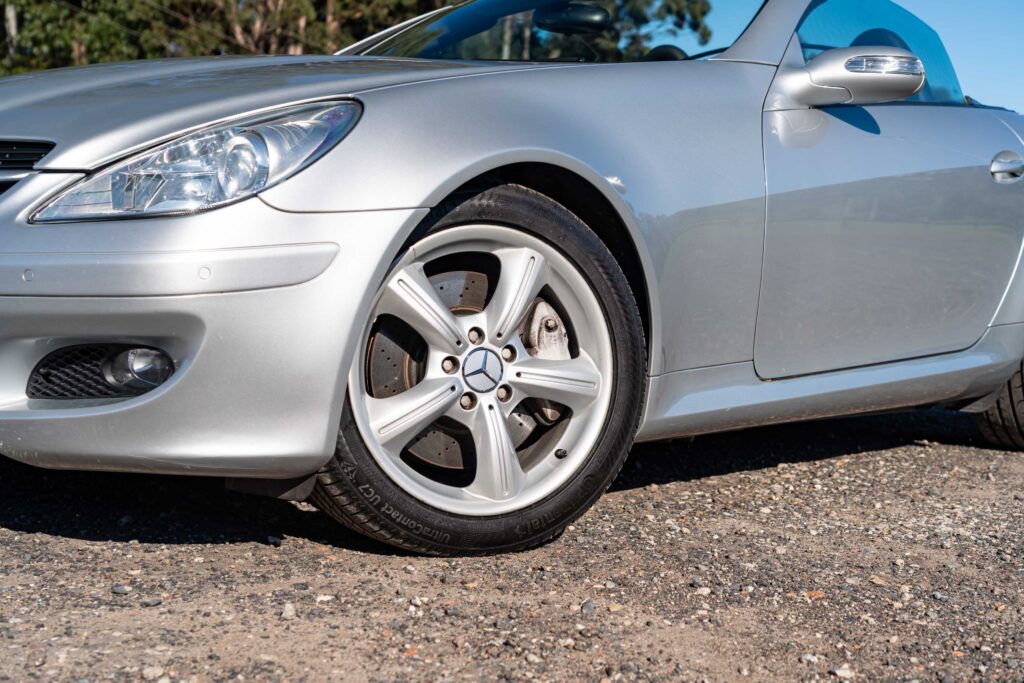
Good rubber is also important to ensure a sports car like the SLK drives at its best. Check the current set all match and ideally, the tyres are from a premium brand and optimised for the car. Anything else can hint to a past owner that has cut corners when it comes to upkeep.
Suspension components are consumables that need attention by now, given the second-gen SLK’s age. We’ve heard multiple reports of the dampers and springs requiring replacement/failing – with cars using 18/19” rims reportedly transferring more ‘shock’ and vibrations throughout the body compared to those with smaller 17” wheels, which accelerates the wear and tear of the suspension parts.
This is even more prevalent on the SLK 55 AMG models – not only do they use firmer suspension and larger low-profile wheels from factory, but the front suspension arms/bushes can wear fairly rapidly, significantly affecting how this sports car drives.
Reliability aside, it’s also worth keeping in mind that while the SLK has ‘sport’ in its nameplate, it prioritised comfort and luxury over outright performance. It lacks the dynamics you find in comparable roadsters of this segment, with its heavier weight and slightly lethargic driving response – much like how its bigger counterpart, the SL-Class, is more of a refined grand tourer.
The upside is that you’re likely to find examples on the used market that have been kept by mature previous owners, who ideally have been fastidious about maintenance and servicing; unlike other sports cars that attract more neglectful, careless owners.
Engines:
It’s important to highlight that all of these engines are known to experience oil and coolant migration, from the sensors through the wiring harness, leading to plenty of ECU issues.
In addition, the usual range of cooling system problems that affect older Mercedes vehicles of this era can also creep up, as the components undergo multiple heat cycles and age; this means anything made from plastic can break, alongside fluid leaks.
PCV complications are also commonly heard of, ranging from engine misfires to vacuum leaks and lean engine codes appearing (when plugging in a diagnostic tool).
1.8L supercharged four-cylinder (M271, SLK 200 Kompressor)
The supercharged four-cylinder is known to suffer timing issues – this includes timing chains, variable-valve timing gears, chain guides, and tensioners wearing down. (Put into perspective, one example we heard of had half the belt tensioner in the sump region).
Oil leaks that then lead to engine oil getting into other parts of the engine are also a known problem. It can get onto the wiring harness and eventually make its way onto the ECU due to the cam adjuster magnets leaking oil into the plug connector. New magnets will help prevent this, but for even better protection, consider investing in wiring adaptors that prevent oil migration entirely.
The supercharger (‘Kompressor’) can encounter issues, from internal bearing failures to drive belt complications. Hence, this is why in later applications, the four-cylinder abandoned the supercharger altogether for a turbo.
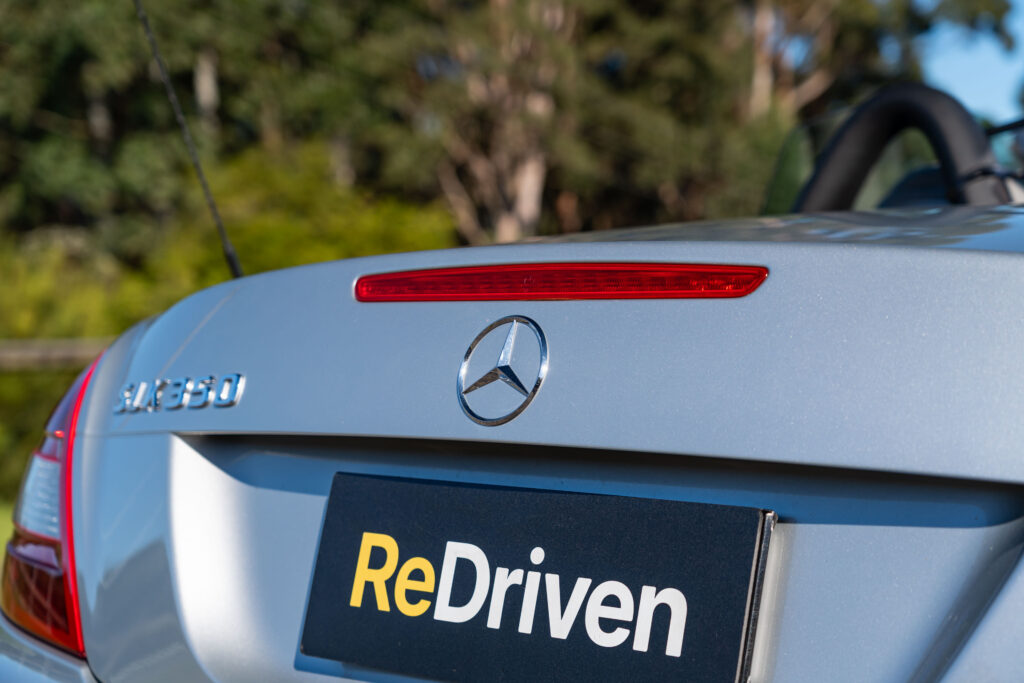
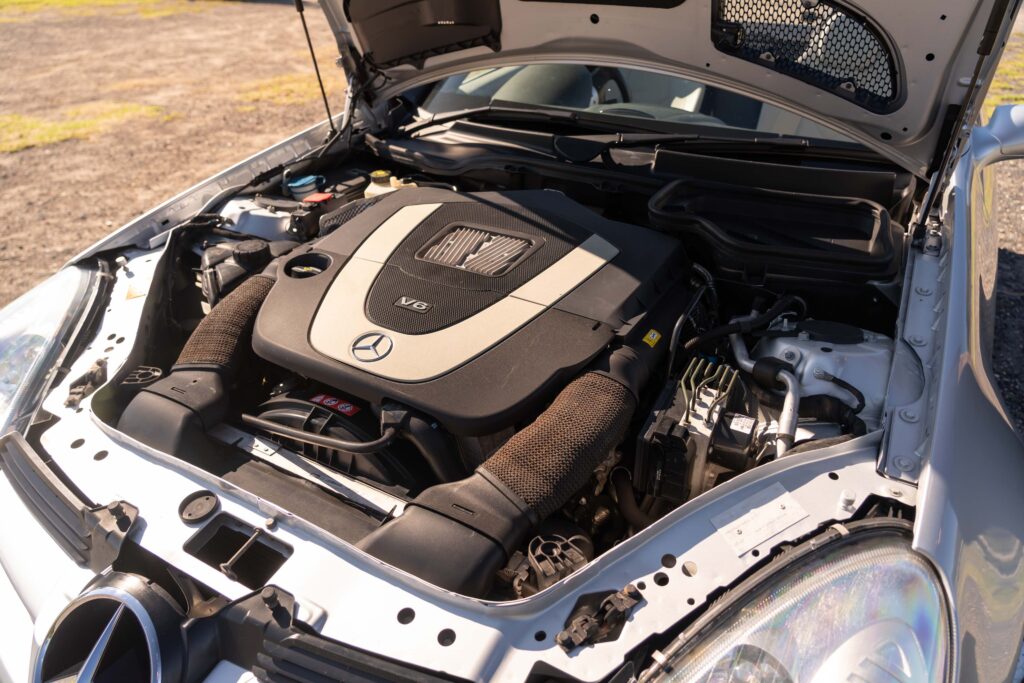
3.0L-3.5L naturally-aspirated V6 (M272, SLK 350)
The V6’s common failure point is its balance shaft drive gear – being poorly constructed means it’s very fragile and prone to breaking. The gear is driven by the timing chain, and when it fails, it is a major and costly job to remedy.
Correlation fault codes can be an indicator it’s having issues, and when it fails, a very audible rattling noise will be heard. If you have to change the drive gear, it’s also worth replacing the cam gears as well, as they’re prone to failing too.
Another set of components to pay attention to on the V6s are the intake manifold and swirl flaps – these contain a lot of vacuum actuators and linkages that fail. It’s possible to replace them as a temporary fix, but often, you’ll also have issues with the shafts and position sensors/seals, so it’s worthwhile to replace the entire intake manifold (difference between saving money short-term versus doing long-term, preventive maintenance).
The same oil dilution and leakage issues from faulty cam adjuster magnets and solenoids seen in the four-cylinders can also affect the V6s.
5.4L naturally-aspirated V8 (M113, SLK 55 AMG)
The V8s used in the AMG models are actually fairly robust, and out of all the possible engines with second-gen SLKs, are the ‘safest’ option when it comes to general reliability.
They still are prone to developing oil leaks from common sources, such as the valve covers, oil filter housing, timing covers, and rear main seals, as well as drivebelt issues.
In addition, if oil leaks onto the harmonic balancer and causes it to fail, you’ll often hear it producing a squeaking noise from the belts, as well as see it physically moving abnormally at idle.
Misfires are also common with the V8 engines, and don’t forget – these require sixteen individual spark plugs and spark plug leads to be replaced as part of a service!
Being a performance-oriented powertrain, it’s also strongly advised to check that it comes with a detailed service history to confirm it has not been neglected to any degree – especially if they’ve been thrashed or subjected to any degree of aggressive driving.
Modifications are also possible with this powertrain, but as advised with other examples, either stick to one that is close to factory condition, or has reputable mods, professionally installed that don’t risk the likelihood of any mechanical issues.
Transmission:
The five/seven-speed automatics can experience conductor plate issues (aka the transmission control module), and to make replacing it more difficult, you’ll find that it’s located within the transmission itself – meaning a lot has to be removed to access this single component.
Early SLK 350s were known for their gearbox speed sensors failing, causing the vehicle to be stuck in third gear – one owner reports that a Mercedes-Benz service department quoted them $2,500 to repair it.
If you happen to find one of the factory-equipped manuals, the good news is that these manual transmissions are generally quite reliable.
Occasional clutch or dual mass flywheel issues can pop up, but the severity of the issues can vary depending on how they’ve been treated (rough, aggressive driving versus calmer driving styles). Rattling noises from the transmission hint towards issues that need to be resolved.
Current prices for second-gen SLKs start from $10,000 and top around $20,000-30,000.
On the used market, pricing for these has largely bottomed out as they’ve experienced the most depreciation they’ll ever have. Though the standard SLK 180-350s haven’t experienced any changes in price trends since 2023, SLK 55 AMGs are beginning to show an increase.
The cheapest examples will largely consist of high-kilometre, highly used examples, while those in the higher price range will likely be mint, post-facelift models.
The V8-powered SLK 55 AMGs can start from $25,000, with the best, mint examples featuring the optional AMG Performance Pack (030/P30) around $60,000; while the Black Series models, given their rarity and collectable status, start from as high as $100,000.
We feel the older, lower-spec SLK models are not worth considering in today’s used market; the post-facelift models are only slightly more, provided they’re in mint condition and have some desirable optional equipment, from the AIRSCARF system to improved aesthetic styling offered by the AMG Sports Package.
But if you want definite future classic material, the ones to target are mint-condition, low-kilometre SLK 55 AMGs, especially those with the optional AMG ‘Performance Pack’ with all the powertrain and running gear improvements they boast over the standard AMGs.
While they were very attractive when launched as a new car, as a used car purchase with considerable use and age, it’s very easy for the wrong example to be a serious headache you don’t want to live with.
Especially as a product of when Mercedes began to cut corners when it came to engineering their vehicles, these are not resilient to any sort of missed servicing or shortcuts towards maintenance, unlike some other roadsters you can also buy for this amount of money.
If you want a compact sports roadster that truly has driving potential, we recommend other options that have far better sporting credentials; other German models like the BMW Z4 and Porsche Boxster to Japanese equivalents like the Honda S2000 and Mazda MX-5.
But we understand the hidden appeal of a roadster like the second-gen SLK may be to some. Provided you can afford the upkeep and treat it with utmost care, they can prove to be a relatively okay used car purchase.


Co-creator, presenter & writer, ReDriven

There are better cars out there.
 4 weeks ago
 4 weeks ago
 1 month ago