Australia’s No. 1 Used Car Review Website
Australia’s No. 1 Used Car Review Website
+20 Photos

2018 Hyundai Kona Highlander 2.0

12 March 2026
Yes. 100%.

2018 Hyundai Kona Highlander 2.0

Used car review
12 March 2026
The Hyundai Kona has been one of the Korean brand’s best-selling crossover or compact SUV models since it first debuted in 2017. Positioned below the Tucson, it was the smallest crossover SUV in the Hyundai global line-up, until the introduction of the subcompact Venue.
The first-generation, known internally as the ‘OS’ experienced multiple updates throughout its entire run from 2017 to 2023:
This iteration of the Kona also rides on a platform derived from the Hyundai i30N hatchback, including the same engines and interior design.
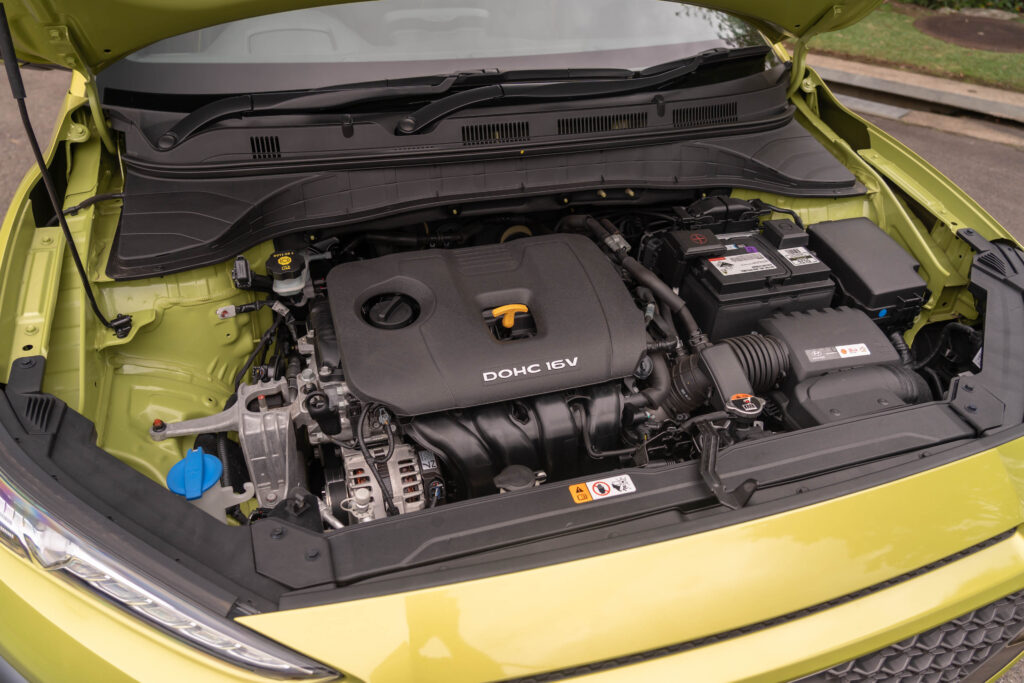
Powertrains for Australian-market models include two four-cylinder petrol engines: a 1.6L turbocharged unit and a 2.0L non-turbocharged unit, sending power to the front or all four wheels through a 6-speed automatic (torque converter or dual-clutch) transmission, and, in later models, Hyundai’s ‘Intelligent’ Variable Transmission (CVT).
The OS-gen Kona is also available with an all-electric powertrain, marketed as the Kona Electric.
It’s also worth highlighting that in other markets, the Kona is also available with a manual transmission, as well as petrol hybrid and diesel engines.
Plus, special mention has to go to the performance-grade Hyundai Kona N, enhanced by Hyundai’s N Division – but that model is on a whole different level compared to the standard Kona.
Exterior:
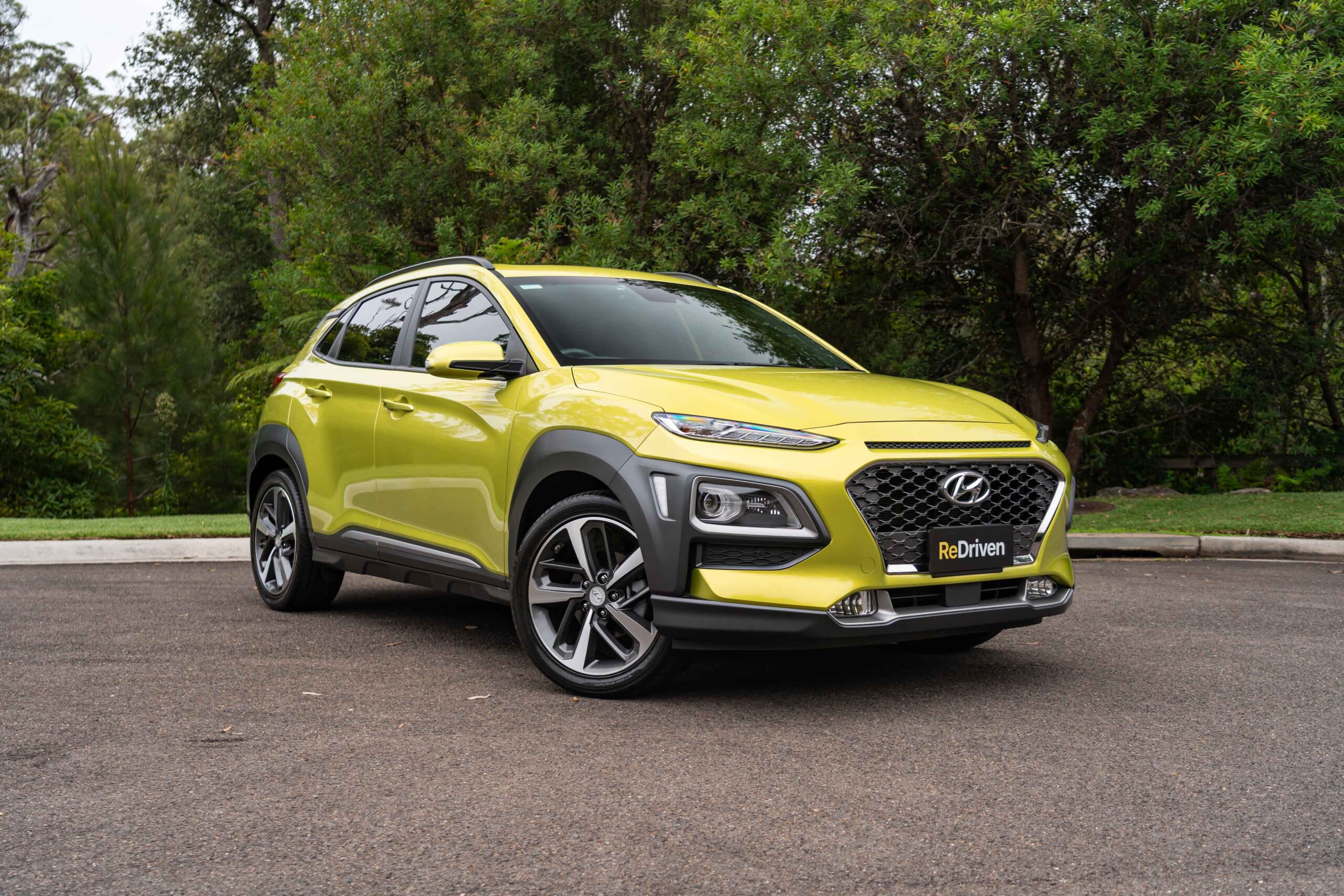
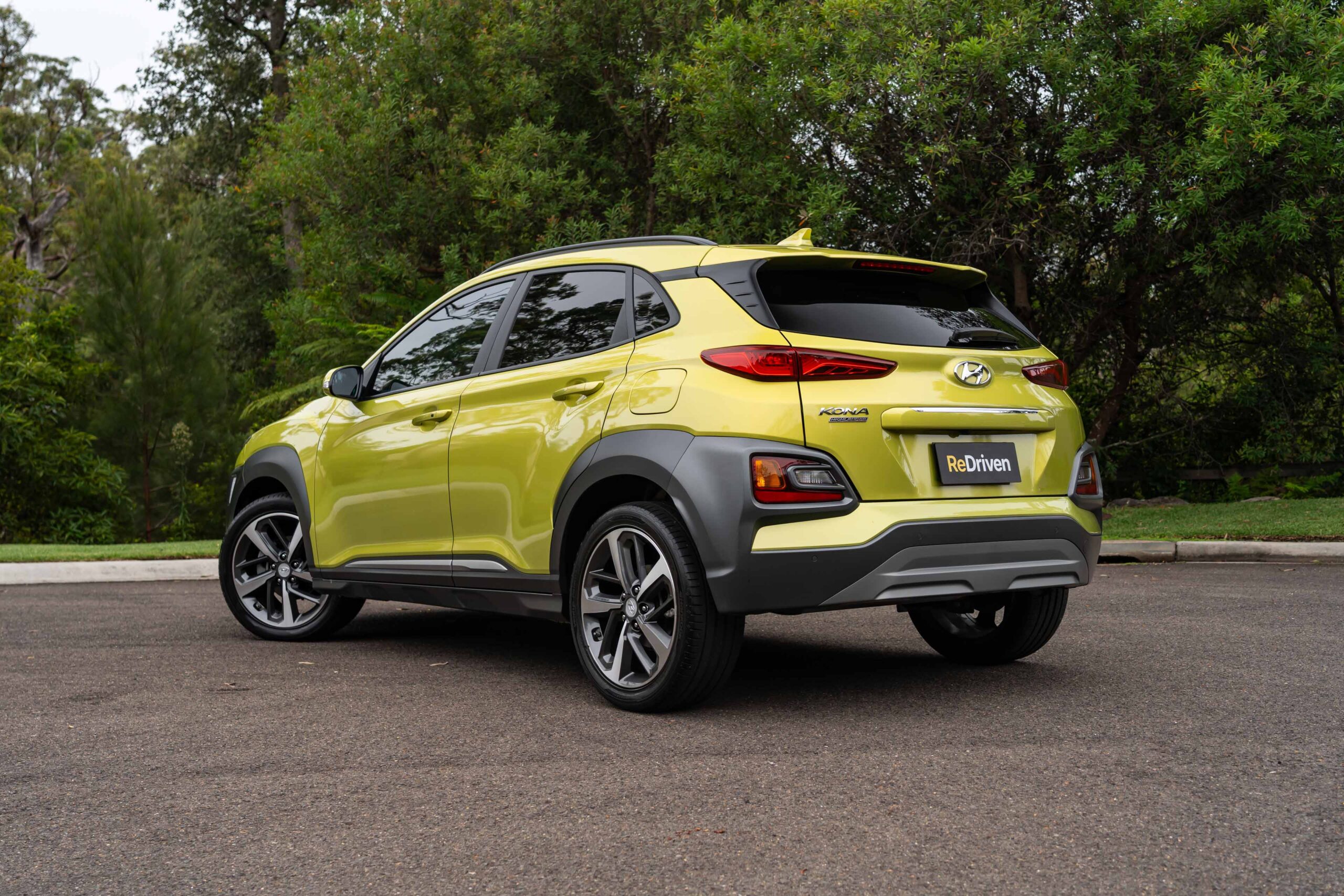
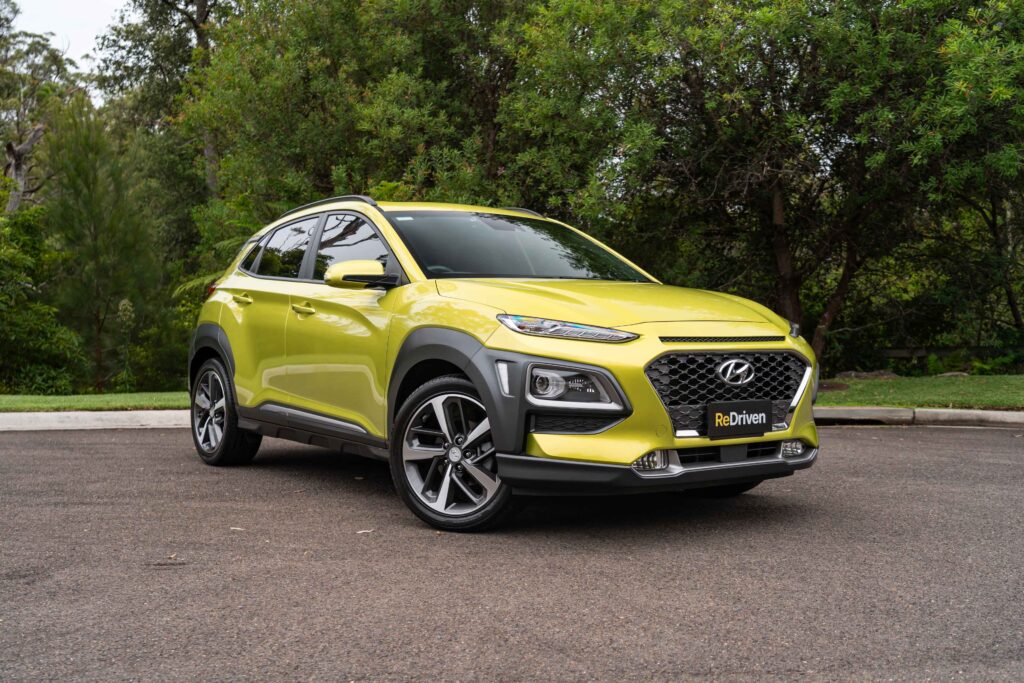
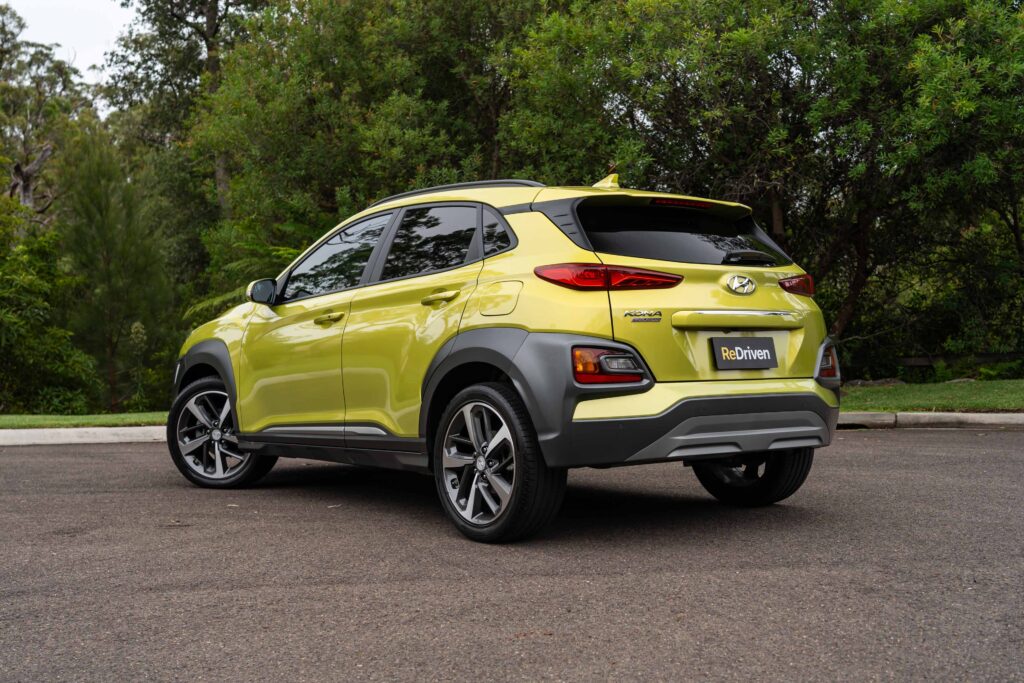
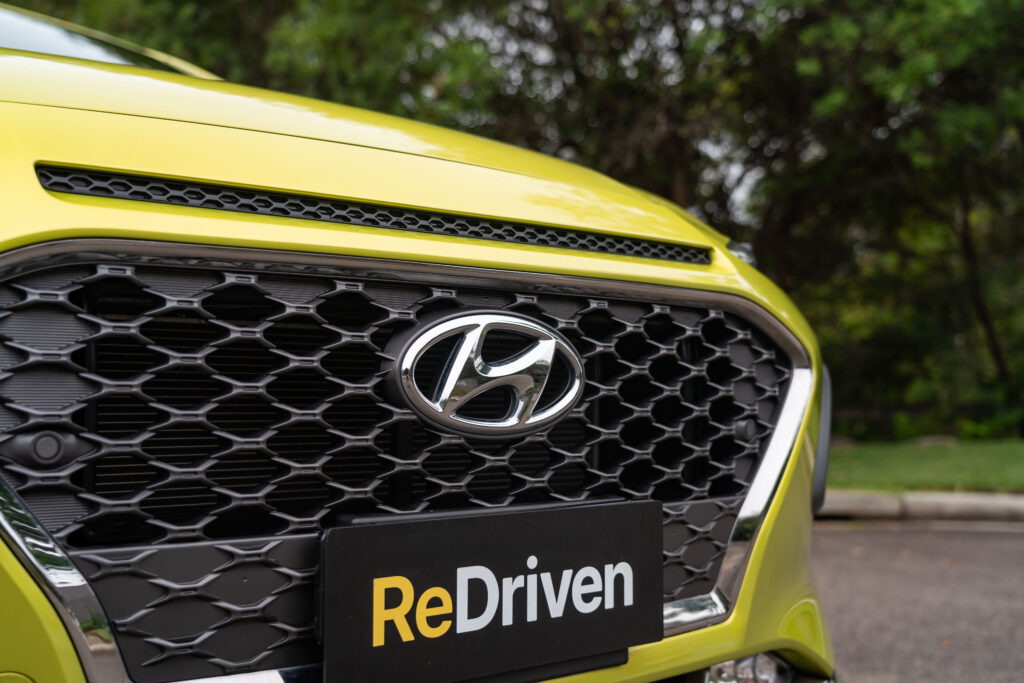
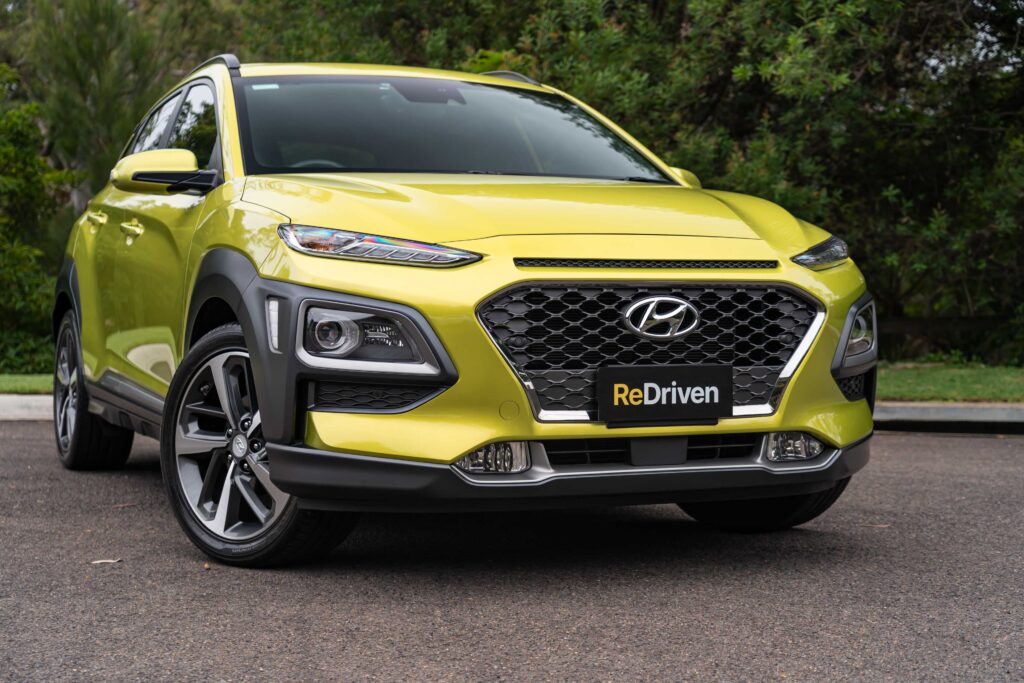
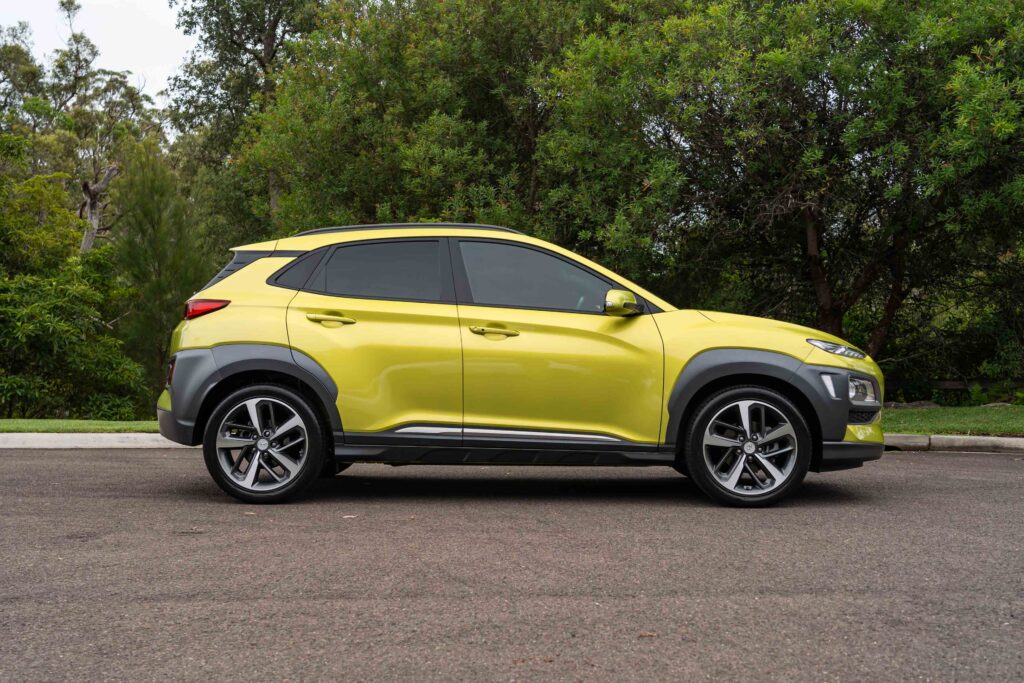
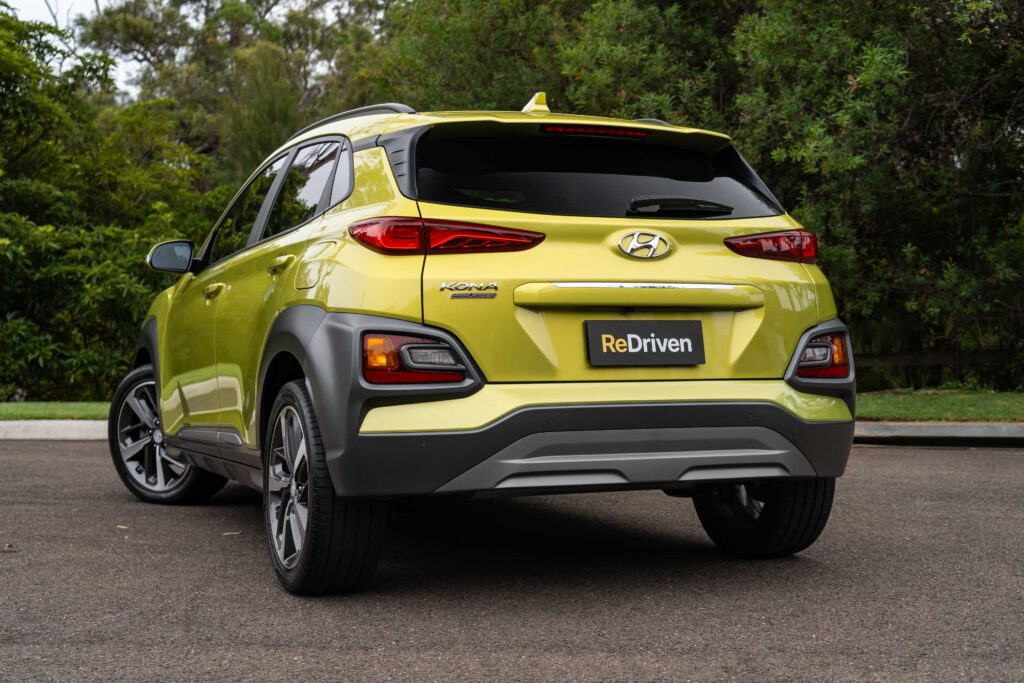
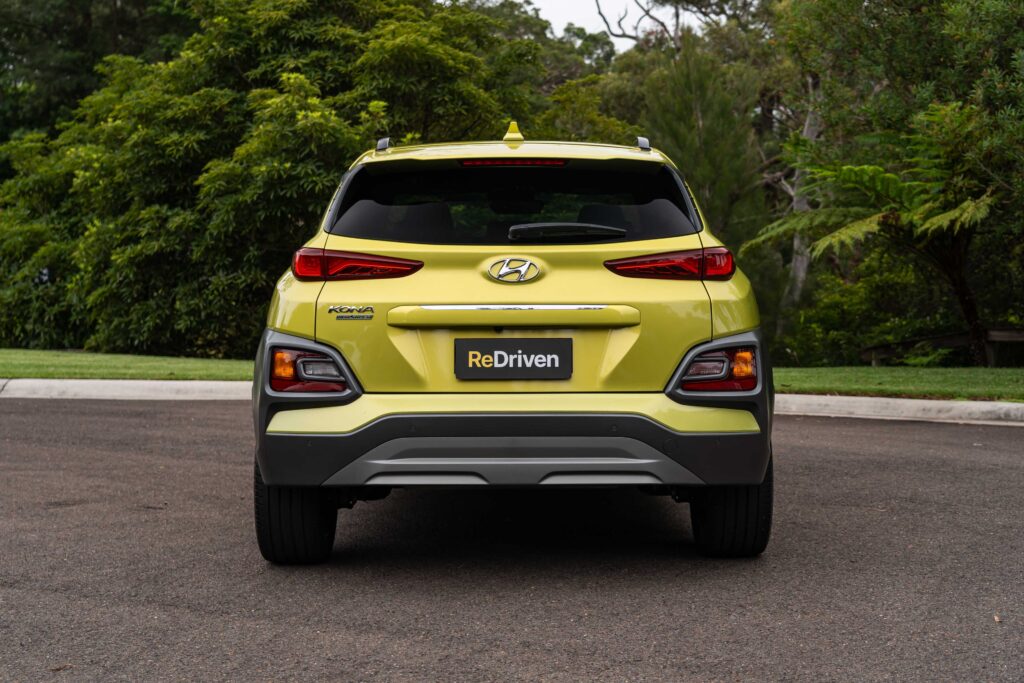
Between the petrol and all-electric Hyundai Kona, they share an almost identical appearance on the outside, minus the Kona Electric’s omission of a front grille, along with a charging port on the front.
The paint resilience can vary by colour and model year among all Kona iterations – we’ve been told it’s worth checking the condition of the body panels thoroughly to see how they’re holding up, as some prove to be more brittle.
Some owners report their Kona’s panels can be chipped fairly easily, or noted the clear coat peeling altogether, but others have found their Kona’s bodywork does not experience these same issues.
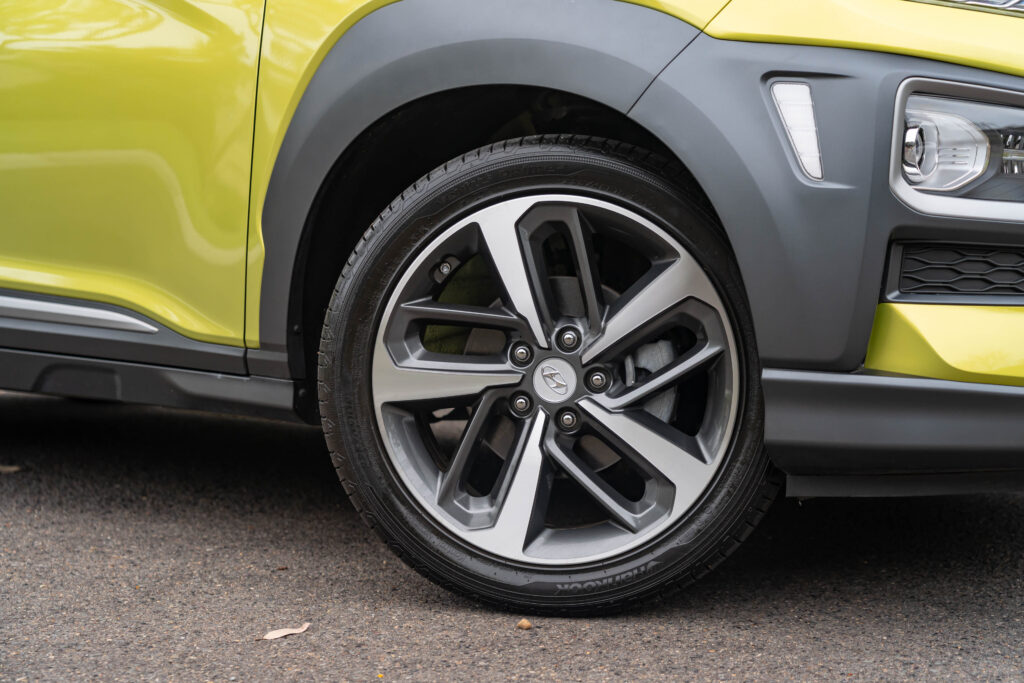
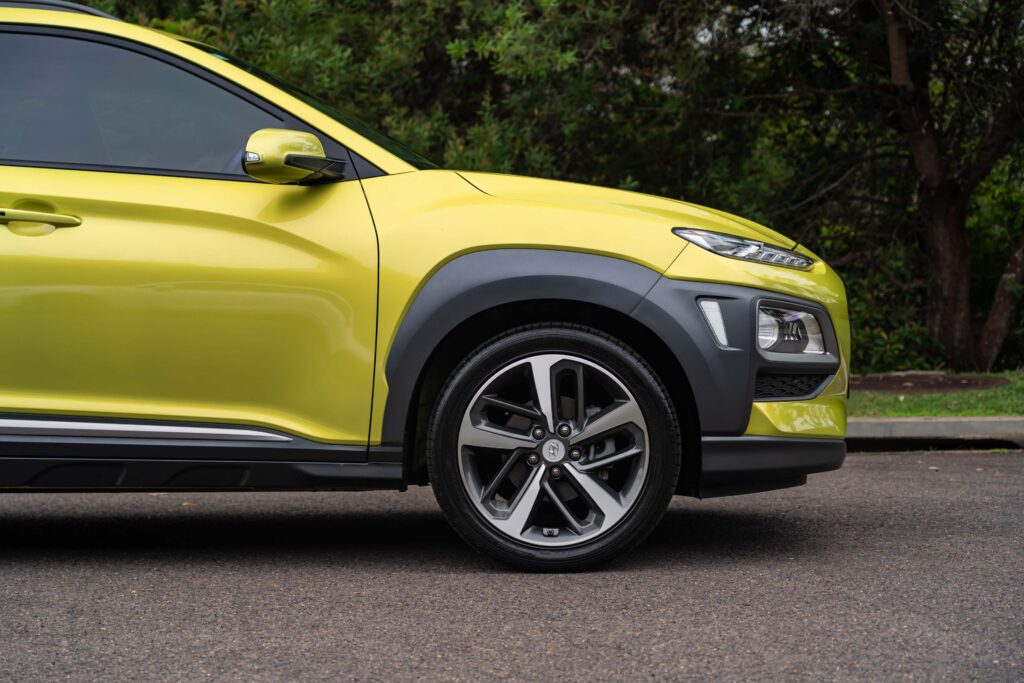
The same goes for the exterior plastics, especially the plastic cladding – any that appear greyish or discoloured could hint towards neglect or harsh UV exposure under previous owners.
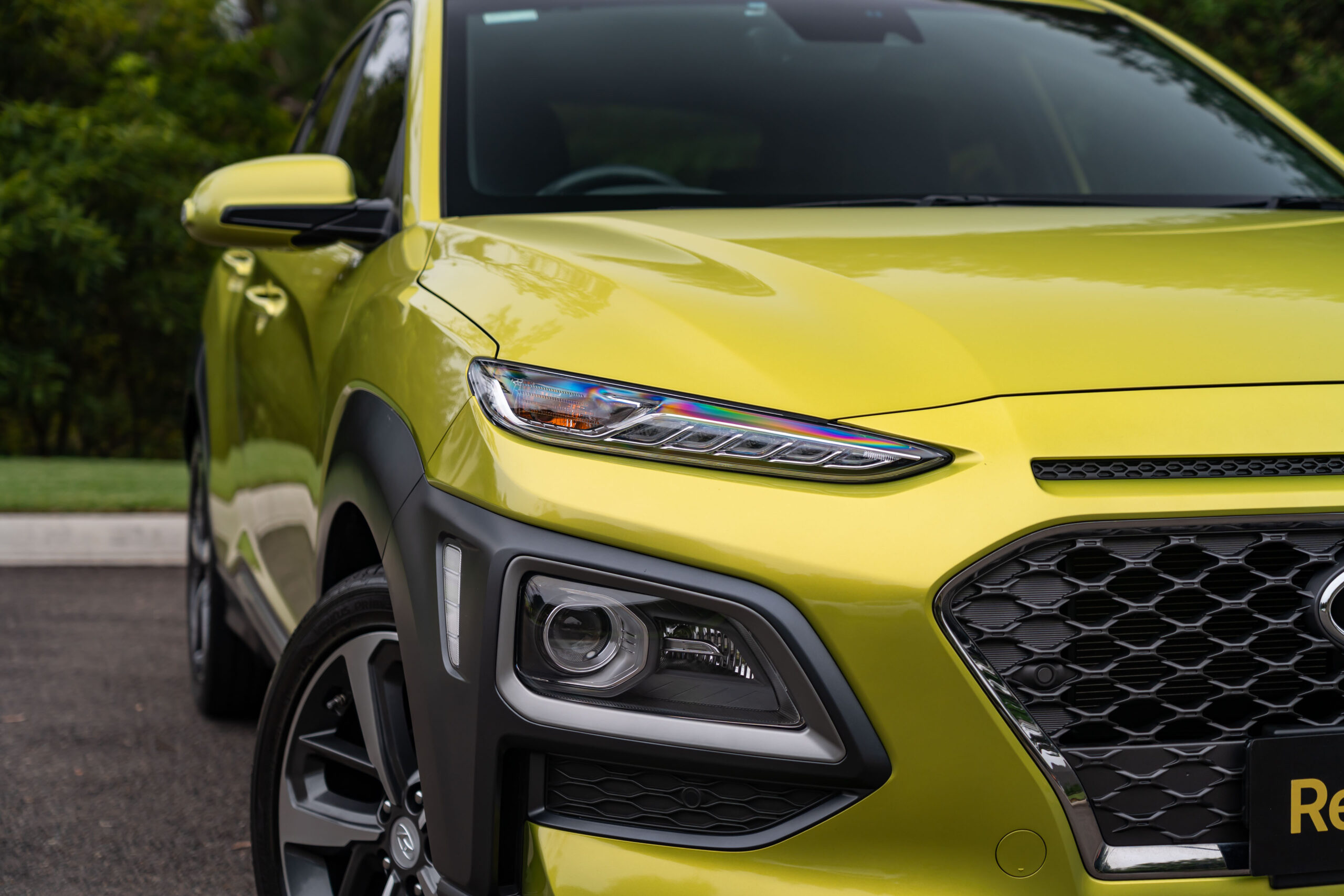
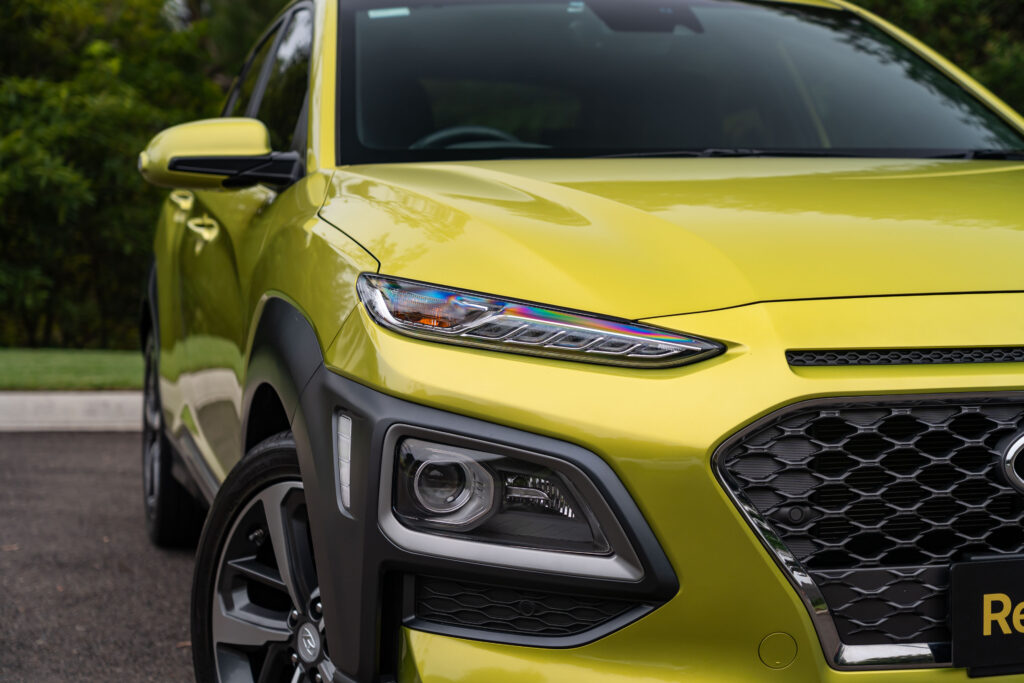
Occasionally, the daytime running lights (DRLs) can have their seals weaken over time, allowing moisture and condensation to build up that leads to electrical issues. Many owners have had this resolved under warranty, and even on those out-of-warranty, we’re told Hyundai has still been able to assist.
Roof accessories, like external racks, are popular accessories to install, but there have been a few reports of loose roof rails.
The exterior antenna on the roof can also come loose easily and fall off, but these items are very easy and affordable to fix via DIY solutions.
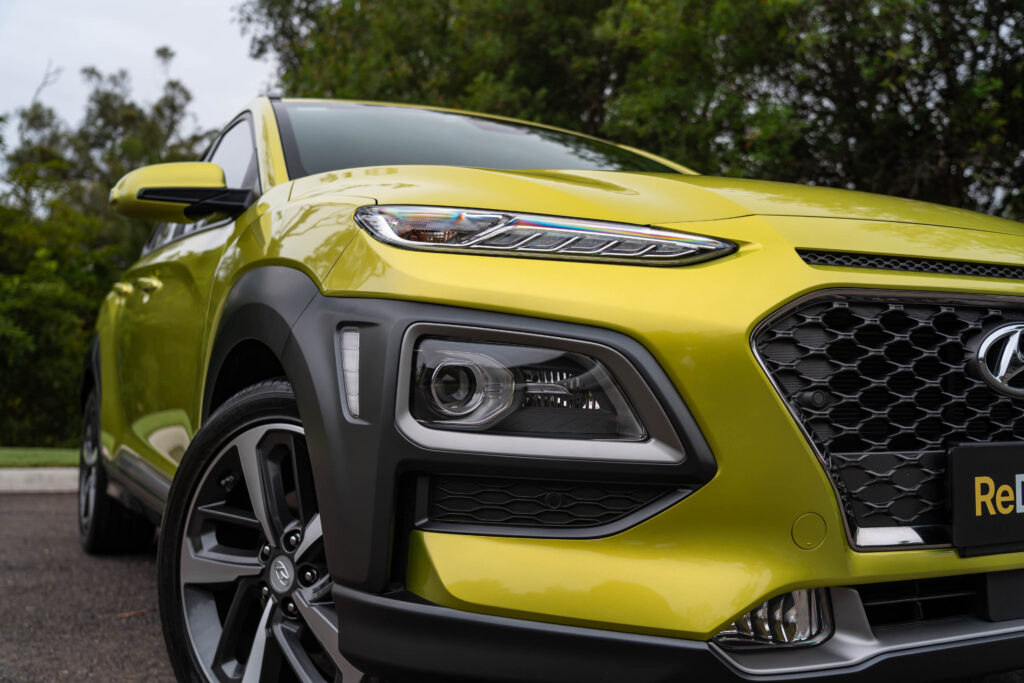
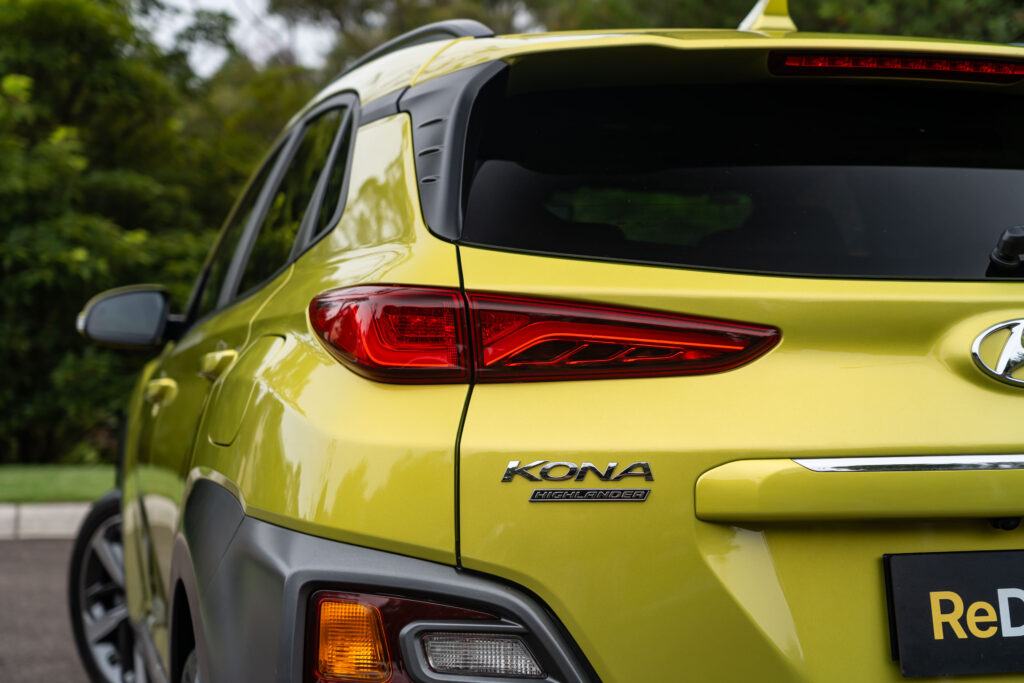
It’s also worth highlighting that there were two headlight designs that applied for the OS-gen Kona. Pre-update Konas feature geometric clusters with ‘fang-like’ driving lights (below the daytime lights), while those on post-update models brought a lower profile, simplified design.
Interior:
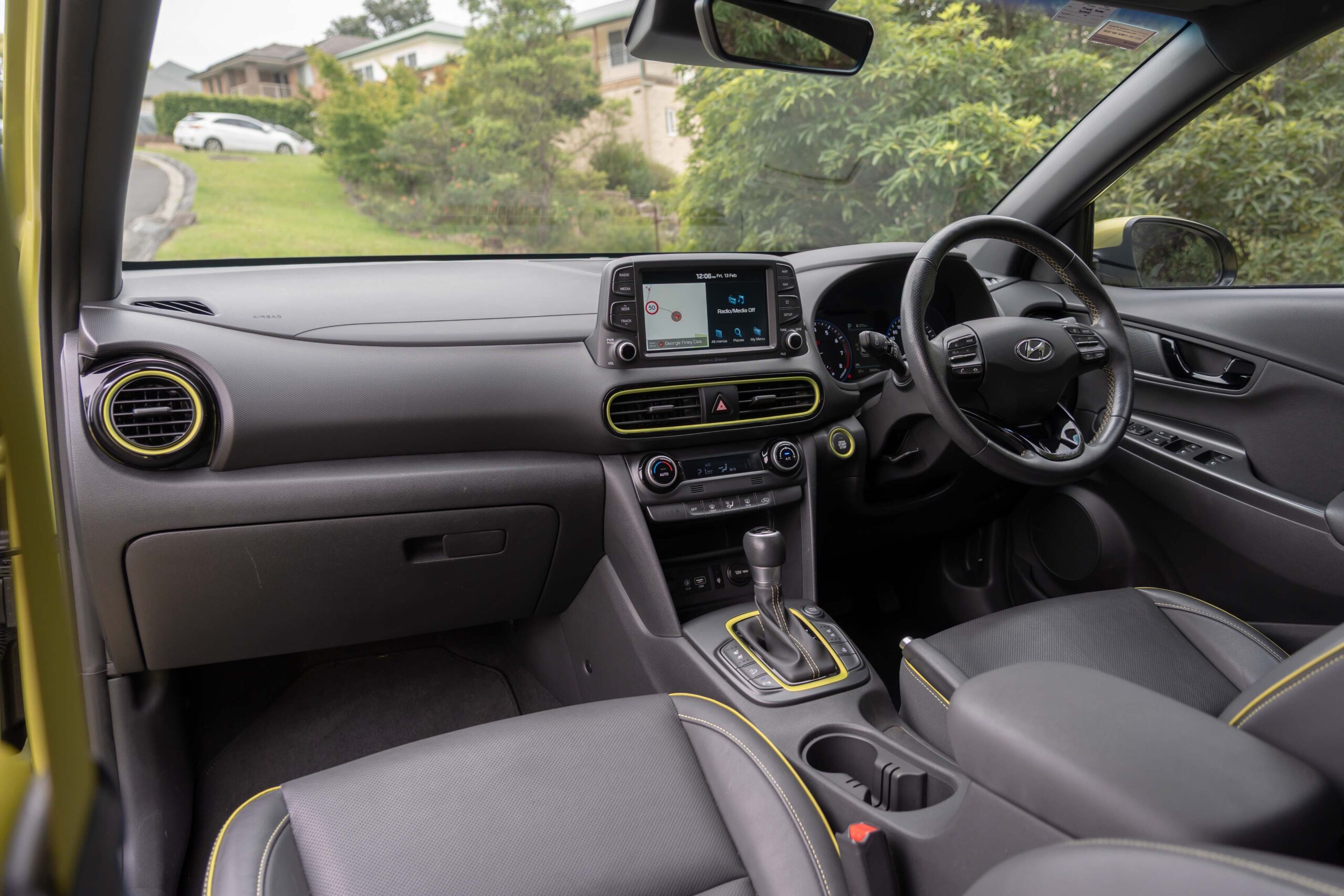
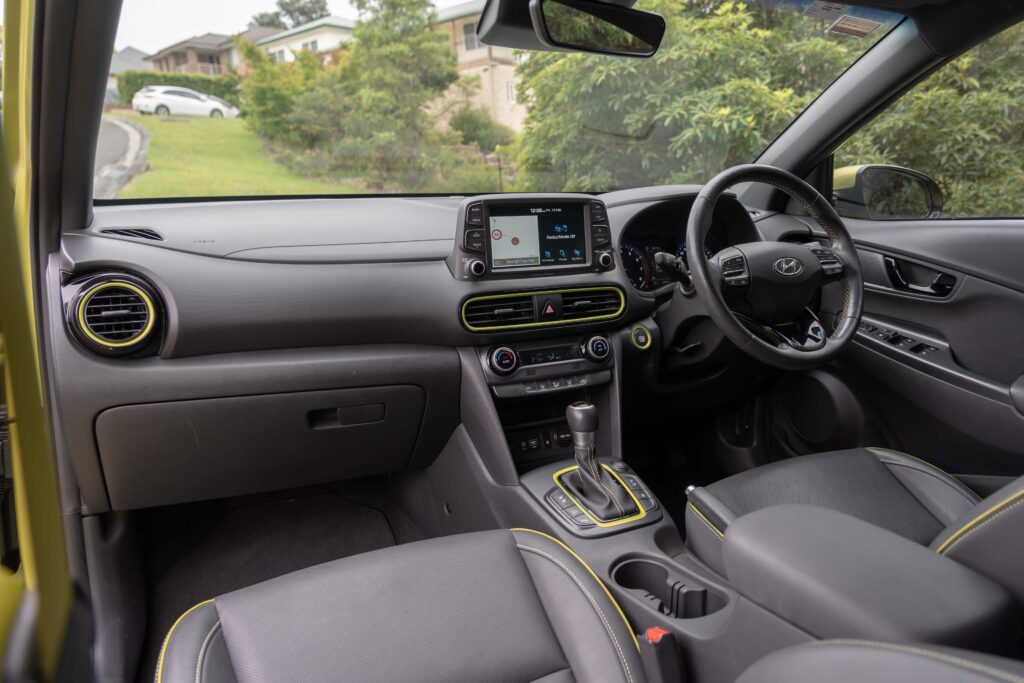
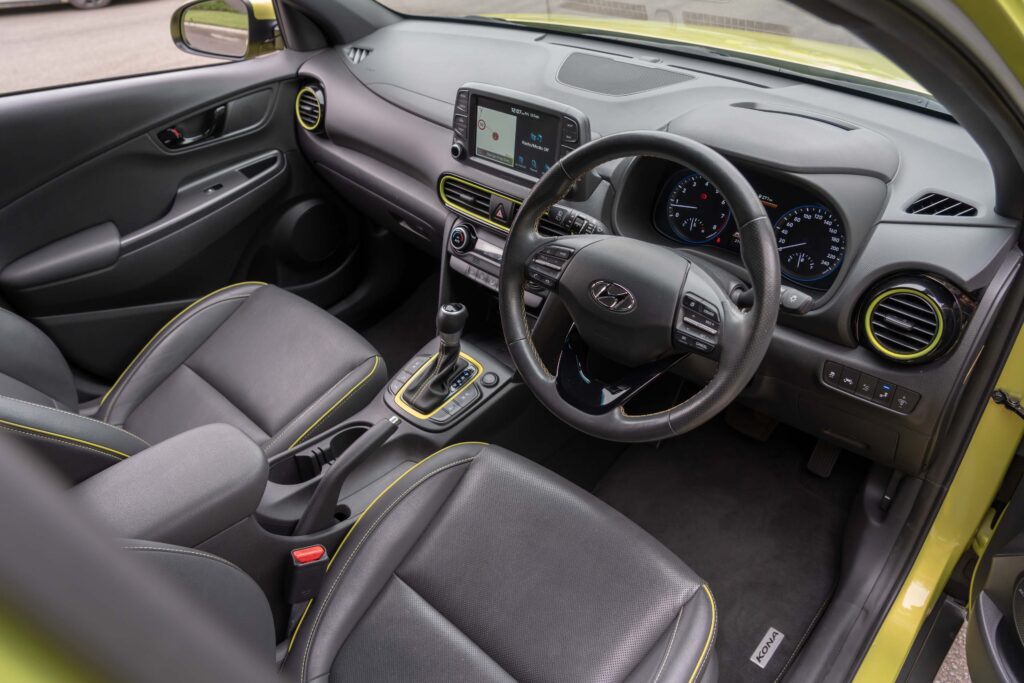
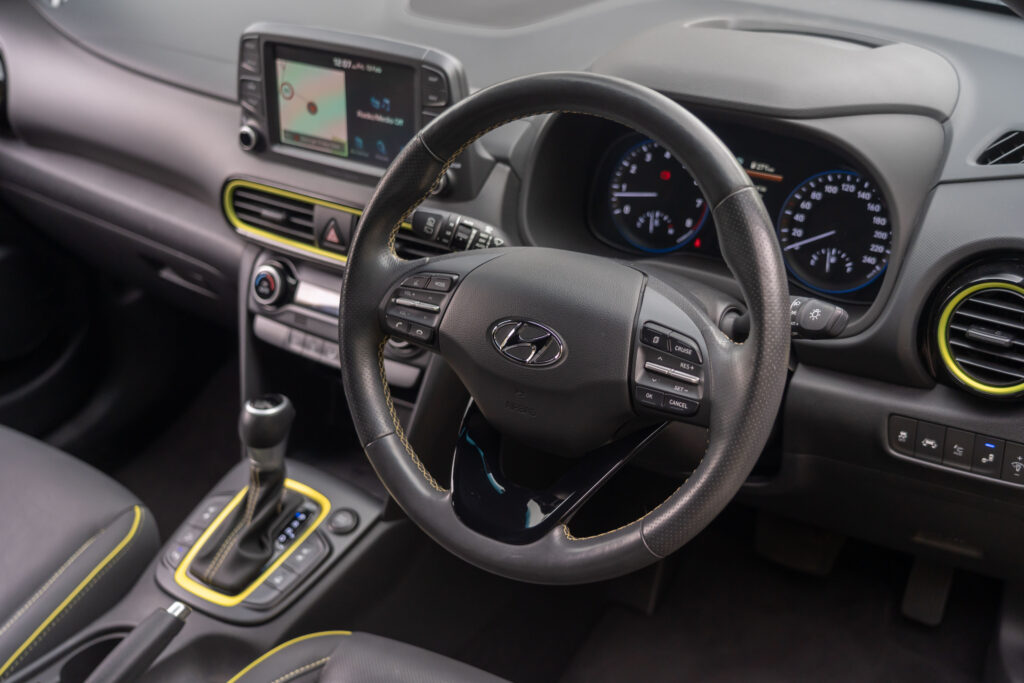
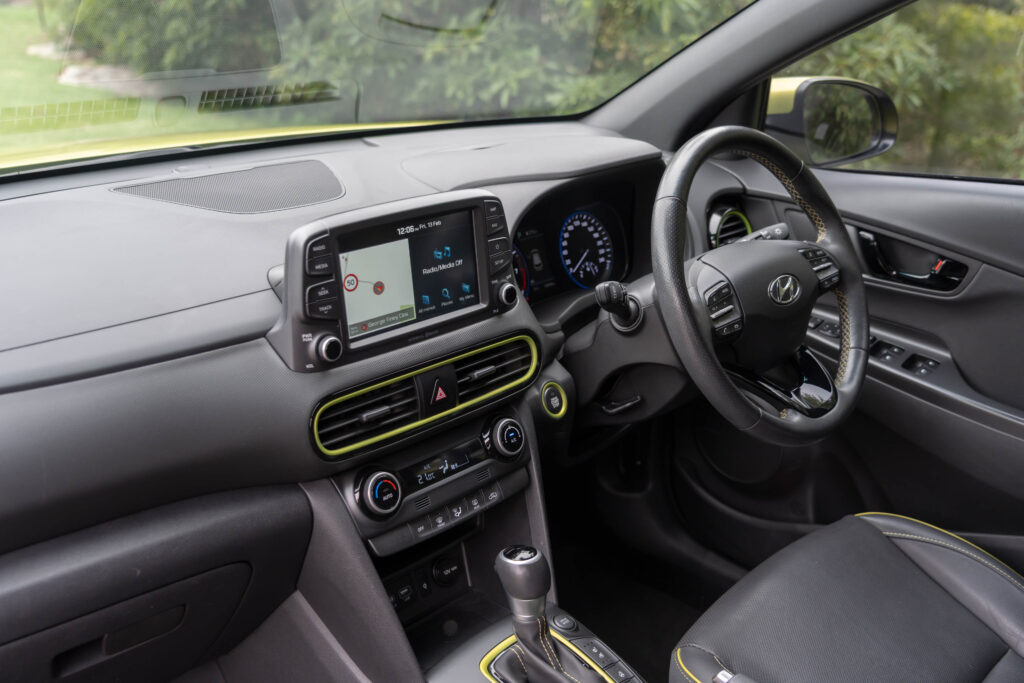
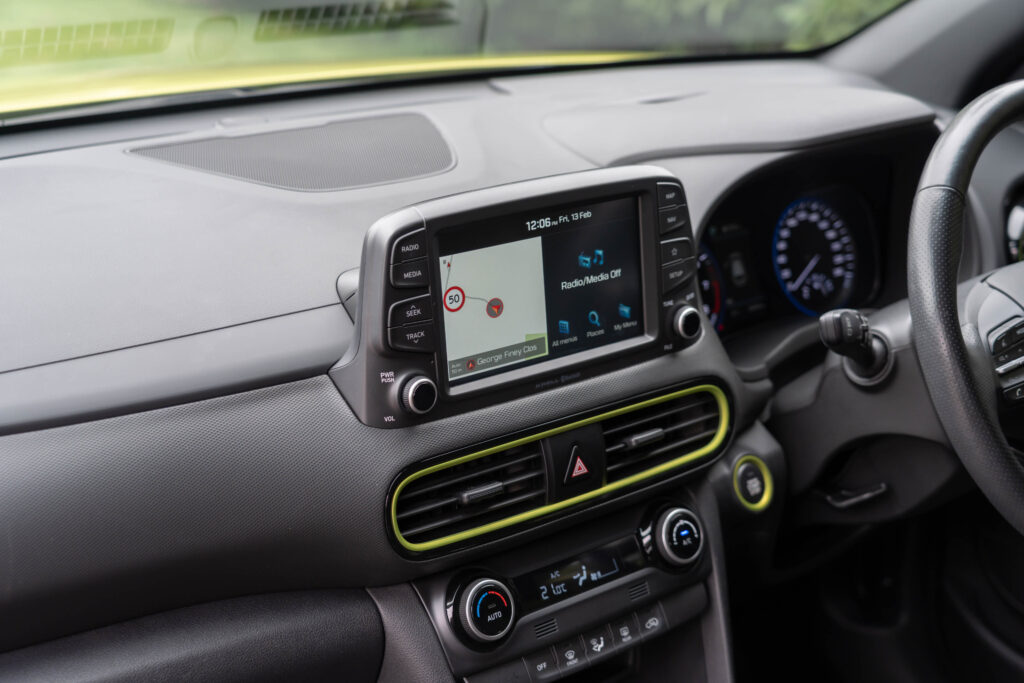
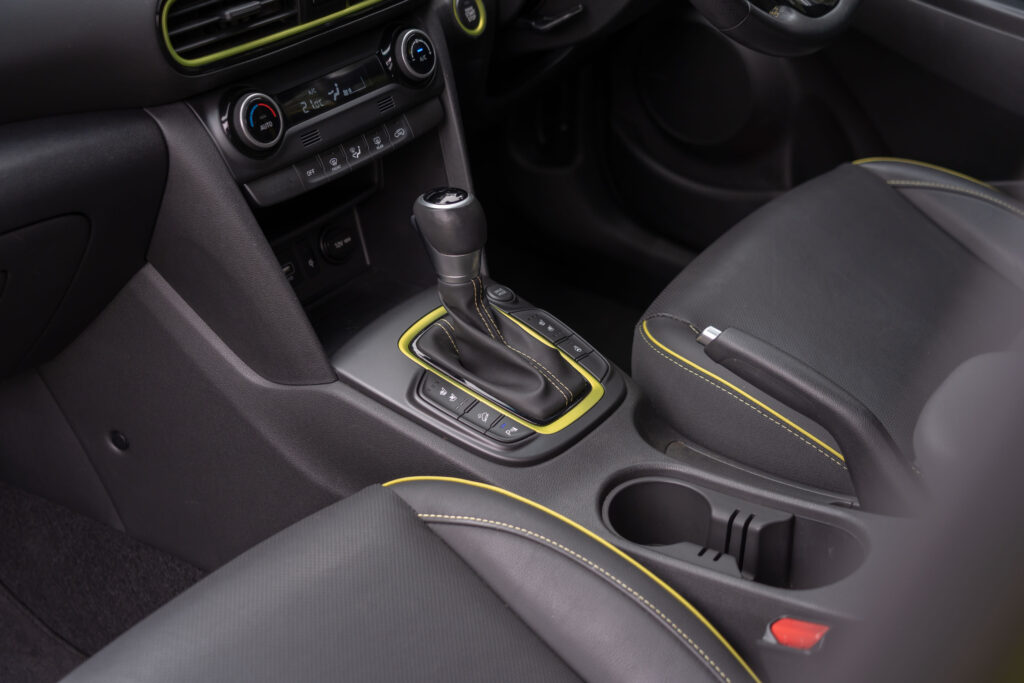
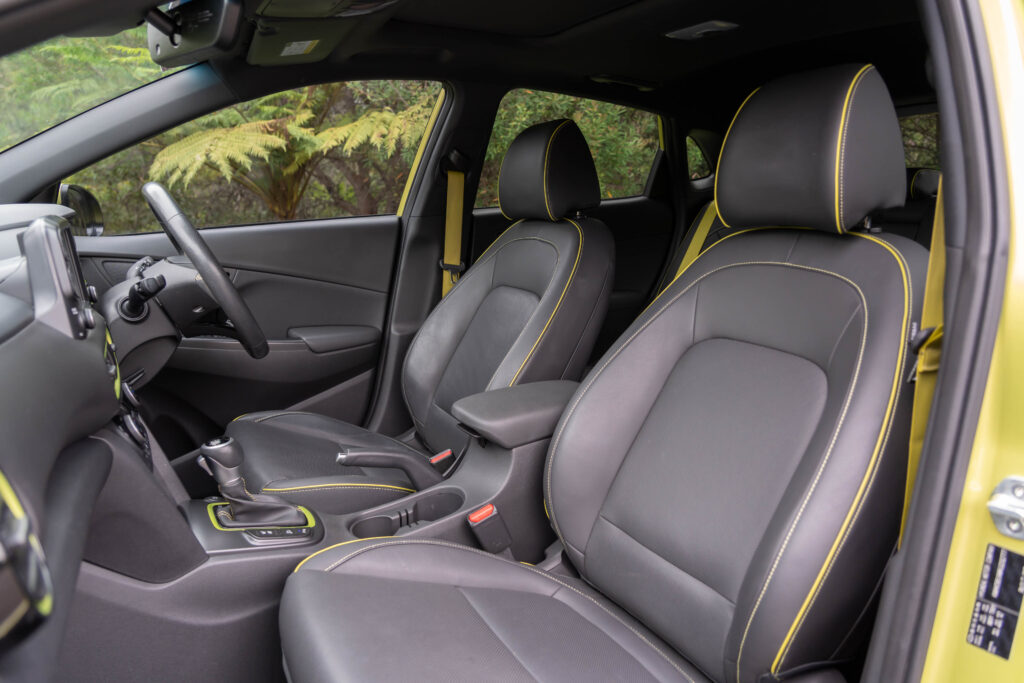
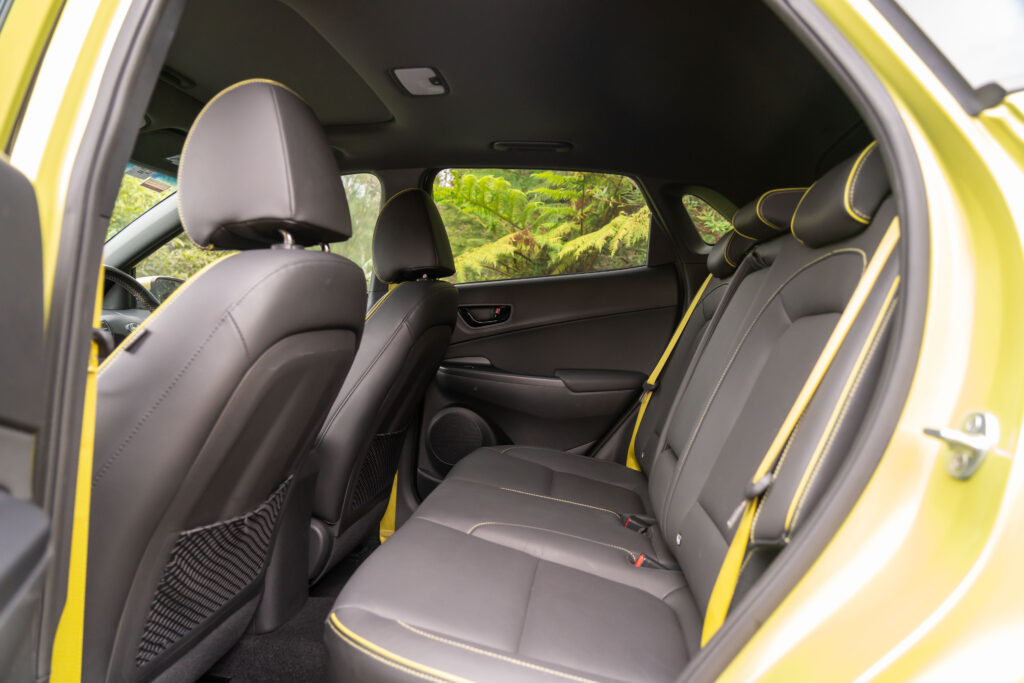
The inside is nearly identical to the i30 hatchback and that’s not necessarily a bad thing, as the layout will be familiar to anyone used to the current era of Hyundai products, with everything as you expect it to be.
The Kona Electric models, given their higher starting price when new, do feature a higher grade of materials and a stylish interior compared to most of the Kona lineup (below the top-line trims).
Cabin trim has proven to be fairly robust, though some sections can be especially prone to wear.
Common areas include the leather steering wheels that peel easily, plastic surfaces prone to marks or scratches, and the sunglasses holder is known to be quite fragile and at times, won’t remain shut – owners’ groups will serve as great resources for tips and solutions.
Many owners report that any number of warning lights can appear on the dashboard, giving the impression that there is something seriously wrong with the car.
But before jumping to conclusions, it could be just a battery drain or one at the end of its life – many report installing a fresh battery resolves these electrical gremlins.
No matter what iteration, all infotainment systems featured in the Kona are known to experience issues. These can range from screens blanking out to the UI being extremely slow to use (or locking up altogether), along with the usual inconsistent Apple CarPlay/Android Auto/Bluetooth connectivity dropouts.
But the good news is that software updates can resolve any number of these glitches and compared to the Kona’s rivals in the segment that have far more temperamental infotainment systems, those in the Hyundai are judged on the more reliable end.
Also, if you are targeting an older, pre-update Kona that might not have as many up-to-date features as newer models, these can be easily replaced with an aftermarket headunit that brings a better grade of features, like wireless Apple CarPlay/Android Auto, or a better resolution reversing camera.
But in terms of features, many have spoken about how the Kona offers a lot of value for money on what comes standard compared to equivalent models from European and Japanese brands in this segment. Even on the entry-level Konas, these come very loaded, especially on later post-update models.
Mechanically:
Reliability-wise, Korean brands like Hyundai currently bring in good customer satisfaction reports and ratings. Plus, there’s no denying they have the upper hand in after-sales support, with their 7-year, unlimited mileage warranty plan.
It’s worth also highlighting that, like many other Australian-market Hyundais, the suspension is tuned for our local conditions, nailing a perfect balance between comfort and an engaging driving experience that other equivalent SUVs can’t match.
However, it’s still worth doing due diligence on which Hyundai dealers you employ to take care of servicing or to resolve any warranty-covered repairs, as many owners continue to report that Hyundai’s dealership network can be hit or miss.
Modern engines from Korean brands don’t have the most solid of reliability track records, and the four-cylinders used in the OS-gen Kona can raise some concerns among those in the secondhand market.
1.6L GF4J Turbo (Gamma 2):
Turbocharger failure is one of the most expensive issues these can experience.
Waste gate actuators are also commonly reported, as is excessive oil consumption.
We highly recommend ensuring the oil changes are performed regularly – this engine uses direct injection, and they are prone to oil dilution, and diluted engine oil doesn’t lubricate well.
All 1.6L turbo Konas are paired with the problematic dual-clutch automatic, which has its own track record of being frustrating to live with and is more common to experience issues.
2.0l G4NH (Non-Turbo):
Engines from this family were involved in a mass recall that covered the replacement for thousands of faulty, prematurely combusting engines, but the G4NH used in the Kona was not one of those affected.
That doesn’t mean they are prone to issues or known to fail. It is less prone to major internal problems like bearing failure or seizure of said components, but there were a few recalls involving the piston rings among 2019-2021 Konas, so it’s worth double-checking if the recall fixes were done.
Not including a turbocharger does mean there’s less to go wrong, but the non-turbo four-cylinder can still experience the oil dilution, excessive oil consumption, and timing chain issues mentioned earlier.
We’d also highlight that early 2.0L Konas also featured the traditional torque-converter automatic, while later models from 2021 onwards transitioned to use the IVT continuously-variable automatic.
Also, while it is the bigger engine of the two, many have cited that the 2.0L engine lacks the power and torque offered by the 1.6L turbocharged unit and can feel somewhat lethargic in terms of power delivery.
The key to ensuring these engines last as long as possible is regular servicing – every 10,000 km or, to be even safer, every 5,000 km.
It’s worth keeping in mind that the Kona, like other Korean cars, are becoming a more affordable used option and is typically bought to serve as a second car or as a first car that many don’t look after with care and attention.
So, if you want to avoid any long-term reliability gremlins, ensure a faultless maintenance history is provided for maximum transparency.
Transmissions:
All three transmissions used by the Kona – the six-speed torque converter, the seven-speed dual clutch, or the IVT automatic can be reasonably trouble-free if well maintained and not too severely neglected.
But as observed within other Korean models from Hyundai/Kia, the dual-clutch is frequently criticised for being rough and jerky at low speeds. Many complain of excessive shuddering and vibrations during normal operation, along with significant delays when engaging or changing gears.
They’re also prone to the usual dual-clutch gremlins, from hesitation when pulling away to rough gear changes at low speeds.
The IVT transmission, given its nature as a continuous range of gear ratios over fixed gears, does allow the Kona to be more fuel efficient, but some might be put off by its droning engine note across the rev range.
It might offer simulated gear changes, but you can’t change the fact its nowhere near the same as a traditional torque converter automatic that offers ‘actual’ gears.
On the used market, first-gen Konas range from as low as $12,000 and top as high as $40,000, with the cheapest examples consisting of the oldest, high-kilometre, pre-update base petrol Konas, while the most expensive consist of mint condition Kona Electric Elite/Highlander models.
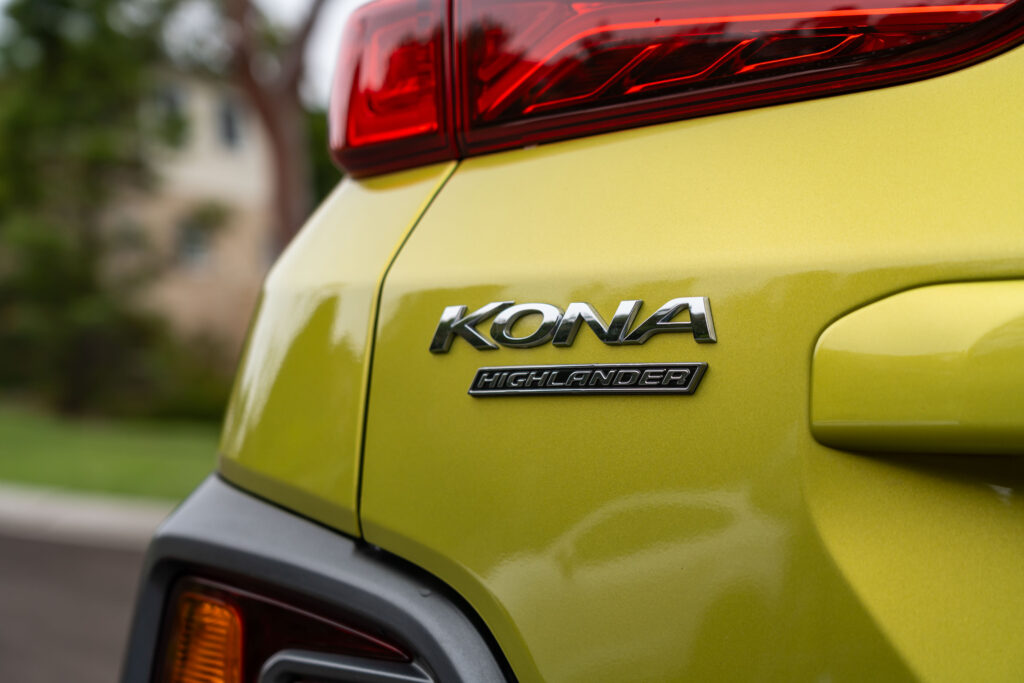
You’ll find most petrol-powered Konas top around $35,000 in the current secondhand market, which will ideally net you a post-update, low-kilometre N-Line or top-spec Highlander model.
The all-electric Kona EVs were among the most expensive examples when new, but they are among the lineup’s most prevalent victims of depreciation now in the current used market.
Compared to most petrol Hyundai Konas, which usually retain 70% of their value after three years, all-electric Konas can plummet to 45% or less of their value from new.
But despite these concerns, many examples of Hyundai Konas carry a strong residual value among other rivals in this segment, matched evenly by Japanese equivalents like the Toyota CH-R and Mazda CX-3.
Korean brands still raise some concerns regarding reliability, but the vast majority of used Konas should be trouble-free – provided they have a meticulous service history.
While a Toyota/Mazda/Mitsubishi can get away with an occasional missed service, cars like the Kona require fastidious care to the same level as European cars to continue being reliable.
If the one you’re inspecting has been treated with maximum care and attention, has had all factory recalls addressed, and a pre-purchase inspection shows no glaring concerns, these can serve as excellent daily drivers.
But if there is even a single concern or grey zone regarding past ownership or its service history, walk away – there will always be another Kona out there that is in better condition.
MORE: Explore our Hyundai reviews
MORE: Explore our SUV reviews


Co-creator, presenter & writer, ReDriven

Yes. 100%.
 17 hours ago
6 days ago
17 hours ago
6 days ago
 2 weeks ago